Gardening in harmony with nature is ideal to adapt to today’s crises: vegetables from the veggie patch, fruit from orchards, regenerating habitats for wildlife and carbon capture, and joy, fitness, fresh air, wellbeing from beauty and tranquility… Paradise! Local workshops, community gardens, many books and online knowledge can help start and answer any question.
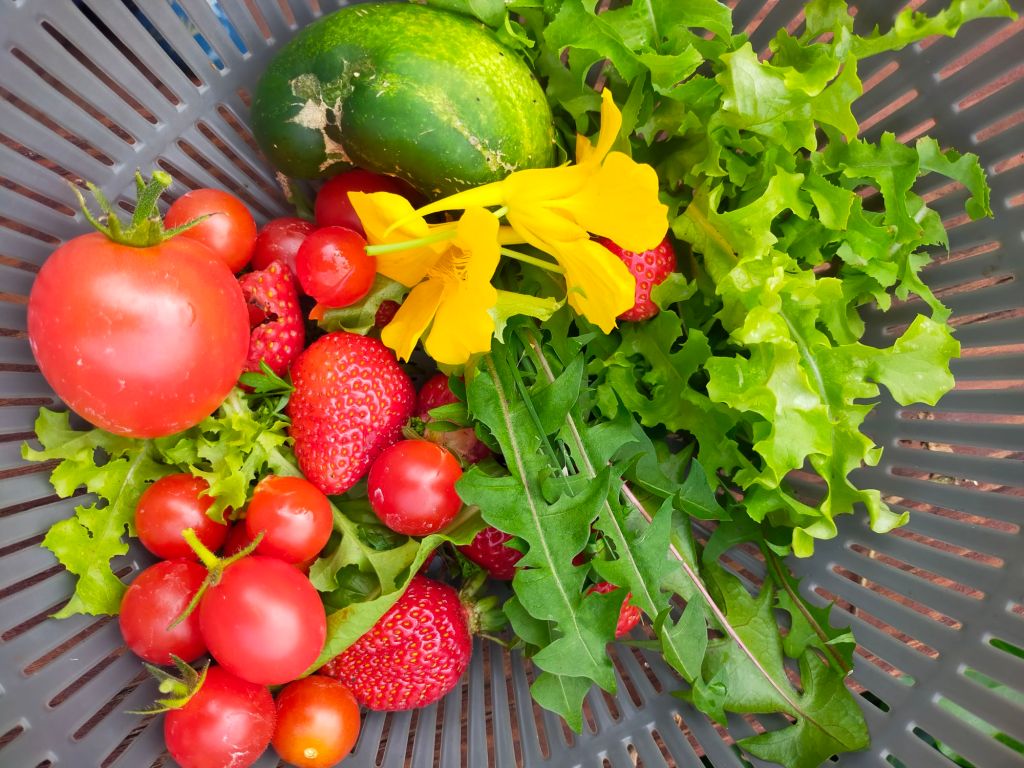
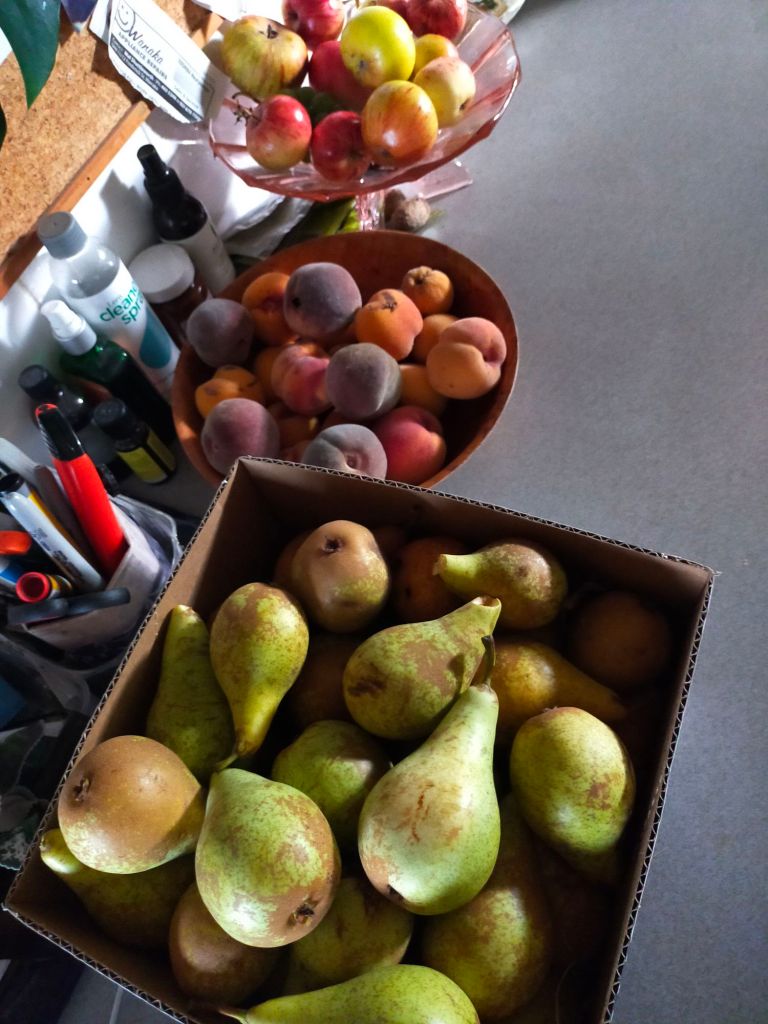
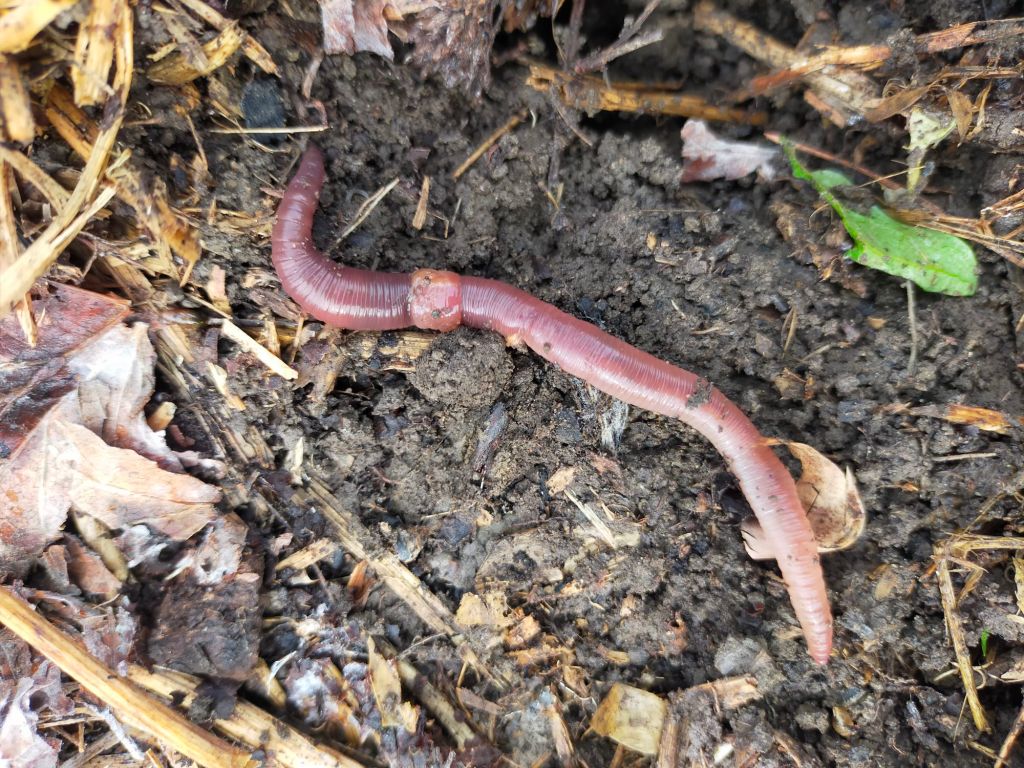
Everyday goodness for lunchAutumn harvest to storeGood for the soils, good for ALL
Nature and the garden are so abundant, they provide even much more! Here we’ll share about garden goodies, tea and coffee, skin oils, medicines, lollies, fertilisers… So much goodness, mostly for free!
First in, champion dandelion!
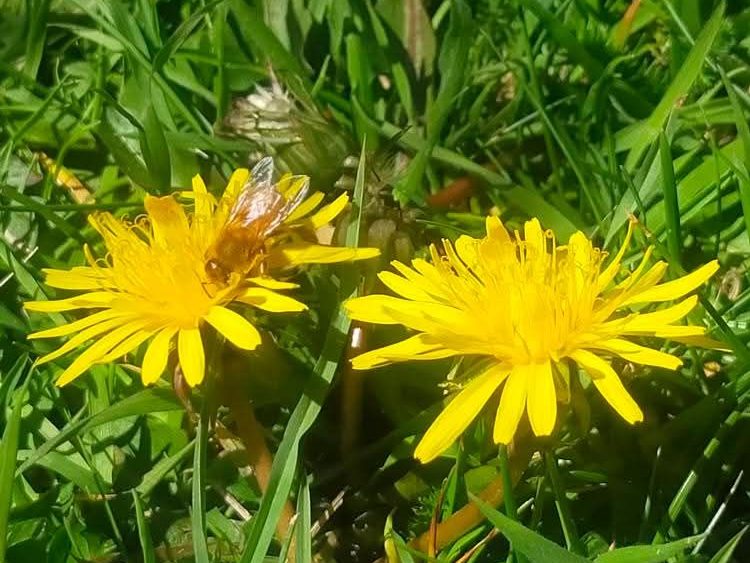
Dandelions have flowers nearly year round, which means they brighten the yards and feed insects year round. The whole plant has therapeutic value, especially useful to cleanse the liver and heal hepatitis, therefore also good for skin, rheumatism, everything. So we consume it everyday.
Two young leaves per person in lunch sandwiches or salads;
Two bigger leaves per person as greens in dinners;
Young dandelion flowers are one of my pleasures: as I potter around, I just pick one with the milky stalk that I fold and eat like a lolly;
And my morning “coffee”:
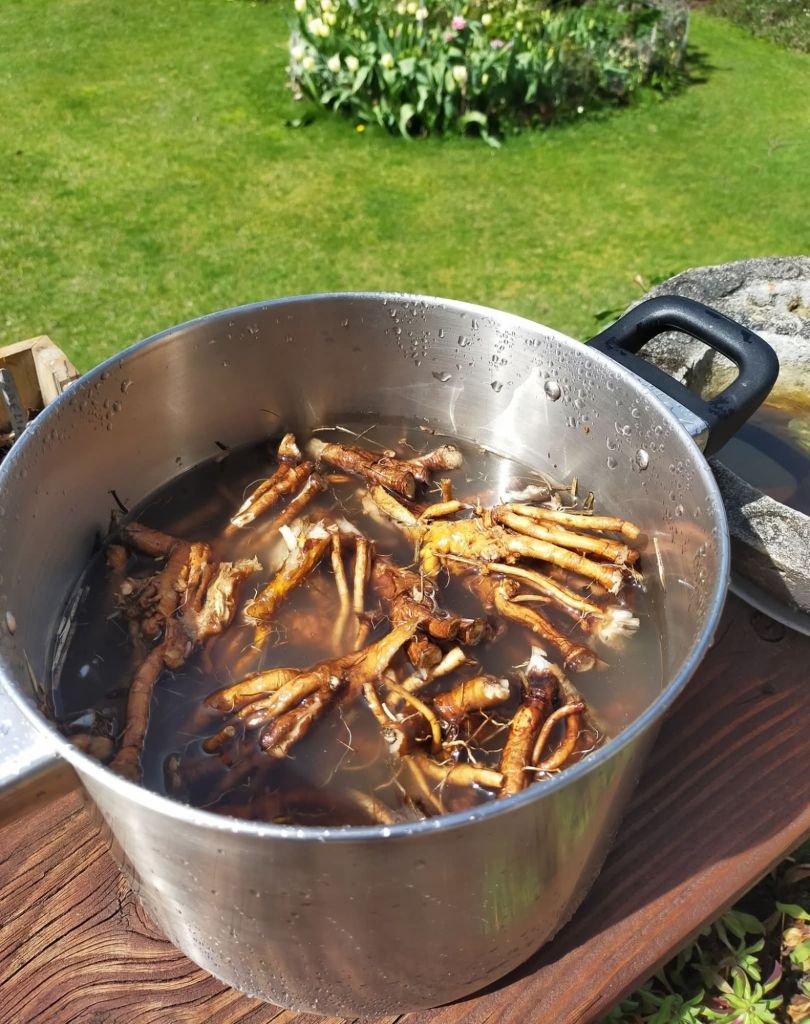
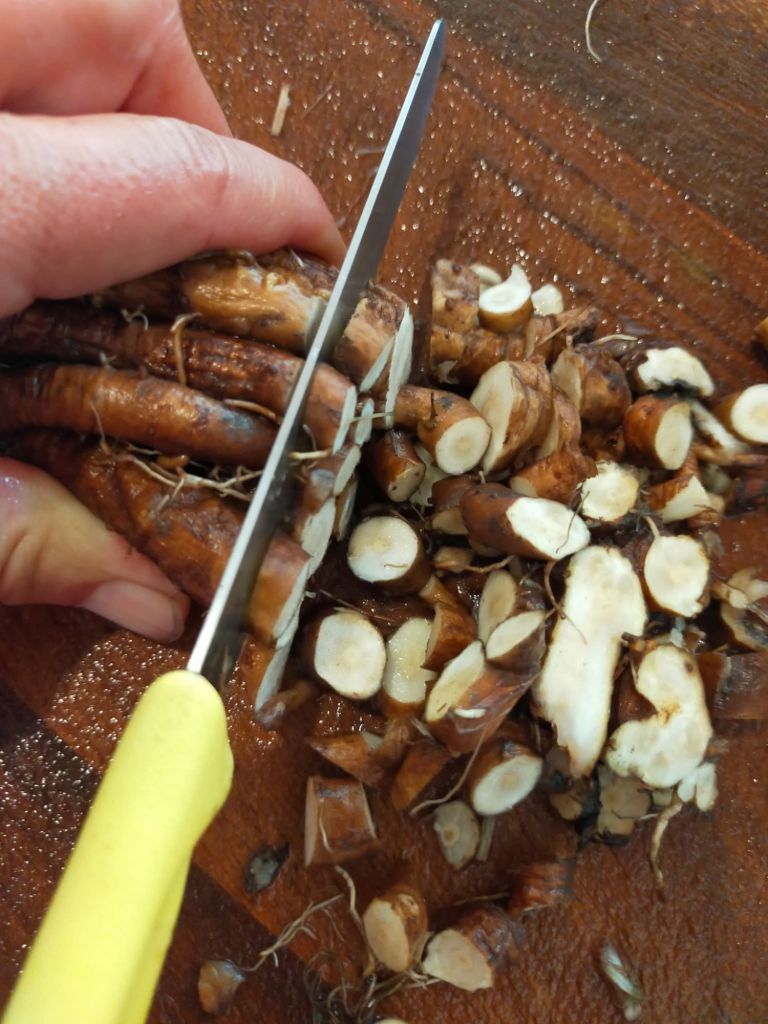
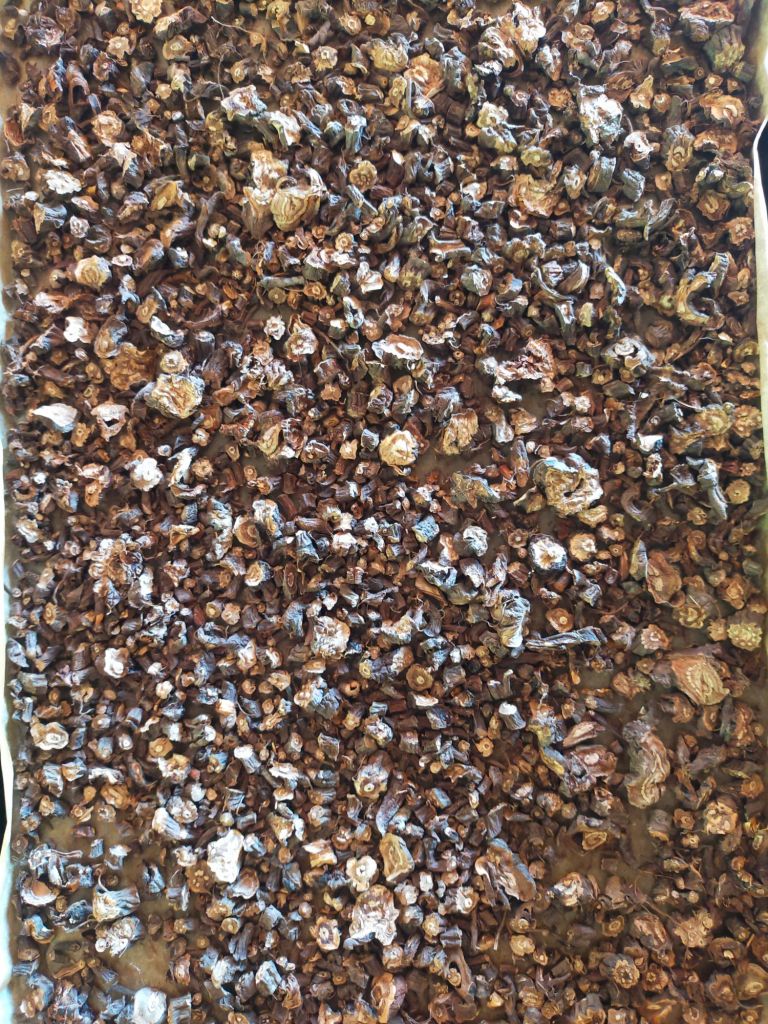
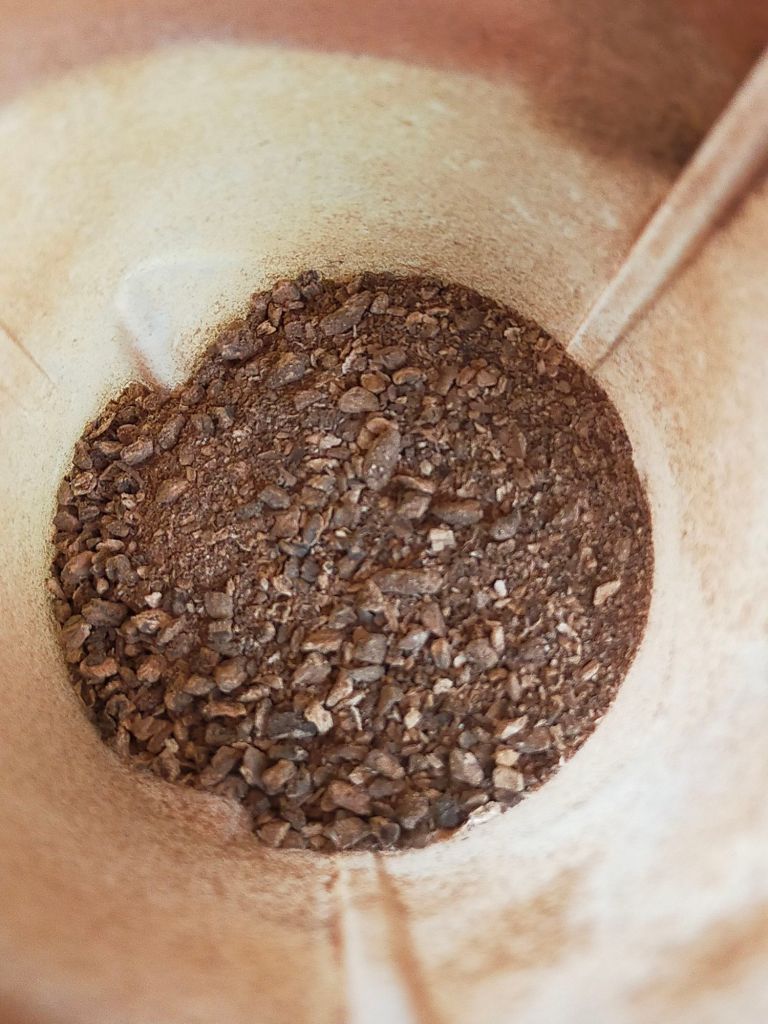
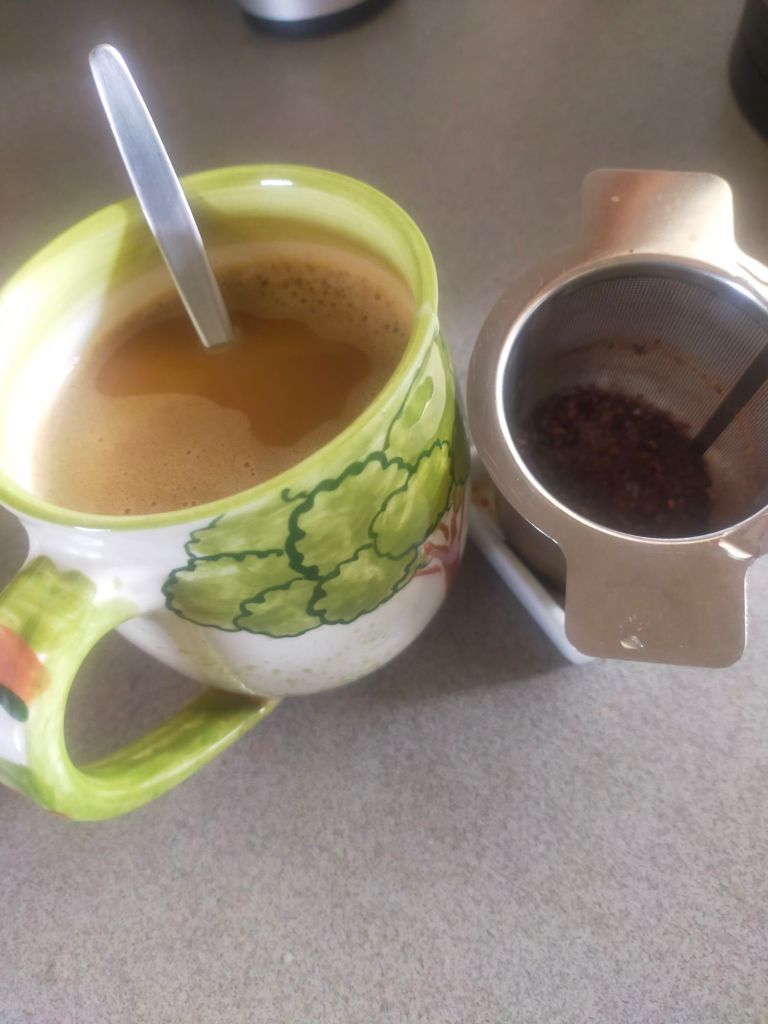
My dandelion root coffee satisfyingly replaces imported acid-forming coffee while giving that morning kick. It also transforms weeding into root harvesting. I cut the leaves off as I harvest the roots, then soak overnight for the soil to drop. Next day, I chop the roots, and leave on a fabric to dry for several days, then roast (180°C for 10-12mn – keep an eye!), then blend in a ninja, then store. I use one spoon per cup, adding milk or not. Dandelion root coffee can also be purchased here.
SoakingCuttingDrying, then roastingBlendRich and earthy, and a little kick!
Dandelions are either loved or hated! There are many FB groups of dandelion lovers sharing beautiful photos and AI compositions of flowers, seed heads, fairies, wishes and happy gardens. There are also many metal sculptures of seed heads. For other people, dandelions are a weed, sprayed systematically (with dangerous chemicals). I often ask those people why. They have no answer! For me, dandelions hold joy and magic, they are so clever: dandelions in deep grass will grow flowers on long stems, dandelion on regularly mowed lawns grow flowers at the lawn height, I find this miraculous! But I don’t use them in our garden tea, too bitter.
Garden tea
There are many edible and medicinal plants and trees. Known ones like rosemary, sage, thyme, yarrow, nettle, St. John’s wort, plantain, chamomilla… Maybe less known plants like lady’s mantle, mallow, comfrey, eupatorium, veronica, calendula, horny goat, roses…
Even less known, tree leaves like walnut, birch, maple, mulberry, blackcurrant and raspberry, many pines, hawthorn -the heart master-, eucalyptus… Barks and roots are often useful too but it’s harming the trees so I don’t practice that. It’s worth googling the trees in your backyard for surprise health benefits.
Many NZ native plants are edible and have traditional medicinal use, hebe for stomach pain, horopito as spice and painkiller, kōwhai for skin, even some ferns for cancer. There is a lot of information here and here.
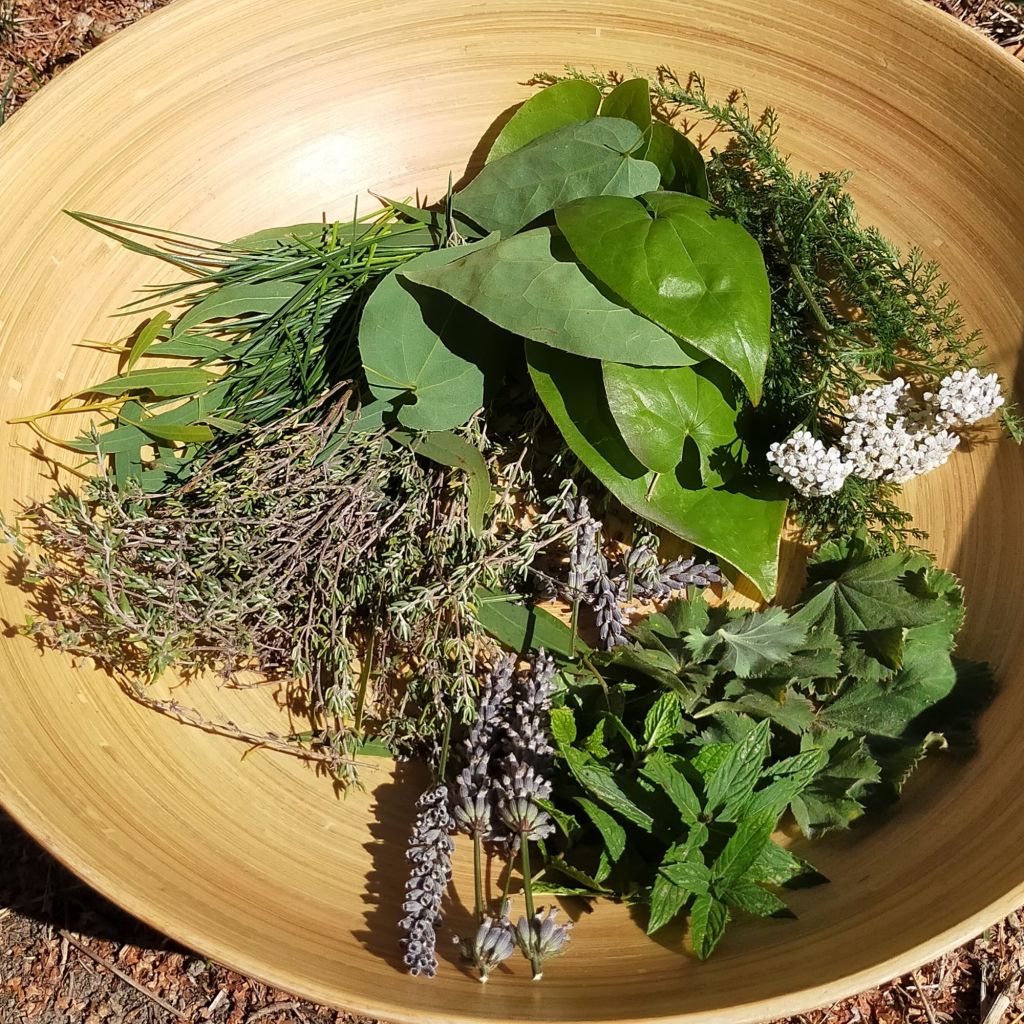
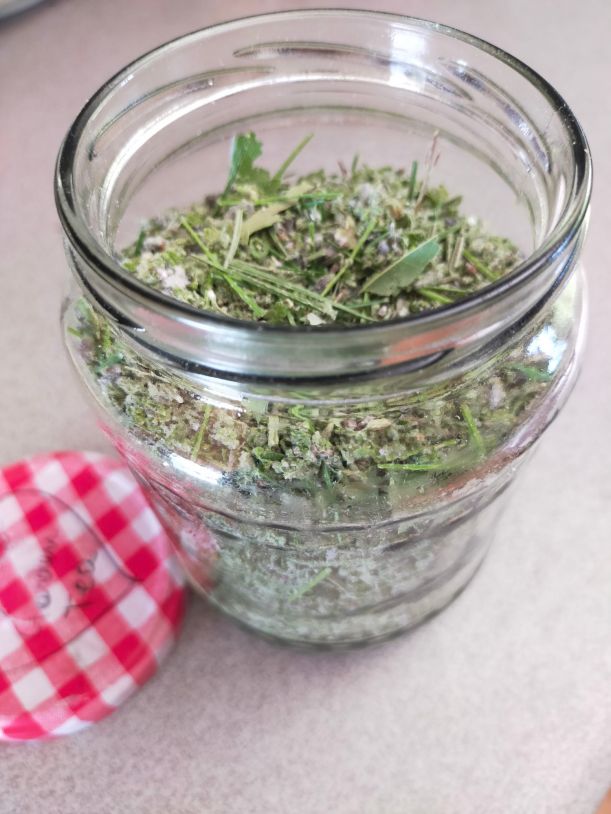
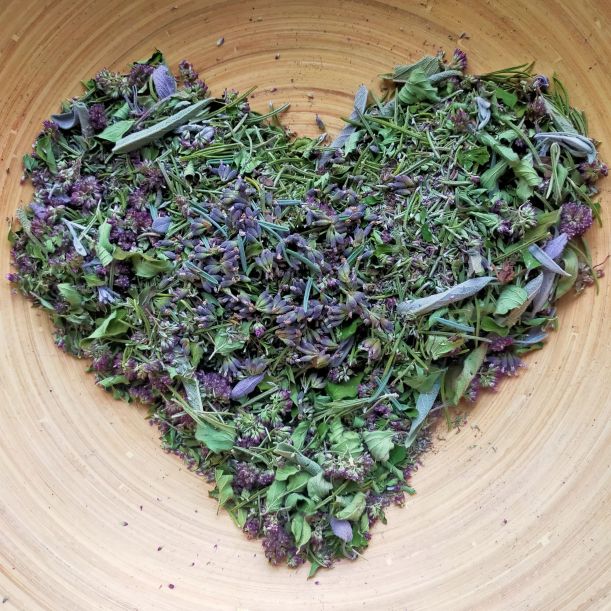
I go around my garden and harvest any of the above, in small quantities, to create a balanced mix, varying by the seasons. I dry that mix for a few days in open air, then blitz it, store in a jar, and drink our garden tea every afternoon, no packaging, free, always different, good for health, and yesss super tasty!
There are many resources for common plants medicinal knowledge. I enjoy getting to know the plants available in the garden and finding out about their health benefits. If in doubt, check with professional herbalist.
Plants can also be foraged. Always check with owners and be wary of roundup. Only harvest small quantities when there are heaps, leaving plenty for nature to regrow and share with other beings.
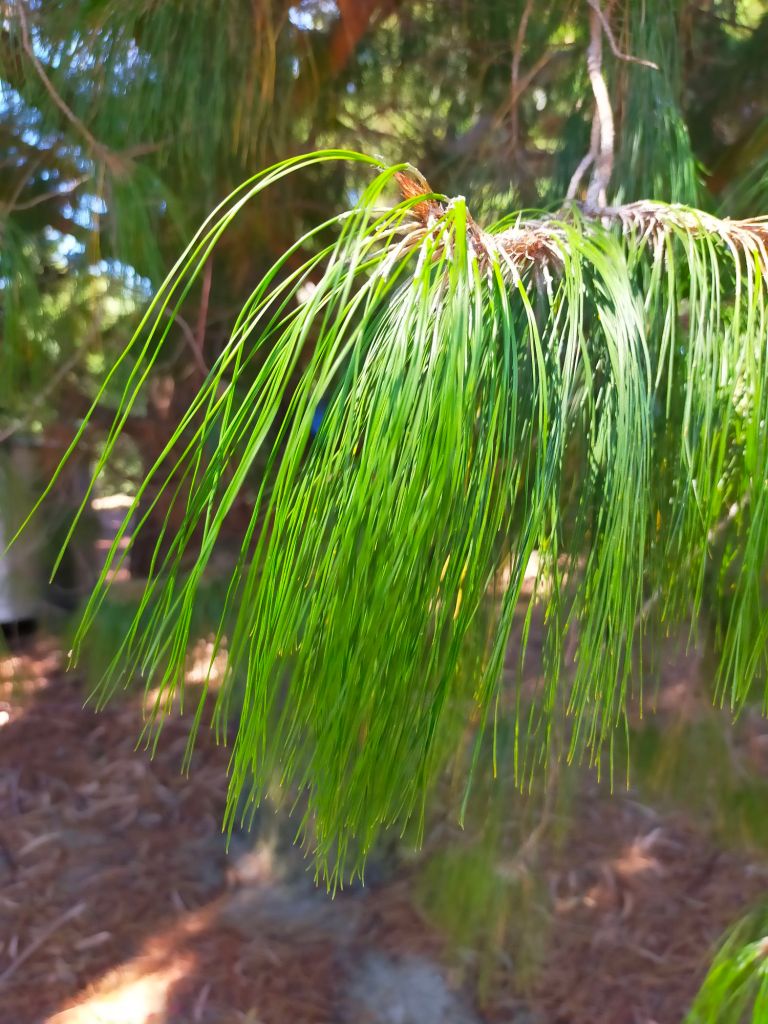
Pinus patula needles are edibleHerbs for the garden teaOur Garden Tea <3
Garden lollies!
As I potter around or go for a walk in the garden, and depending on the season, I enjoy:
Folding and eating a dandelion flower and its milky stalk for a rich experience!
Pinching mint, this also controls its spread;
A drop of pine cone sap, a long lasting treat;
Gleaning blackcurrant flowers, blackberries climbing on the glasshouse, a wild strawberry or the sweet base of primula and clover flowers…
Also the unvaluable delight of crunching a cherry tomato, a snow pea or a nasturtium flower as I harvest for lunch or dinner.
As a breath freshener: one leaf of each plant in the herb garden (rosemary, sage, origano etc.) and munch together, wow.
Skin oil
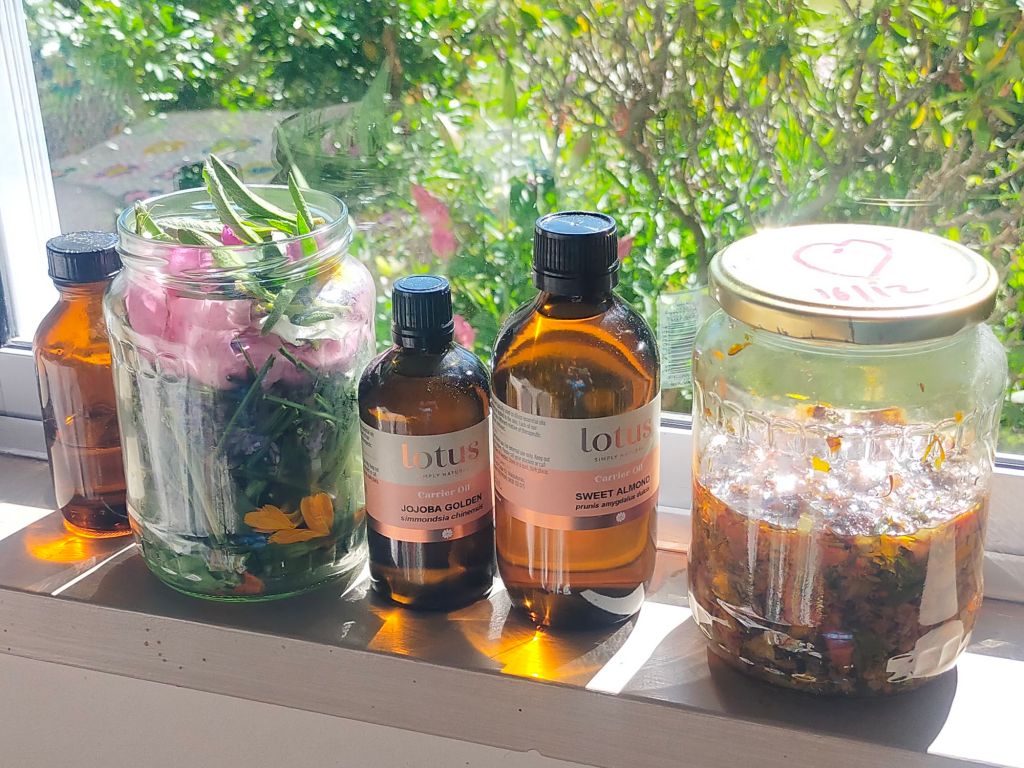
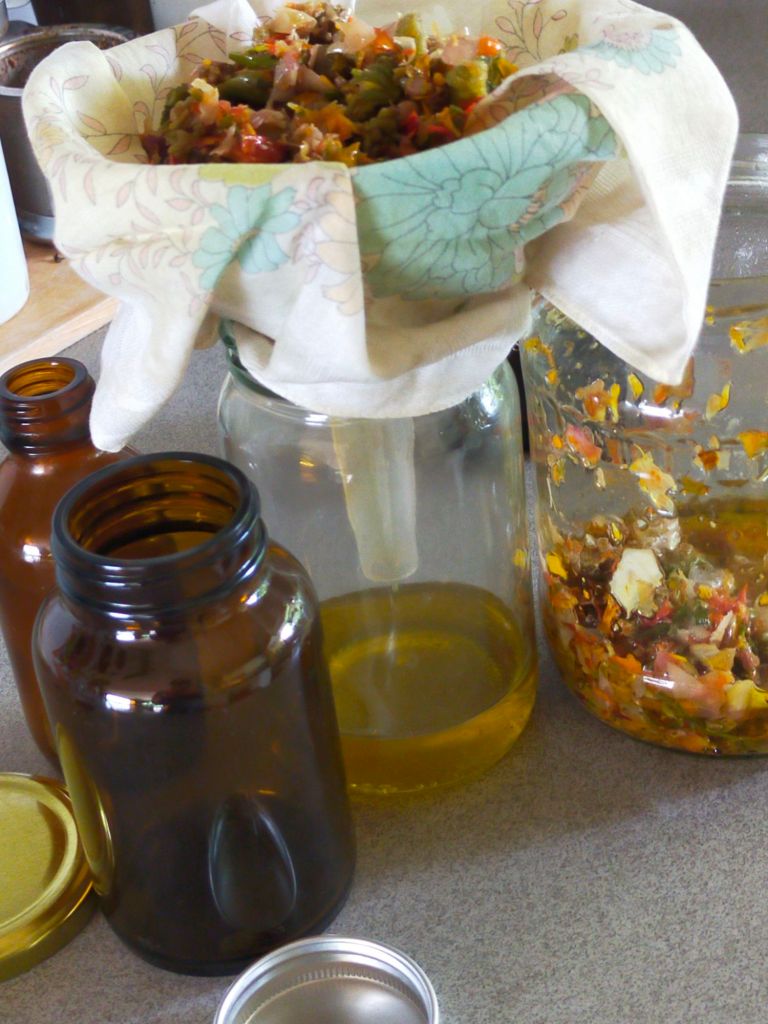
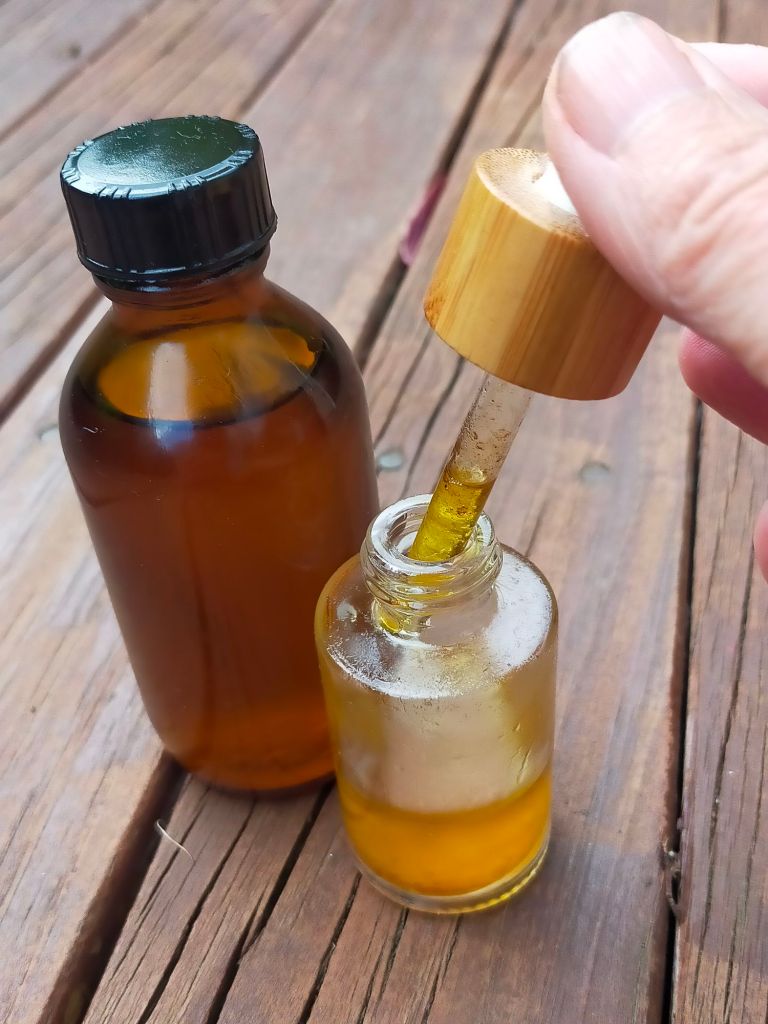
On a nice sunny morning, I take a glass jar and scissors and go around the garden. In the jar go cistus leaves and flowers (good for aging skin), lots of calendula leaves, stalks and flowers and one rose. I chopped these with scissors, then add oils: sunflower, grapeseed, almond or apricot kernel, a bit of jojoba for texture. The closed jar is left to marinate 2 or 3 weeks (longer, it starts to smell like manure!). Then I filter it and put in tainted jars. I add a few drops of essential oils that I like and are good for my dry skin, frankincense, rose, geranium, lavender. There are so many options, check with Auntie Google, but do NOT use citrus for day oils. No chemicals, no plastic, not quite free as the oils can be pricey, but what a satisfying pleasure every morning!
Fresh flowers in a jar on the leftFiltering the marinated flowers after 3 weeksDaily use of garden oil
Garden fertilizers
It’s well known that comfrey and nettle leaves are great fertilizers for the veggie garden. With gloves, I harvest half a bucket of leaves, weigh them down with a stone, cover with water and a lid; Leave to ferment 2-3 weeks, then dilute 1 liter per water can to feed our plants.
Both these rich plants can be used as mulch -before they are in seeds. It has been known since the mid-50’s and popularised by Henry Doubleday in Britain. Together with the compost, they are enough to feed our prolific garden, no chemicals here of course!
And much more…
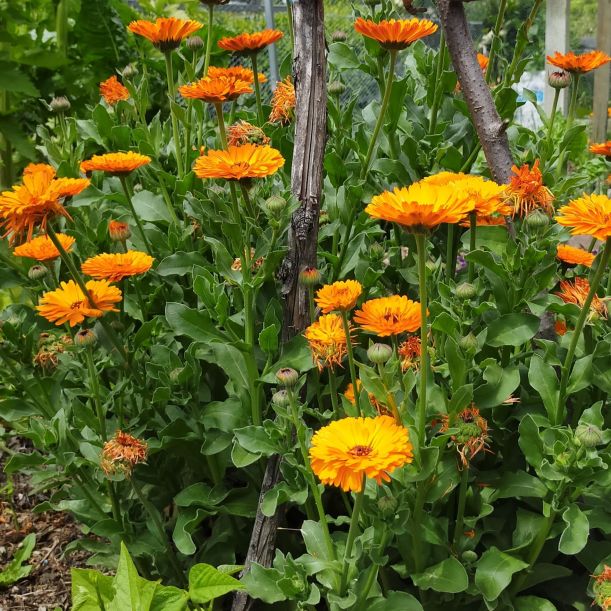
Many plants are enriching biodiversity in the garden -by definition-. My favourite is the joyful calendula, I wrote a whole post about Calendula wonders!
One calendula plant in each garden bed to attract companion insects and add petals to colour salads.
Instant healer
For bites, stings, cuts, pick three leaves of different plants, hold together, tear the end to access the juice, then rub on the skin.
Favourites: plantain, yarrow, calendula (of course ), pine or cypress…
Or any greens around. Try and refine!
In fact all plants play an enriching role, clover brings nitrogen to other plants, rumex is an interesting addition to dinner greens and food for many insects, lily of the valley keep rabbits at bay, the list goes on…
Weeds are not weeds really. In our garden, weeding is CARING for our plants, making space for their roots and aerating the soil. One important message here is to always check any plant use and benefits before removing it. Spreading very fast or being prickly are good reasons for me and I do remove some plants by hand before they go to seeds. As we like to walk barefoot, we remove thistles even if they are great soil enhancers with their deep tap roots and offer a lot of food to birds. We also remove cleavers after eating young shoots in dinner greens and before they spread up trees. We do also remove a lot of grass when it competes with our plants and trees roots. But apart from that, we leave everything to grow, we welcome and manage them.
Awesome juices
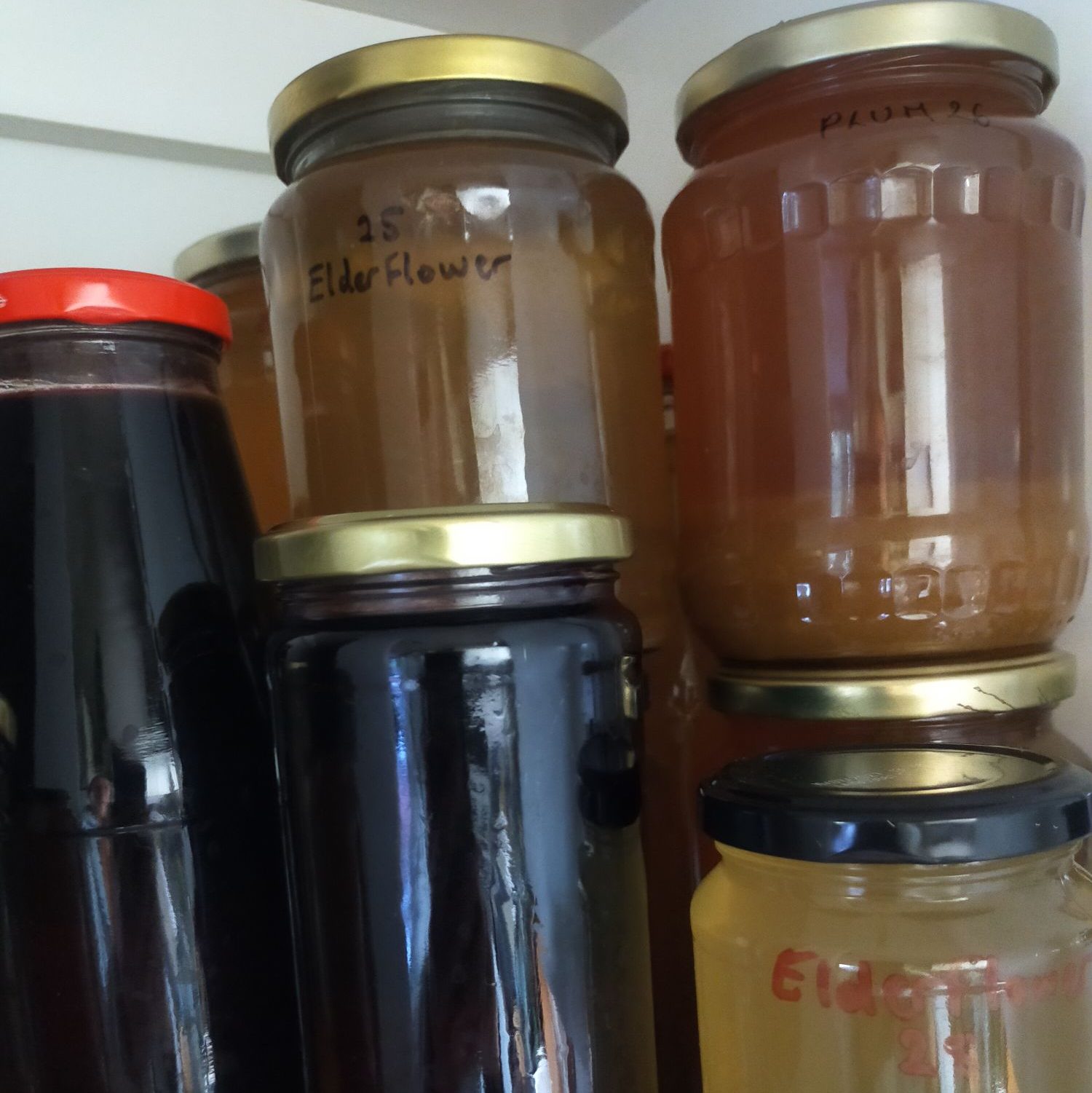
Hawthorns, rosehips and elders tend to grow on their own in our climate. Great! Flowers in spring for beauty and insects, berries later for the birds and us. Every year, I make a batch of elderflower juice, then elderberry juice, hawthorn berries juice and rosehip berries juice. Healthy goodies for the winter.
Simple method
Harvest a large bowl; rinse; in a pan, cover with boiling water, bring to a boil; leave to infuse overnight; next morning, crush with potato masher or moulin, bring the juice back to a boil with a lemon juice and 1 or 2 table spoons of honey; Into jars, fill to the top, lid on and turn upside down. This keeps a year in the pantry.
Again, lots of recipes online, these preserves have been done for generations so just about every family has their own way. I choose simple.
Our “Herbes de Provence”
The “official” mix is thyme, rosemary, summer savoury, origano in equal measure, plus half that measure of basil and bayleaf.
I haven’t managed to grow summer savoury yet so I add sage and lavender to our mix, and follow the rest -approximately.
Contrarily to the garden tea where I blitz the whole branches together, here, I carefully peal the leaves off the stalks or we end up with bits of wood in dishes. Then left to dry, then mixed in the ninja and kept in glass jars. A little bit is enough to light up any dish.
No packaging, mostly free, and healthy. I can’t remember when I last bought some mixed herbs. When I use some at a friend’s place, it tastes very bland.
This harvest of herbs will last a whole year, until next season.
From wellbeing to food production, gardens are source of goodies (and home for many animals families).
Started in 2018 by Wānaka local Monique Kelly and a small team, WAO Summit 2024 aims again to inspire and inform, setting us on a pathway to action, helping us lead with purpose, and be part of the transformation towards a thriving future.
Saturday 2 November in the morning
Guided tour of Namaste Park and Gardens, our 2.5 hectares on the outskirts of Wānaka, featuring regenerating land with a developing 600-tree arboretum, and extensive ornamental and edible gardens maintained in harmony with nature. Our carbon-positive household is the occasion to learn about renewable energy, locally sourced food, electric equipment, wise water management, circular waste management and healthy living.
At the height of spring beauty, with dogwoods, rhododendrons and many more in full bloom, join us for practical, carbon-free living and land management insights, a Tree Healing experience, morning tea and Q&A.
When: 9-11am Where: Namaste Park and Gardens (address provided after booking). No dogs allowed. $26.05(incl. $1.05 fee)− Booking here
Please note a bespoke Namaste and regeneration tour is also available on request (min 2 participants) from October to April.
Saturday 2 November in the afternoon
I will hold an informative stand at the Festival of Nature, a vibrant celebration connecting everyone to nature. We will share information about everything regenerative and tree protection in the Upper Clutha; I look forward to it!
As part of the process, I was invited to provide a short bio, an interesting reflection exercise showing I actually have a LOT of knowledge and practice for a healthier planet and resilient happy communities. I am a professional generalist which allows for holistic interconnected approach of the issues people, society and the planet face, with a positive solution focus that I am diligent to share.
Here is the bio, not to boast, but so that people can tap into these skills.
Nature advocate and regeneration practitioner, I have always loved trees and flowers!
With a Master of Economics and a graduate diploma in Sustainable practice, I developed a clear holistic vision and practical how-to for regenerating our lifestyle and district on all levels: ecosystems, water, transport, building, waste, energy, economics, health, wellbeing, community resilience and democracy. I share vision and knowledge for creating a beautiful resilient low-pollution district, region and country in practicing, submitting, emailing, speaking and opening the conversation on Regenerative Wanaka FB group.
And it all started in the garden ! As information manager for the French organic gardening magazine and visitor centre Terre Vivante, I professionally researched and spread practical ecology knowledge 30 years ago already.
20 years a Wanaka local, I was librarian at Mount Aspiring College where I facilitated the College Sustainability Club. I have been involved locally in many grassroot groups: Local Food Wanaka, Wanaka Wastebusters, Plastic Free Wanaka, Te Kakano, Wanaka Timebank etc. and organised the Wanaka Climate March in 2015.
Now owner operator of a local guided garden tour business, I continue spreading the word and love on gardening in harmony with nature, regenerating land and living sustainably.
I am fostering a district approach to enhancing biodiversity and community wellbeing in a public/private partnership (willing landowners, local groups and the Council) creating green corridors for wildlife, with commuting and leisure trails, local food growing, timber and firewood growing.
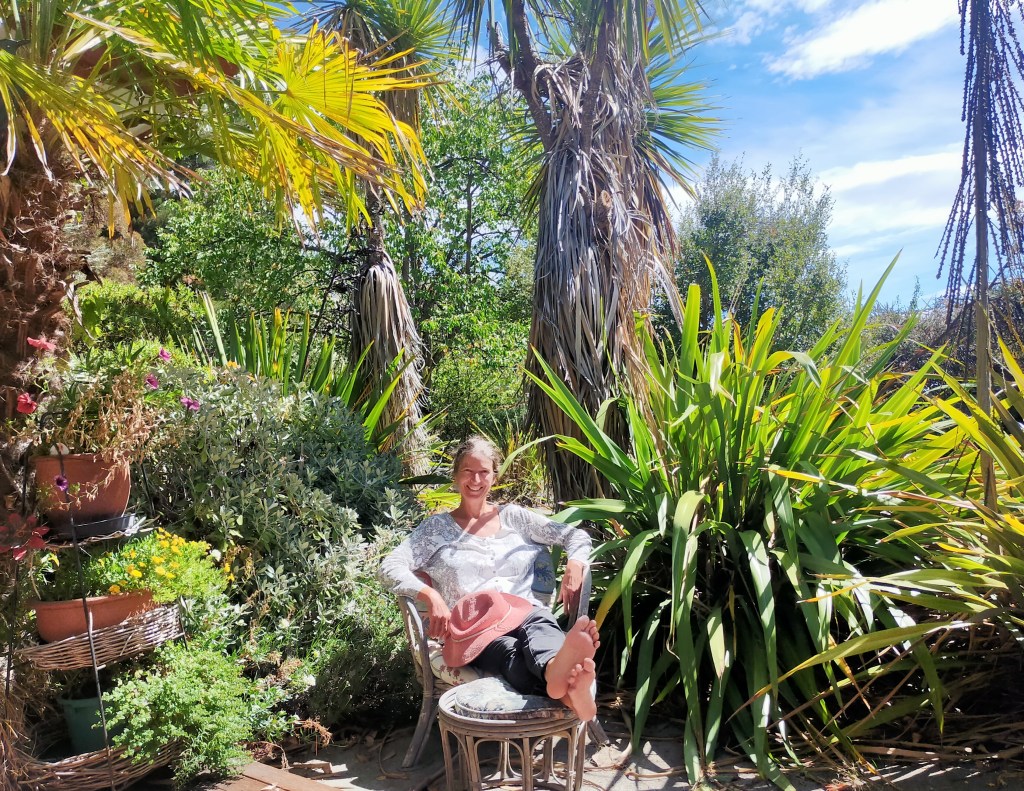
When I am not emailing and submitting locally and nationally to represent nature, trees and future generations, I am usually in the garden, hands in the earth or communing with nature.