From iconic Wastebusters shaping Wanaka and New Zealand zerowaste future to Te Kakano reforesting our area with thousands of volunteers for 15 years, to WAO inspiring and empowering the community in yearly Festivals, many ecofriendly businesses, the Regenerative Wanaka Facebook page and the QLDC Climate and diversity action, our active community is loving and caring for the place, often choosing a lifestyle in harmony with nature.
View our Here – Us – Now List here send us a note if you believe your business or organization should be included.
WAO Summit
Coming up in October, WAO Summit is a great inspiring and galvanising festival in Wānaka.
I will talk about: 1- low-carbon, resilient, biodiversity-enhancing lifestyle at household level 2- beyond individual action, how to foster regeneration at district level.
Exciting!
Beautiful Gardens of Wanaka
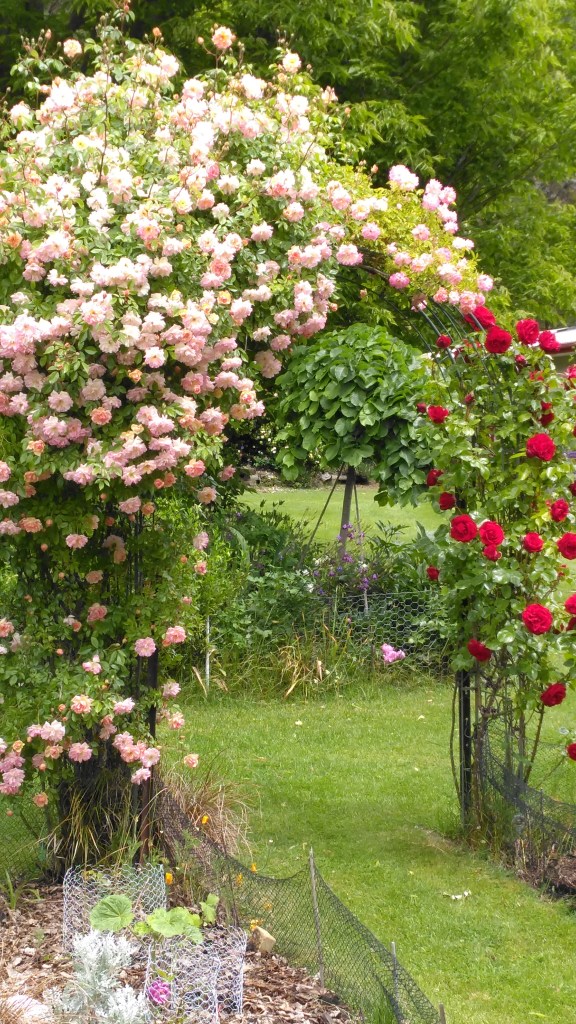
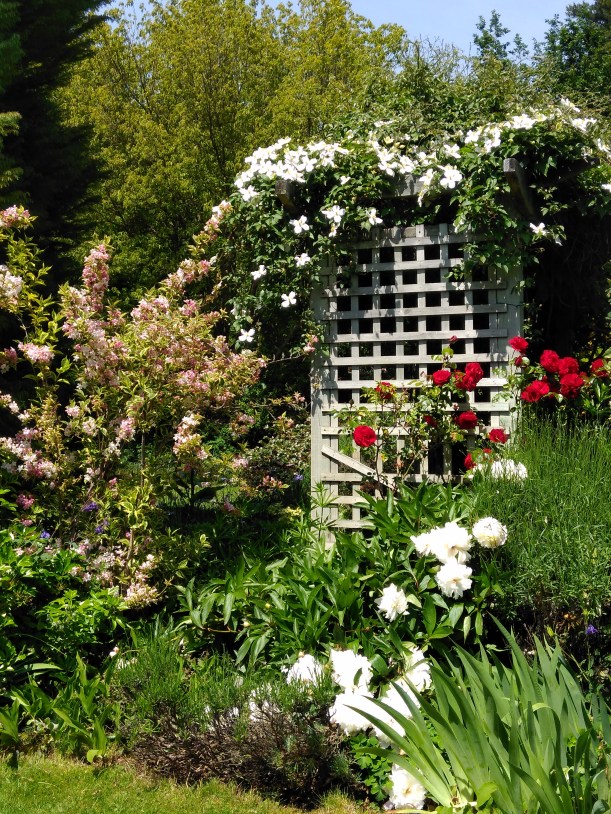
Our guided garden tours are a great complement to this thriving sustainability culture, showcasing outstanding private gardens, a unique way to share garden beauty and connection with the place and people. Great activity for manuhiri/visitors, our tours also benefit locals presenting local gardeners’ best practices for Central Otago special conditions (frost, heat, draught, rabbits…)
New this season is our educational tour featuring biodiversity attributes and practices to adapt to our current climate crisis era, demonstrating how to regenerate land and gardens in harmony with nature. The property showcased on this tour is an inspiring example of sustainable living with forest and regeneration, food growing, beautiful flowers fostering biodiversity, entirely run without fossil fuels… Come and learn how it’s done.
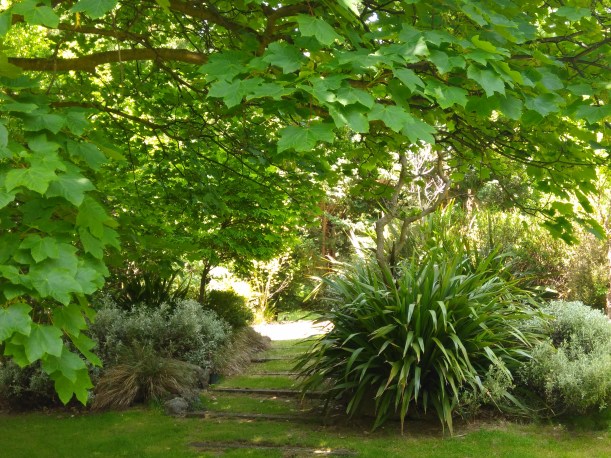
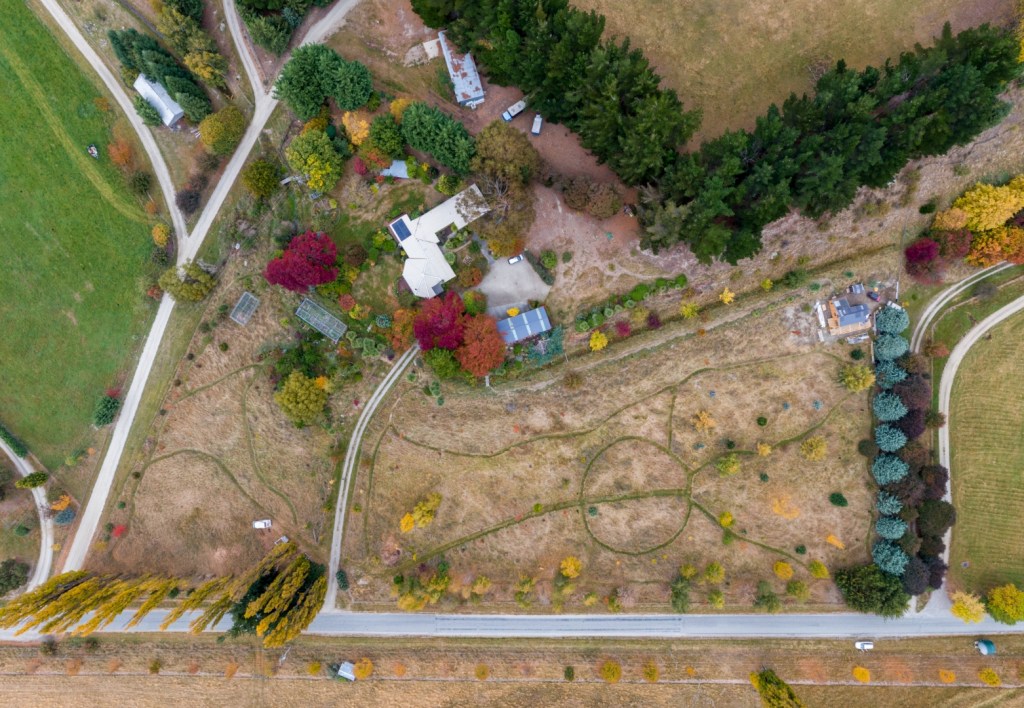
Namaste Park and Gardens is a 2.2 hectares lifestyle property on Studholme Road, Wanaka; currently on the urban boundary of Wanaka. In the upper part of Namaste Gardens around the dwelling, the property hosts a dozen mature trees of significant height and hundreds of shrubs, trees and more formal gardens – home to abundant bird life. The lower eastern side of the property hosts two small ponds, flower gardens, fruit and young nut trees and enclosed vegetable and berry patches.
Namaste Park
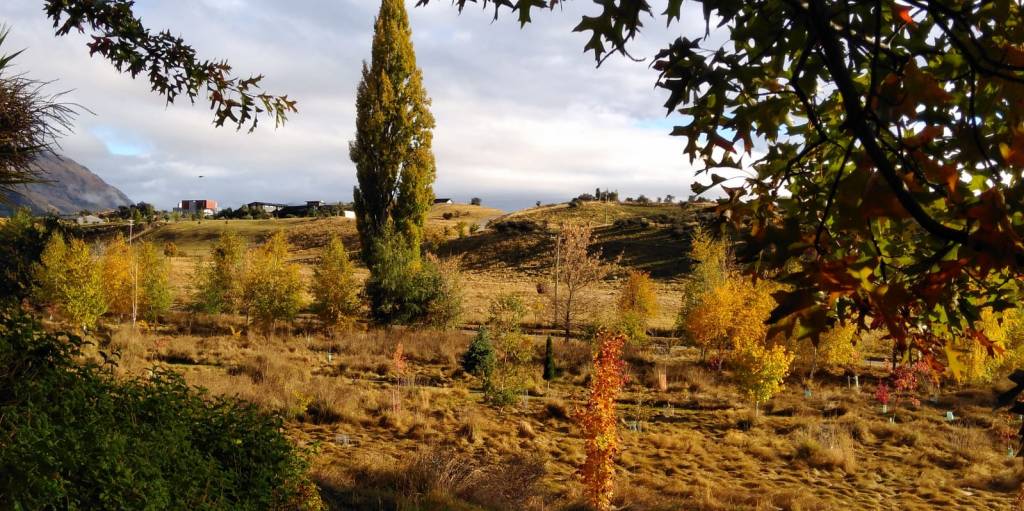
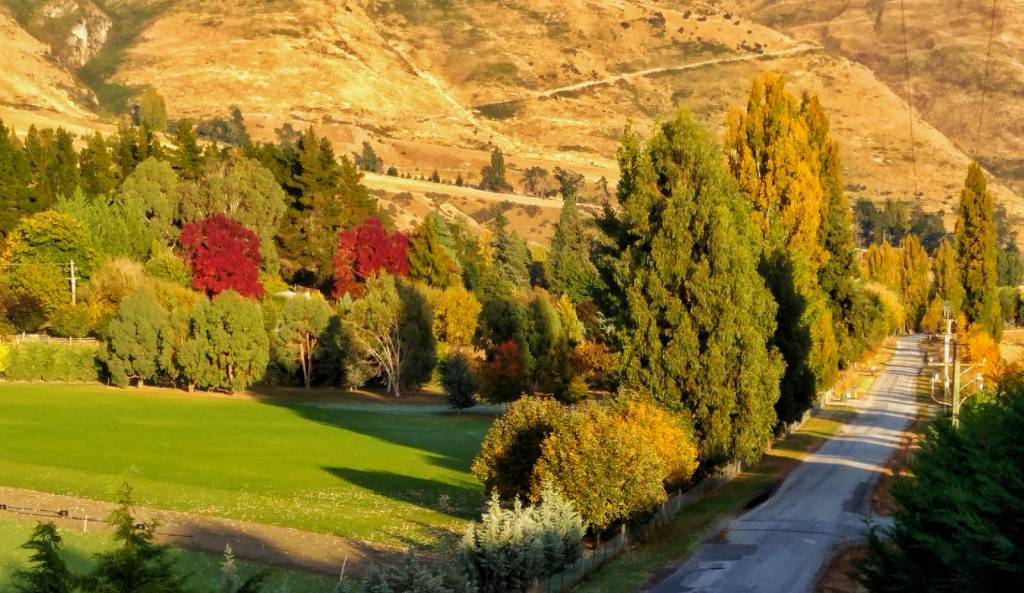
The lower part is a one-hectare arboretum planted by the current owner over the last 16 years. Once a bare pasture, the area has been planted with more than 500 trees, mostly all different, with a forest of silver birches on the road side, a grove of dogwoods, an area with crabapples, lots of maples, and many more different trees from all over the world that survive our Wanaka climate. Established boundary trees of Cypress Glabra align the western boundary and a collection of Conifers are well underway over a fifth of the arboretum. Many of the chosen trees are rare and unusual creating a significant collection of interest. In the heart of the park is a small native area.
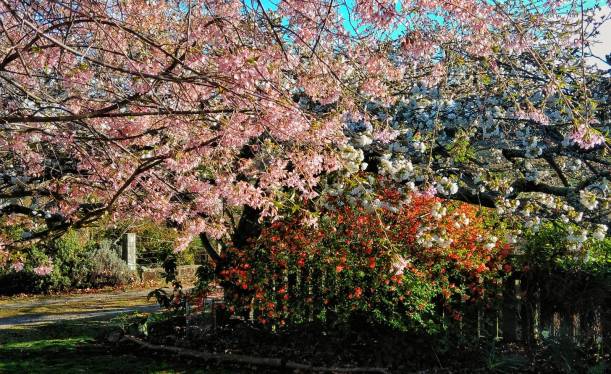
The park is a beautiful and lush open landscape, designed to show amazing blossom shows in spring and splendid foliage colours in autumn, along with benches and curved footpaths. Although the emphasis is not on natives, we believe the sheer variety of trees planted offer a unique and valuable open space for people and biodiversity.
Dogwood and maple “avenue”
Sustainability and Regeneration
As Studholme Road is a small valley floor it offers a unique corridor of biodiversity, attracting birdlife which would be lost if the number of established trees were to be removed. Birds include Fantails, Silvereyes, Bellbirds, German Owls, Ruru, Hawks, Oystercatchers, Quails and Tuis along with a number of more common bird species.
With the lawns being cut only on footpaths, the surrounding grass is regenerating the land and is now home to insects, birds and skinks. No biodiversity inventory has been done yet.
The property doesn’t have any town water source and is serviced by a deep bore, which makes the regeneration of the land all the more important. The deep soil now retains enough moisture to keep green in summers with minimal drip irrigation watering.
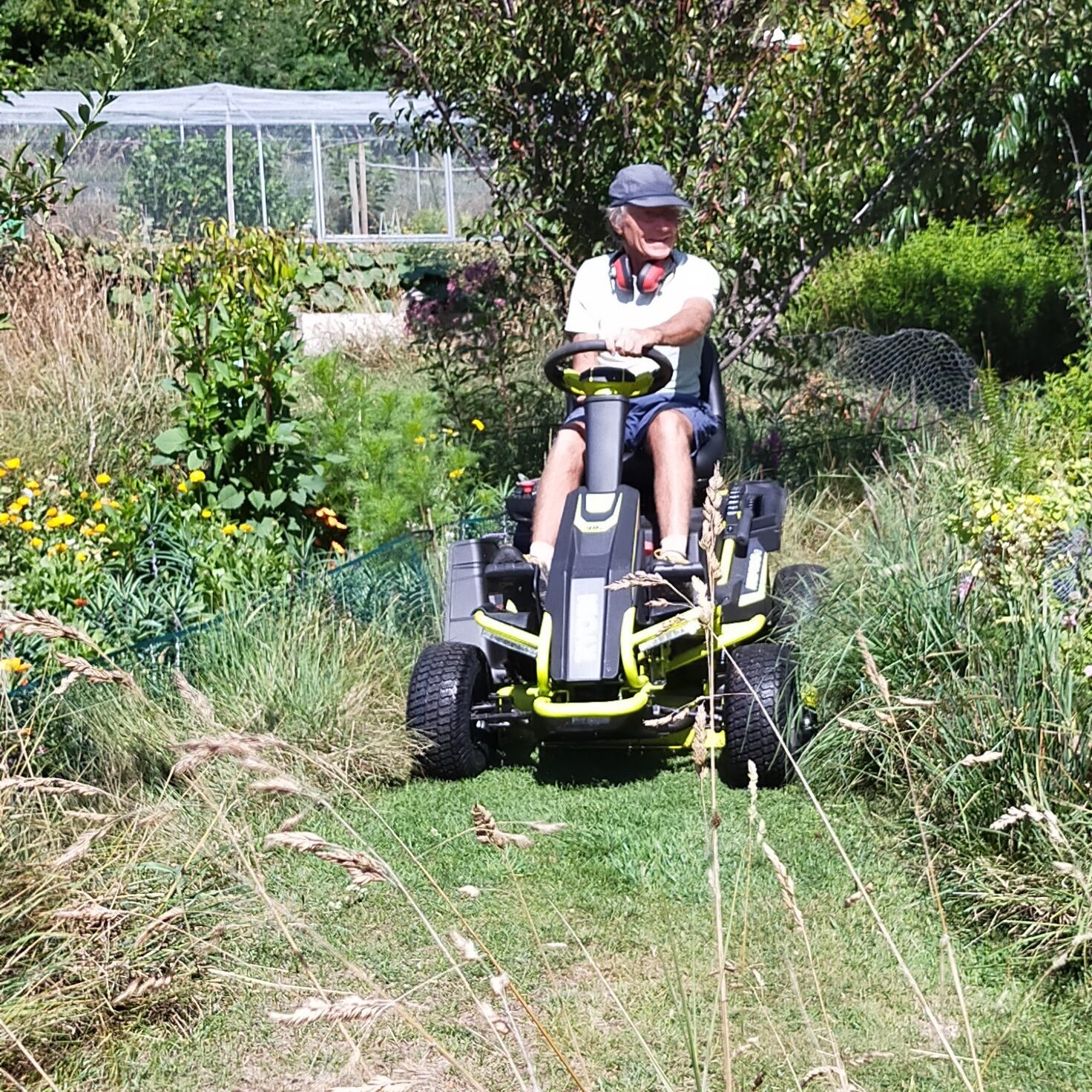
The whole property is cared for without chemicals and without fossil fuels (electric tools charged with solar panels). It is a fantastic example of how one person can regenerate bare grazed land in just 18 years, bringing the dawn chorus back (all day chorus actually). The landowners intention is to keep the land as a whole, for perpetuity, with owners continuing guardianship and fostering nature life.
Electric ride-on lawnmower
Peri-urban context
The property is sitting in a zone planned to become urban within the next 28 years, which means the sections and trees in this zone will overtime be chopped up, leaving no nature in the area. Already both ends of Studholme road have been subdivided, at the upper end down to 400sq.m. If we look further on the town boundary along Orchard Rd there are currently intensive subdivisions taking place with the usual removal of all existing fauna, flora, top soil and land form. Our park trees start to have enough growth and visibility to be admired by walkers from the road as well as visitors on guided garden tours. It is our intention to open the arboretum to the public once more mature, thereby creating a valuable green space for locals and visitors. When the whole area around becomes dense housing, the Park will be a treasured haven for the community benefit and refuge for wildlife.
We are advocating the Council to create a regenerative land zoning or whichever way to enable people like us with properties planted with mature trees to be possibly preserved, but at this stage, council staff and councilors turn a blind eye.
There are other established zones of vegetation around Studholme Road so we have submitted for its inclusion in the Mount Alpha Outstanding Landscape zone.
The Wanaka Community Board have been consulted as well and have encouraged that this preservation be discussed with QLDC…
We have started a Biodiversity group on Studholme Road, facilitated by WAI, to encourage a more collective approach to ensuring open green spaces can be included in future Council rezoning. We also have excellent support from Lake Wanaka Tourism who are keen to see more examples as outlined above.
We are working with QEII Trust to support us to enable long term protection of our property for the benefit of the “greater good”.
It’s our beloved home, we enjoy enhancing the gardens, soil, wildlife. We love planting and nurturing the trees, watching them grow. We are privileged to be caring for this land in harmony with nature, guardianship, kaitiaki, gratitude 🙏🏵️
We are proposing a new Regenerative Land Zoning that encourages landowners to protect, regenerate and possibly share the land they are guardians of.
Context: the situation in Wānaka
In our district, urban growth is transforming the small town we love and pushing nature further and further away, decreasing inhabitants wellbeing and tourism appeal.
The urban area already stretches 10km from Bills Way to Albert Town bridge, which requires everyone to hop in a car to go anywhere, work, shopping, hobbies…
As developments start by removing all trees (incl. natives), massive earth moving and soil compacting, life, trees and soil present in the previously rural landscape are destroyed. It doesn’t have to be that way.
We now have kilometers of suburbia with houses four meters away from each other, where people can’t grow food let alone trees.
In 2023, we have to consider the climate, biodiversity and cost of living crises. To adapt, we need:
Connected pathways for commuting and recreation biking and walking
Plenty of trees and nature, 30% of land and water left to nature by 2030
Local food production
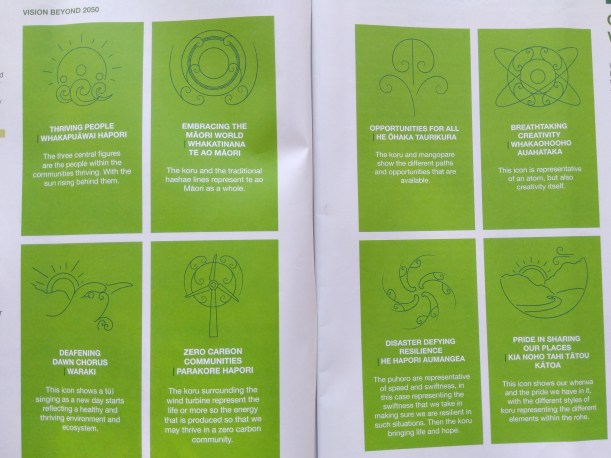
These 3 simple points enable low carbon living, good for nature and wellbeing, good for resilience and affordability. And it’s aligned to the QLDC Vision beyond 2050 principles:
Green belts exist on private land
The new subdivisions are now well beyond initially planned green belts and reserves.
Nature is pushed further and further away from the people. But in a sustainable resilient low carbon society, we do need nature and space for food production on our doorstep, not half an hour drive away.
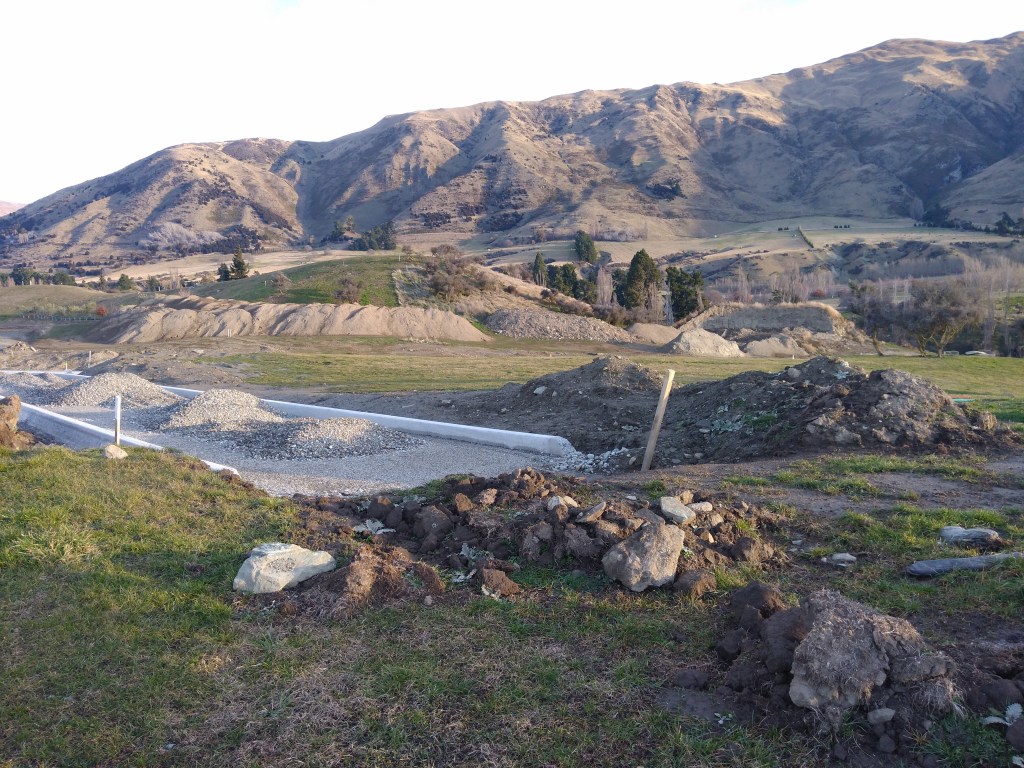
Urban development is creeping on rural lifestyle areas, bulldozing them. Have a look at Orchard Road. It doesn’t have to be that way.
On many lifestyle properties in town and adjacent to town, landowners have planted trees and enhanced biodiversity on the land they are owners and guardians of. They are givers not takers. Kaitiakitanga. Thank you for having planted trees, established trees are treasures🙏 Taonga.
The current rules and price of land mean that when these creators sell, the land is chopped off with all the life on it. A simple optional new land zoning could prevent that.
Innovative Regenerative Land Zoning
We are proposing a regenerative land zoning, allowing landowners to voluntarily secure their land for perpetuity, providing they enhance biodiversity and/or the community.
The land can be sold with the same conditions.
The owners can choose how they want to regenerate: planting trees, native or not, restoring or creating wetlands, planting orchards for local food, planting fast growing well managed forests for local timber and firewood…
And the owners can choose whether they share it with the public or not, or which part of it. For example a strip along the road can be made into a bike lane; a grove of trees can be open as a park for the public; an orchard can be open for a time for locals to harvest; a land can be gardened by community groups or as plots…
It already happens. A few enlightened and generous landowners are already offering their land for the greater good.
A regenerative land zoning would foster green belts connections. It would create a network of biodiversity and community enhancing parks and corridors. Tracks through these corridors would enable low carbon transport. Food would be produced locally for resilience and affordability, and nature would be accessible for everyone with all its biodiversity and wellbeing benefits. Win-win-win.
Steps
I have shared the idea for two years, in emails to local influencers, including all the Councilors, several times. I have talked with many Council staff, I have presented it to several community groups and in the tourism sector, even prompting a standing ovation (at the WAO Regenerative Tourism hui October 2022). It IS a great idea with huge desirable benefits for all, thriving nature, resilient community and cheap for the Council.
Now is the time to sit around a table and make it happen.
Let’s start with the pioneers who have already created something beautiful which is at stake of being destroyed by growth. Let’s start with the landowners who already regenerate and share (or wish to).
What would encourage landowners to participate is yet to be discussed and finetuned, from rebate to maintenance or simply protection.
The Council is the entity capable of creating a land zoning and I am talking at a Council meeting on the 10th August to invite them to start the process. LWT, WAO, WAI, UCTT, Te Kakano, are invited in the discussion and action.
The innovative land zoning protects what we already have and deploys it to an exciting collective creation that, we all agree, would be great.
From landtaker to landmaker; From land management to guardianship; From $growth$ first to Nature first: a mindshift is happening.
One example of outstanding landscape, nature and biodiversity right on the urban boundary. Are we going to Love it? Or to bulldoze it?
To go deeper… here are 4 documents with more details.
Please contact us for any further information, if you are interested in participating, contributing, or if you know of similar public/private regenerative schemes in New Zealand and the world.






 Regenerative Livestyle Blog