Regenerative Livestyle Blog


1 Comment

Climate Action

What do we want?
CLIMATE ACTION!
When do we want it?
NOW!

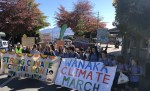
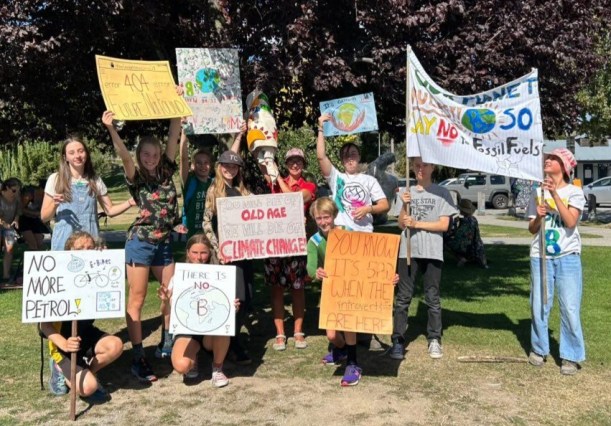
Following and chanting in the Wanaka Climate March on Friday 5 April behind my ex-students (feeling very proud of them!), I reflected on MY climate actions. Here they are, small steps in all aspects of life…

These are actions one person can do at home in their lives. I share these ideas to inspire. I would love to know what you already do to mitigate climate change and enhance biodiversity. Let’s save the planet together, because “We have to“, says Janet Goodall in her Book of Hope.

“Halve our emissions by 2030…”

“…And halve that again by 2040“, says local climate scientist Carly Green. For a long time, I have been looking at my emissions and phasing out fossil fuels and embedded carbon, in plastics, transport, chemicals, consumption, energy, land management, food…
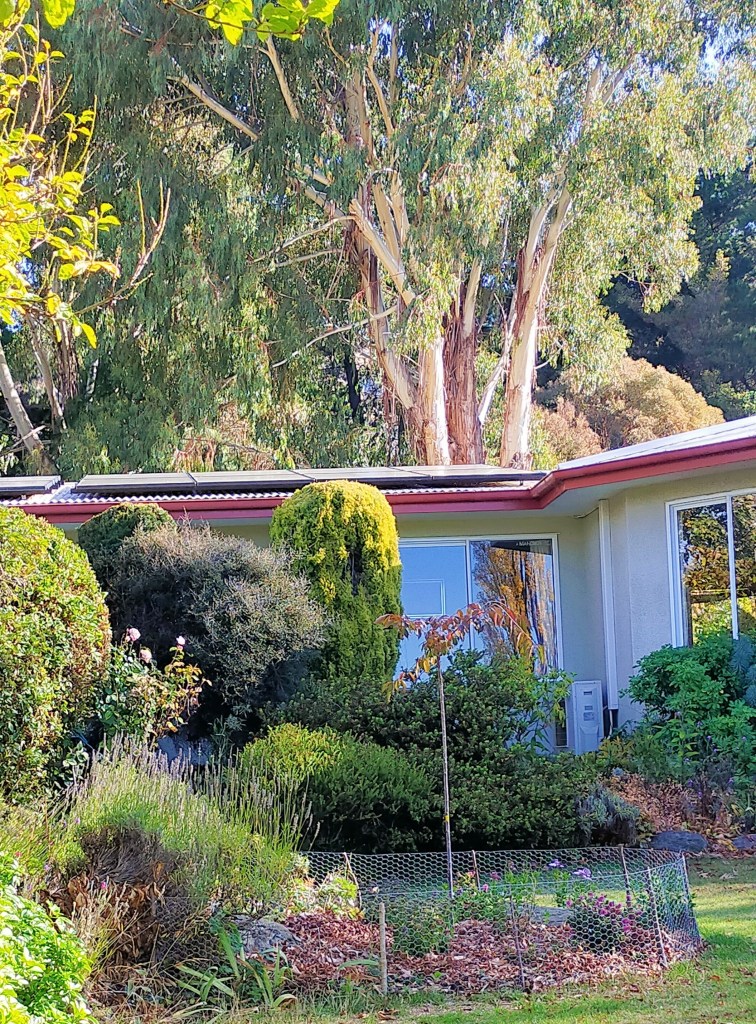
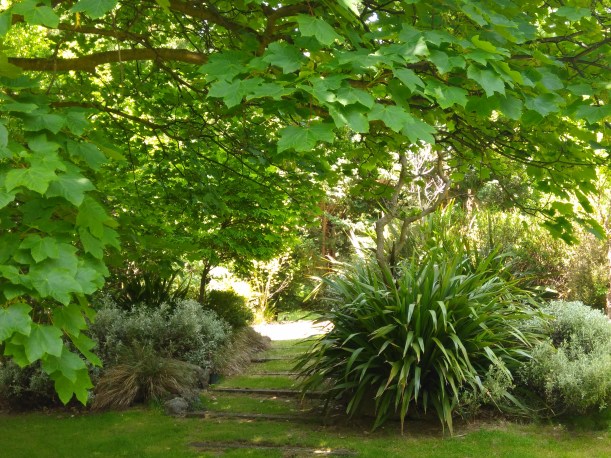
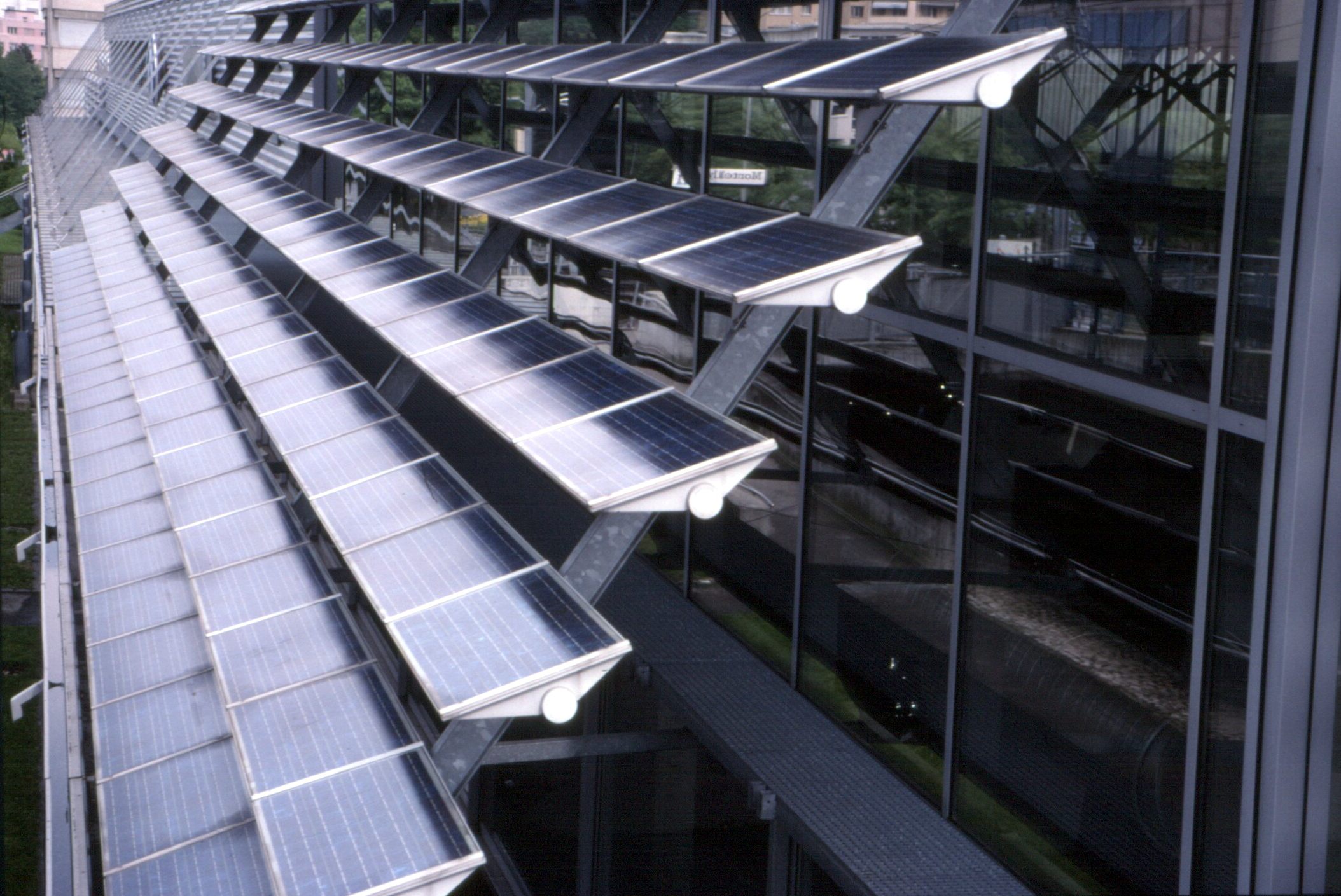
Solar panels, gardens, lots of trees, beautiful and relaxing

So here is a list of changes I and we have done over time, in no particular order.

Plastic and waste

For years, I stopped single use plastic, always carrying bags and cups. If I forget my cup, I don’t get a single use cup: I either sit and have my drink there, or I don’t have any. Then I don’t forget anymore. When shopping, we are phasing out plastic items, always choosing the non-packaged, wood, bamboo, hemp or cardboard option and this is still ongoing.
We refill the same plastic pockets for bulk nuts, lentils, etc. No gladwrap here! Instead we have a bunch of beeswax food wraps, reused and reused.
We are not zero waste, yet: Our rubbish bin goes out every two months, our recycling once a month approximately.
I make our crackers, bread, etc, to avoid plastic but we still have plant milk cartons.
I separate and recycle soft plastics and tetra packs.

I have campaigned the Council for years so they use a chip in the wheelie bins to count people’s waste and practice the Polluter Pays Principle rather than a blanket rate for waste that enables, therefore encourages people to fill a whole wheelie bin of rubbish every week.

I have lived in Wanaka for 20 years, raising my family.
I have been involved in several local community groups and initiatives. Green drinks, Transition Towns, Kapa Haka, Mac Team Green, 2015 Climate March, Local Food Wanaka, Plastic Free Wanaka, Friends of Wanaka Wastebusters, Te Kakano, a lot of fun really.
I have now retired from all these community involvements but I continue nature advocacy at the local Council level and
wholeheartedly admire WAO, WAI and Grow Wanaka work for nature and community education.

Transport

In 2015, I swapped my car to a Prius and had hybrid vehicles since. It means, I have halved my fuel consumption all this time and I halved my fuel bills too.
Now with an ebike, all local trips are solar and muscle powered. And I love it, smiling away like a teenager on their moped, just silent and more careful!
We make sure our activities and hobbies are not carbon intensive.
We have decided to halved our travels, nationally and overseas. This hurts a bit but ethically, I had to! Now, we plan ahead and will stay “there” a bit longer. Many people tell us the planes fly anyway. Of course, until many people also halve their travels and there will be twice less planes. Electric planes are coming up so that will ease emissions of national transports.
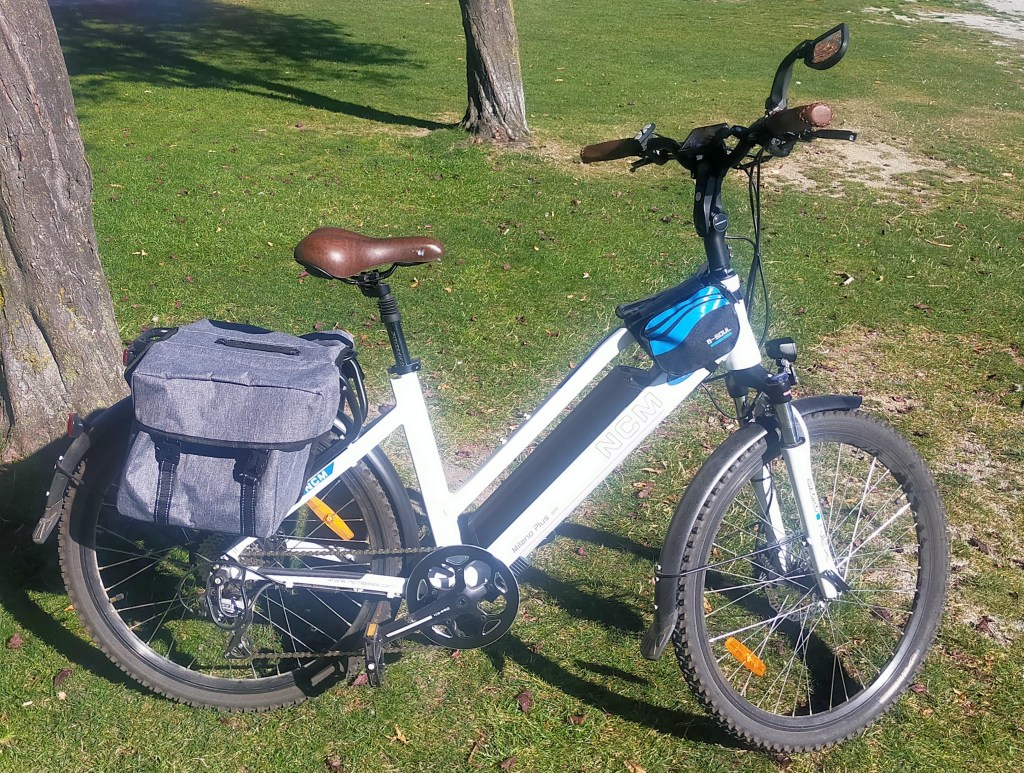
With panniers for shopping and mirror for safety
Chemical free

Chemicals are made from fossil fuels, they are polluting and bad for health.
So I have always chosen chemical free soaps, creams, cleaning products… Skin Deep database has been helpful to identify the risks of cosmetics. Reading the labels and googling it is helpful too. Making my own oils and cleaning products (easy) is even better.
Likewise, we don’t use synthetic chemicals in the garden, fertilisers nor pest/weed sprays, instead we use natural soil enhancers, a lot generated on the land, compost, comfrey tea, etc.
To support agriculture without chemicals, I am buying organic as often as possible.

Energy

We are nearly off the grid. This is important because 20% of NZ electricity still comes from fossil fuels. We initially installed 10 solar panels, then a few years later, another 10 panels and a year later, a battery. Over the years, we have swapped all our tools to electric versions. As powerful, lighter, not smelly, not noisy. Our latest car drives 55km on a charge, which is sufficient for most of our trips. It feels good to be powered by the sun and our electricity company owes us money!
We have also reduced our own energy use. There are lots of ways to do that: short showers, lights and standby off, replacing bulbs with led, heating the oven for all the baking at once, putting on a jumper instead of a heater, just being mindful of energy, we are energy too, we can tune in…

The solar panels return on investment is immediate!
If you have $10K in the bank and put them on the roof, the next bill is $100 cheaper, that’s equivalent of a 12% interest rate!
Oh! and it’s so easy to install with local solar pioneer Wanaka Solar and it feels so good to cook, shower, travel, work with the sun!

Several NZ banks now offer a zero% interest loan on solar panels so you can reimburse with the gains.

Rewiring NZ reports that households can save money and also significantly reduce their emissions by electrifying their appliances and vehicles. Let’s ride the ‘electrification tipping point’ together!

In gratitude and awe with the Sun and nature, thank you.
Consume less

For years, I have reduced my consumption, asking myself if I really need it before I buy it, always looking at Wastebusters first and we repair stuff. It’s fun and also cheaper! I am content with what I have, I don’t want more, I prefer simplicity. Granted it doesn’t contribute to the “economy”, it is about degrowth, but degrow we must to come back within the Planetary Boundaries.

A simple way to stop contributing to climate change is to divest my own money from being invested in the fossil fuel industries. I checked the MindFul Money comparison tool and made sure my money is in a bank 100% not invested in fossil fuel, and divested my kiwisaver too.
The returns are excellent and it feels good.

Clearly GDP is not a good indicator of progress: disasters creates reconstruction jobs, sickness creates a medical industry, crime creates lots of security devices, war is fostering weapon industry, all tallying up in the GDP. When the economy contracts (0.3% in the last month in NZ), economists, businesses and people freak out, they fear of lacking so they accumulate as much as they can, in case of a rainy day. Thereby creating a rainy day! In fact, it is best for the climate and the planet if we are buying less stuff, making less stuff, working less, needing less. The best policy the government could do is to accompany recession to soften the impacts. A universal salary is a good start, then people would no longer fear lacking. I personally feel I have enough and it is not luck, it is a conscious choice. To me, having “enough” is better than wanting “more”.
Another way to look at economics is the Doughnut concept (really good presentation of the Doughnut in NZ here): putting people and the planet first, decoupling economic growth from carbon use, investing in clean technologies, putting the economy back in its role as a tool not an end. Dunedin Council started in 2020 and is going for it (see ODT article here).
The Happiness Index seems more holistic, fair, relevant and climate-friendly too.
Maybe Confucius said: “Live simply and happy“. No he didn’t! But it is true.

Land management

Here is how we manage our land in harmony with nature to enhance biodiversity, on our 2.5 hectares just on the outskirts of a growing town: 

  • planting hundreds of different trees, creating an arboretum. No monoculture here!
  • the park is not mowed, lawns are only cut around the house and on footpaths. The uncut uneaten grass grows and dies back every year, absorbing carbon, becoming a sponge, regenerating the land and now a home to insects, birds and skinks.
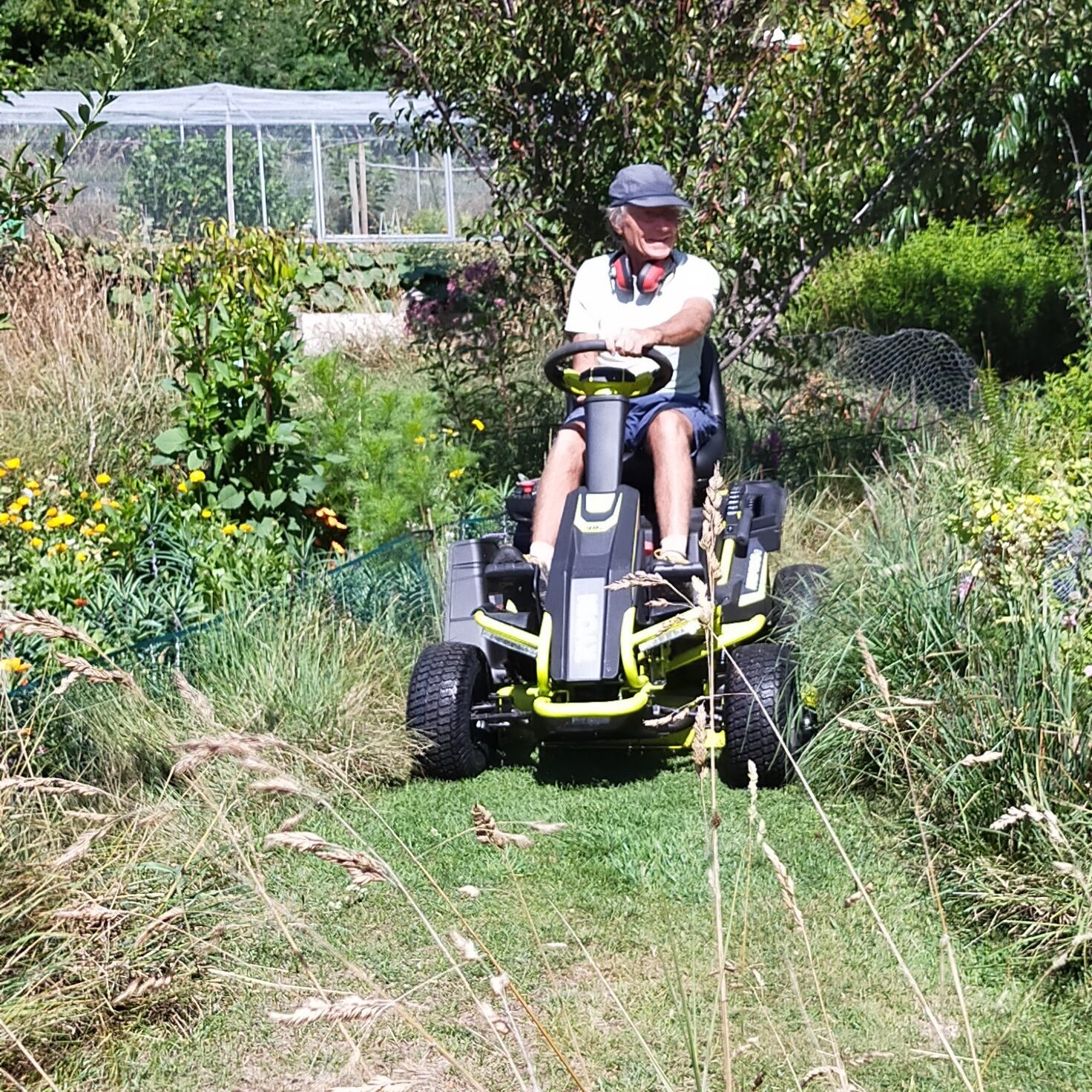
  • the whole property is cared for without chemicals and without fossil fuels (electric tools, incl. the lawn mower are charged with solar panels)
  • we share the land: the park is open to the public as part of guided garden tours and the land is shared with another household in a tiny house. And we share the story and how-to as part of the garden tours and Regenerative Lifestyle classes. 
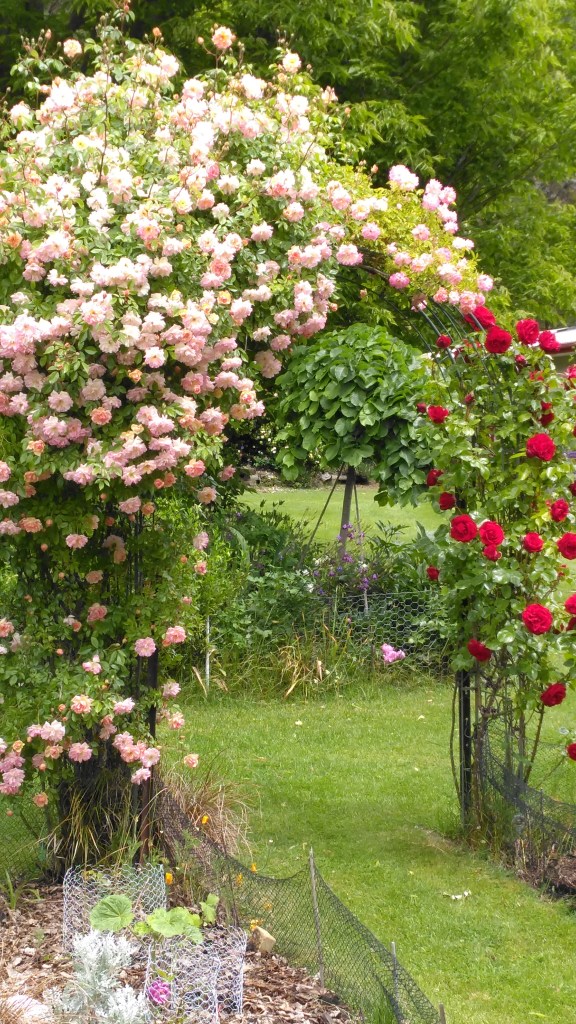
Good for the bees, and beautiful too
Food

Food has one of the biggest impact on the climate. In the Drawdown, Solution 3 is “reduced food waste”, solution 4 is “plant based diet”, silvopasture and regenerative agriculture are close behind.
Reducing consumption of meat, milk, cheese, and butter are a critical way to reduce our carbon footprint.

I have never been a big meat eater and became vegetarian since my pledge at the first Wanaka school strike for climate March in 2019. And I love it, I feel more healthy. Now, meat production looks unnatural and unethical to me. Fish? Oceans are in crisis so I let the fish replenish. No loss there.

Climate friendly food is a variety of cereal, with lots of vegetables and fruit everyday, a dose of beans or other protein, with a dollop of seeds, a handful of nuts. Simple, healthy, delicious, affordable and allegedly better for the planet too. Planet friendly food is also:

  • seasonal (cheaper too), 
  • as local and organic as possible (less transport km, no chemicals which embed a lot of carbon and pollute),
  • not processed, as most processes require energy, degrades the food wholesomeness and comes with packaging. So I make our bread, muffins, juices, etc.
  • not peeled for all the goodness and fiber (only if organic), 
  • not cooked long (also saves energy), 
  • without fat (easier to wash the dishes, using less water and hardly no dishwashing liquid),
  • hardly any salt nor sugar (better for health too)
  • leftovers are reused or frozen.
  • all the peelings goes to bokashi or compost, without the fruit sticker!

It is important to read the ingredients to avoid chemicals and ban palm oil.

Lots of vegetables, many from the garden

A report published in 2010 by Ella Lawton and R. Vale concluded that in remote areas like Wanaka, the biggest difference we can make is to grow our own food. So we do. Not all of it, but more and more and it is fun. Grow Wanaka Community gardens is a great place to start and learn, as well as the Wanaka Vegetable Growers club.

Action to hope

Do these little things make a difference? Yes they do! All the plastic I haven’t bought and discarded, all the petrol I haven’t consumed, for years… I adds up.
I have calculated our household carbon footprint with this tool https://www.futurefit.nz/ and it turns out, we are emitting less than the “target”!

We are nonetheless continuing to reduce our waste, energy, consumption, travel and planting more trees, because we love it.
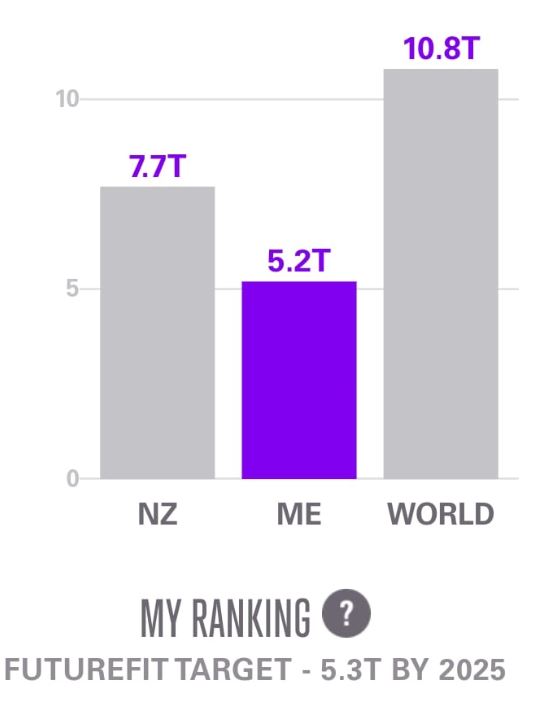
My personal carbon footprint is below the 2025 Future Fit GHGe target

I act to keep hope, I feel the need to share my vision of the world and climate friendly practices. So I am advocating online (Twitter, Regenerative Wanaka and in this blog), in submissions, in climate marches, in community speeches… I love to share solutions, positive actions, no grumble, no judgement, we are together in these crises on one planet. It’s my hobby! I continuously learn more about nature (trees are incredible!!)

Most importantly, we spend a lot of time in the garden, not only to grow our own food, plant a lot of trees and plants adding diversity and beauty, but also to enjoy nature. Connecting with nature, trees, peace, calm, simplicity, I think this is the key, nature changes us. 

Relax, do and eat less, be and love more.

Many things that many people can do, if they choose to. It’s no hardship, it’s caring, it’s loving. Because I love nature, because I love children. It is a little effort, a focus, like we attend to our children. I hope I gave you some ideas and inspiration. I believe all these little actions make a difference for the climate and the planet, therefore young people and future generations.
What do you think?
What are your climate actions?
What are you ready to change ?
3 Comments

Namaste Park and Gardens

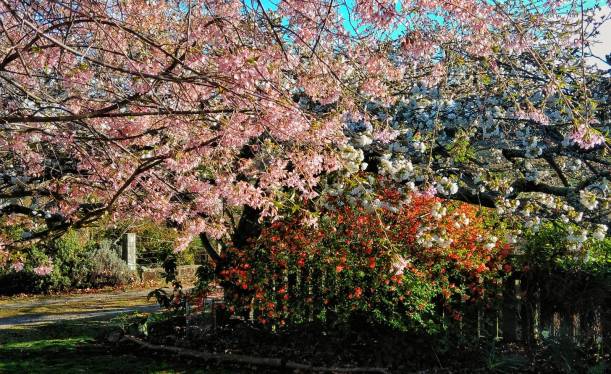
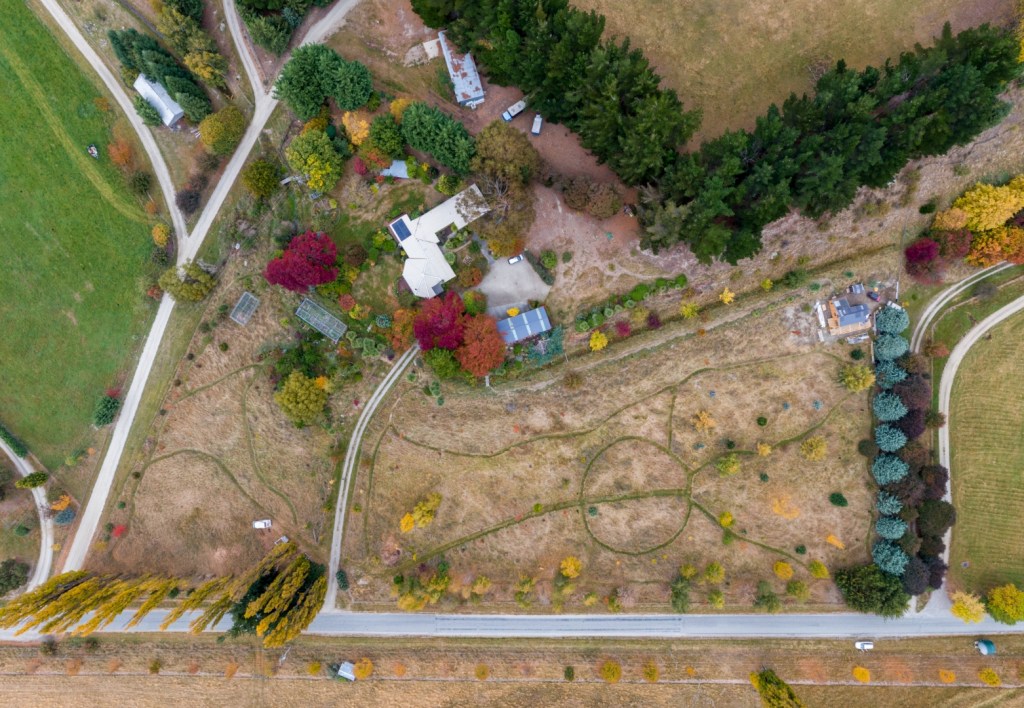
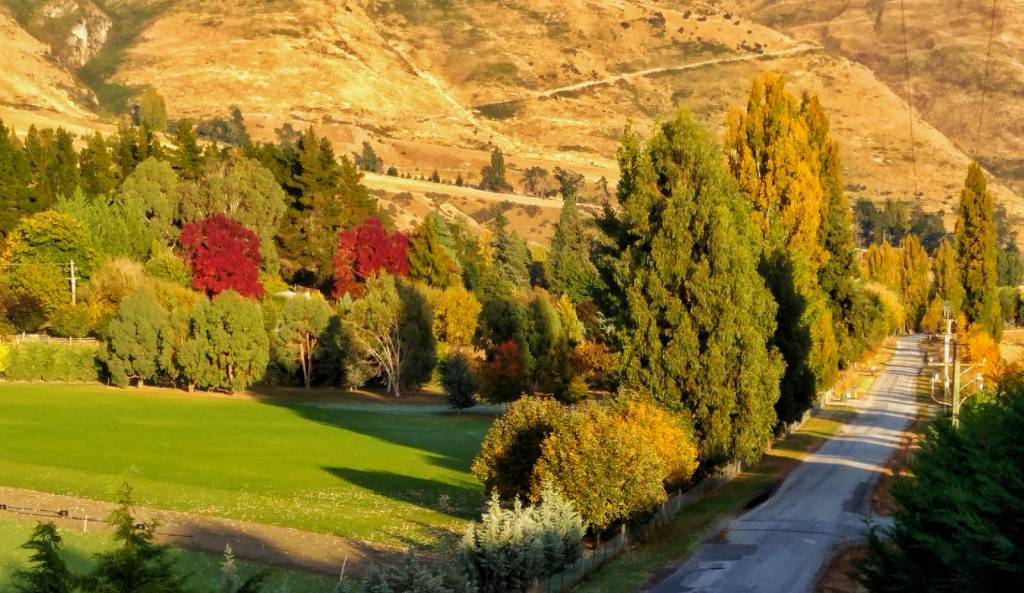
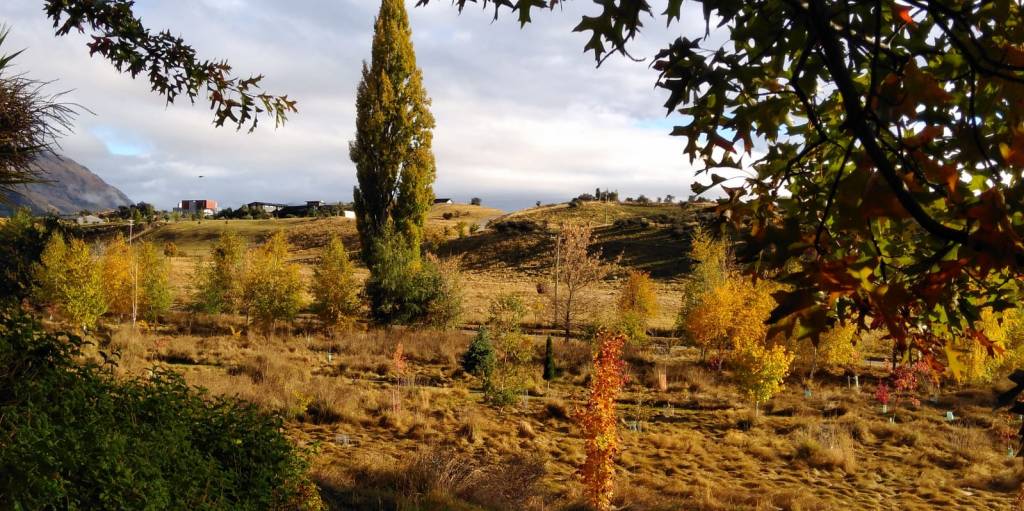
Namaste Park in autumn

Namaste Park and Gardens is a 2.2 hectares lifestyle property on Studholme Road, Wanaka; currently on the urban boundary of Wanaka.
In the upper part of Namaste Gardens around the dwelling, the property hosts a dozen mature trees of significant height and hundreds of shrubs, trees and more formal gardens – home to abundant bird life.
The lower eastern side of the property hosts two small ponds, flower gardens, fruit and young nut trees and enclosed vegetable and berry patches.

Namaste Park

The lower part is a one-hectare arboretum planted by the current owner over the last 16 years. Once a bare pasture, the area has been planted with more than 500 trees, mostly all different, with a forest of silver birches on the road side, a grove of dogwoods, an area with crabapples, lots of maples, and many more different trees from all over the world that survive our Wanaka climate.
Established boundary trees of Cypress Glabra align the western boundary and a collection of Conifers are well underway over a fifth of the arboretum.
Many of the chosen trees are rare and unusual creating a significant collection of interest. In the heart of the park is a small native area.

The park is a beautiful and lush open landscape, designed to show amazing blossom shows in spring and splendid foliage colours in autumn, along with benches and curved footpaths. Although the emphasis is not on natives, we believe the sheer variety of trees planted offer a unique and valuable open space for people and biodiversity.

Dogwood and maple “avenue”

Sustainability and Regeneration

As Studholme Road is a small valley floor it offers a unique corridor of biodiversity, attracting birdlife which would be lost if the number of established trees were to be removed. Birds include Fantails, Silvereyes, Bellbirds, German Owls, Ruru, Hawks, Oystercatchers, Quails and Tuis along with a number of more common bird species.

With the lawns being cut only on footpaths, the surrounding
grass is regenerating the land and is now home to insects,
birds and skinks.
No biodiversity inventory has been done yet.

The property doesn’t have any town water source and is serviced by a deep bore, which makes the regeneration of the land all the more important. The deep soil now retains enough moisture to keep green in summers with minimal drip irrigation watering.

The whole property is cared for without chemicals and without fossil fuels (electric tools charged with solar panels). It is a fantastic example of how one person can regenerate bare grazed land in just 18 years, bringing the dawn chorus back (all day chorus actually).
The landowners intention is to keep the land as a whole, for perpetuity, with owners continuing guardianship and fostering nature life.

Electric ride-on lawnmower

Peri-urban context

The property is sitting in a zone planned to become urban within the next 28 years, which means the sections and trees in this zone will overtime be chopped up, leaving no nature in the area. Already both ends of Studholme road have been subdivided, at the upper end down to 400sq.m. If we look further on the town boundary along Orchard Rd there are currently intensive subdivisions taking place with the usual removal of all existing fauna, flora, top soil and land form.
Our park trees start to have enough growth and visibility to be admired by walkers from the road as well as visitors on guided garden tours.
It is our intention to open the arboretum to the public once more mature, thereby creating a valuable green space for locals and visitors. When the whole area around becomes dense housing, the Park will be a treasured haven for the community benefit and refuge for wildlife.

We are advocating the Council to create a regenerative land zoning or whichever way to enable people like us with properties planted with mature trees to be possibly preserved, but at this stage, council staff and councilors turn a blind eye.

There are other established zones of vegetation around Studholme Road so we have submitted for its inclusion in the Mount Alpha Outstanding Landscape zone.

The Wanaka Community Board have been consulted as well and have encouraged that this preservation be discussed with QLDC…

We have started a Biodiversity group on Studholme Road, facilitated by WAI, to encourage a more collective approach to ensuring open green spaces can be included in future Council rezoning.
We also have excellent support from Lake Wanaka Tourism who are keen to see more examples as outlined above.

We are working with QEII Trust to support us to enable long term protection of our property for the benefit of the “greater good”.

This beautiful place is visited as part of Beautiful Gardens of Wanaka guided garden tours and the place of Gardening in Harmony with Nature workshops.

It’s our beloved home, we enjoy enhancing the gardens, soil, wildlife. We love planting and nurturing the trees, watching them grow. We are privileged to be caring for this land in harmony with nature, guardianship, kaitiaki, gratitude 🙏🏵️


3 Comments

Regenerative Land Zoning

We are proposing a new Regenerative Land Zoning that encourages landowners to protect, regenerate and possibly share the land they are guardians of.

Context: the situation in Wānaka

In our district, urban growth is transforming the small town we love and pushing nature further and further away, decreasing inhabitants wellbeing and tourism appeal.

The urban area already stretches 10km from Bills Way to Albert Town bridge, which requires everyone to hop in a car to go anywhere, work, shopping, hobbies…

As developments start by removing all trees (incl. natives), massive earth moving and soil compacting, life, trees and soil present in the previously rural landscape are destroyed. It doesn’t have to be that way.

We now have kilometers of suburbia with houses four meters away from each other, where people can’t grow food let alone trees.

In 2023, we have to consider the climate, biodiversity and cost of living crises. To adapt, we need:

  • Connected pathways for commuting and recreation biking and walking
  • Plenty of trees and nature, 30% of land and water left to nature by 2030
  • Local food production

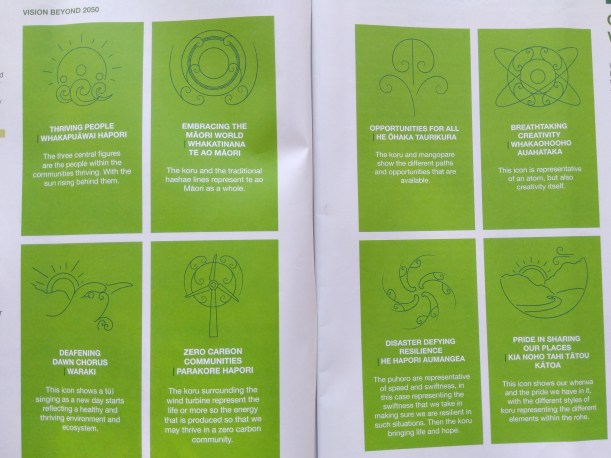
These 3 simple points enable low carbon living, good for nature and wellbeing, good for resilience and affordability. And it’s aligned to the QLDC Vision beyond 2050 principles:

Green belts exist on private land

The new subdivisions are now well beyond initially planned green belts and reserves.

Nature is pushed further and further away from the people. But in a sustainable resilient low carbon society, we do need nature and space for food production on our doorstep, not half an hour drive away.

Urban development is creeping on rural lifestyle areas, bulldozing them. Have a look at Orchard Road. It doesn’t have to be that way.

On many lifestyle properties in town and adjacent to town, landowners have planted trees and enhanced biodiversity on the land they are owners and guardians of. They are givers not takers. Kaitiakitanga. Thank you for having planted trees, established trees are treasures🙏 Taonga.

The current rules and price of land mean that when these creators sell, the land is chopped off with all the life on it. A simple optional new land zoning could prevent that.

Innovative Regenerative Land Zoning

We are proposing a regenerative land zoning, allowing landowners to voluntarily secure their land for perpetuity, providing they enhance biodiversity and/or the community.

The land can be sold with the same conditions.

The owners can choose how they want to regenerate: planting trees, native or not, restoring or creating wetlands, planting orchards for local food, planting fast growing well managed forests for local timber and firewood…

And the owners can choose whether they share it with the public or not, or which part of it. For example a strip along the road can be made into a bike lane; a grove of trees can be open as a park for the public; an orchard can be open for a time for locals to harvest; a land can be gardened by community groups or as plots…

It already happens. A few enlightened and generous landowners are already offering their land for the greater good.

A regenerative land zoning would foster green belts connections. It would create a network of biodiversity and community enhancing parks and corridors. Tracks through these corridors would enable low carbon transport. Food would be produced locally for resilience and affordability, and nature would be accessible for everyone with all its biodiversity and wellbeing benefits. Win-win-win.

Steps

I have shared the idea for two years, in emails to local influencers, including all the Councilors, several times. I have talked with many Council staff, I have presented it to several community groups and in the tourism sector, even prompting a standing ovation (at the WAO Regenerative Tourism hui October 2022). It IS a great idea with huge desirable benefits for all, thriving nature, resilient community and cheap for the Council.

Now is the time to sit around a table and make it happen.

Let’s start with the pioneers who have already created something beautiful which is at stake of being destroyed by growth. Let’s start with the landowners who already regenerate and share (or wish to).

What would encourage landowners to participate is yet to be discussed and finetuned, from rebate to maintenance or simply protection.

The Council is the entity capable of creating a land zoning and I am talking at a Council meeting on the 10th August to invite them to start the process. LWT, WAO, WAI, UCTT, Te Kakano, are invited in the discussion and action.

The innovative land zoning protects what we already have and deploys it to an exciting collective creation that, we all agree, would be great.

From landtaker to landmaker; From land management to guardianship; From $growth$ first to Nature first: a mindshift is happening.

One example of outstanding landscape, nature and biodiversity right on the urban boundary. Are we going to Love it? Or to bulldoze it?

To go deeper… here are 4 documents with more details.

Please contact us for any further information, if you are interested in participating, contributing, or if you know of similar public/private regenerative schemes in New Zealand and the world.


1 Comment

Gardening in Harmony with Nature Classes

Regenerative Lifestyle WORKSHOPS

Spring series, 6 Saturday mornings, 4 Nov – 9 December 23

  • Are you interested in taking care of your property in harmony with nature?
  • Do you want to regenerate your lifestyle property or garden without fossil fuels?
  • Do you love a healthy natural life?
  • Do you ask yourself “what would nature do?”?

Learn more than you expect with garden guide and regenerative lifestyle practitioner, Florence Micoud, in a relaxed atmosphere in the beautiful inspiring garden she is a grateful kaitiaki / caretaker of.

Contact Florence 02102792481 for more info or booking.

  • 6 sessions Saturdays 9am-12 pm starting 4 November
  • 3 to 7 Participants
  • Price: $240pp – $210pp with Community Service Card or Duet
  • Location: Namaste Park and Garden, 2 hectares of climate positive lifestyle block run in harmony with nature in Wanaka.
  • Level: Beginner, intermediate
  • Bring: Gloves, notebook+pen, jar+box for takeaways

Details of the sessions

Each session includes : 

+ Informative tour
+ Activity
+ Q&A
+ Stretch
+ Takeaways (garden goody & recipe)

Contact me 02102792481 for more info or booking, limited space

I’m looking forward to share garden and nature beauty and knowledge with you in spring,
it’s going to be awesome!

Florence


Leave a comment

Stepping up

After years of learning, volunteering, practicing and talking about improving sustainability, I felt I needed to accelerate change. And I knew how to! Just discard diffidence and reach out. I hear a few of you thinking “at long last”! And the timing is perfect with climate issues becoming mainstream, at long last too.logo-bala

I’ve created Aim At Sustainability eco-consulting to support businesses, organisations and people willing to do their part.

How?

  • By applying he Natural Step framework to a business or organisation to implement solid sustainable practice now and into the future.
  • By conducting eco-audits to focus on a specific area (example Green office makeover)
  • By helping with certification, sustainability communication and education, etc.

Visit the website, like the facebook page or contact me if you want to know more, to give feedback or know someone who needs help, in the Wanaka, Queenstown, Cromwell and Alexandra and everywhere in the area.

Go back

Your message has been sent

Warning
Warning
Warning

Warning.


2 Comments

Climate change: there’s hope

Friday 22 April 2016 was Earth Day and Tim Flannery was keynote speaker of the first Aspiring Conversations, “Cool It: dealing with climate change”, with Suzi Kerr and Veronika Meduna. Here are my notes of the event.

Tim Flannery

There’s hope

Climate change is not a destination. It is a process. We decide on the tempo of the change.

December 2015, February 2016 and March 2016 were the hottest months in 150 years. O.3°C warmer than ever recorded. Two consequences were observed this year: The Arctic ice formation did not replenish as it usually does in winter and sadly, 93% of the great barrier reef has been hit by bleaching. way beyond anything we’ve seen before.

By now, we’ve released enough CO2 in the atmosphere to add 1.5°C to the earth temperatures by 2050. Lots of ecosystems are and will be in strife. Every year, we add 50 gigatons of CO2 in the atmosphere. In the last 2 years, emissions stalled. It is a very good news. What has just been signed in New York will limit/enable a 2.7°C to 3.3°C warming by 2100. Again it is very good news as if we were to continue as we are going, temperatures would rise by 4 / 5 degrees by then.

The hope is: we understand clearly now that there is a problem and we know what tools and what paths we can take. We are at the peak of emissions. Half of energy investments last year were in solar and wind energy. Existing coal plants need to stop. And this will only happen through regulations.

A basket of technologies

We can draw CO2 out of the atmosphere.

  • We can plant trees. However we would need to plant trees on an area as large as Australia to absorb 50 giga tons. So we can manage to absorb 2 Giga town with planting trees.
  • Fairly recent studies show how kelp can absorb CO2 and provide protein so kelp farming will be part of the solution.
  • Carbon negative cement will be part of the solution to the carbon dioxide emissions.
  • A University of Washington researcher has demonstrated that we can pull CO2 from the atmosphere and transform it into carbon nanofibersproducing a very strong plastic at a cheaper price than steel.
  • Other studies show that silicate rocks can absorb large scale CO2.

With all these creative solutions, we could absorb 40 to 50% of the carbon in the atmosphere by 2050.

It is difficult to imagine 2050. Think of 1916… horses, start of the war, first electricity supply scheme in NZ… and think of 1950, post war, growth, cars etc. It was unfathomable for someone in 1916 to imagine 1950. In the 21st century, technology and change has accelerated. So there is no way we can imagine what our world will look like in 2050.

If we take a good look at what we do wrong now, we give ourselves permission to be creative, to progress, to be positive, to hope.

Veronika Meduna

Adapting to change

Today is a turn. The Paris climate agreement signed today is saving us from the worst. There is hope but we are so late, change already happens so we need to think about adapting to it. It is a slow emergency. It is so hard to grasp the problem and the possible impacts that it is difficult to get started. If we knew about the local impacts then we could think of our own actions. New Zealand has a wide variety of climates, influenced by many factors.

NIWA is mapping climate change as locally as possible. Air and oceans are and will be warmer, sea levels rise and will continue to do so. In the mountains, the snow cover thickness is forecast to be 90% of what it is now in 2040 so there is minor change for ski resorts until then.

There will be however 50% more rain in winter and spring while there will be more dry days. This means storms, heavier, more damaging, more floods as well as more droughts. How do we adapt to that?

The higher winter temperatures mean insects don’t die in winter. How do growers adapt to more pests?

There will likely be more fires, worsened by wilding pines. What shall we do today to prevent the worse in the future?

We need to get used to that so we can think about how to manage it.

presentation-brt-around-the-world-update-2012-47-638Suzi Kerr

Reduce emissions

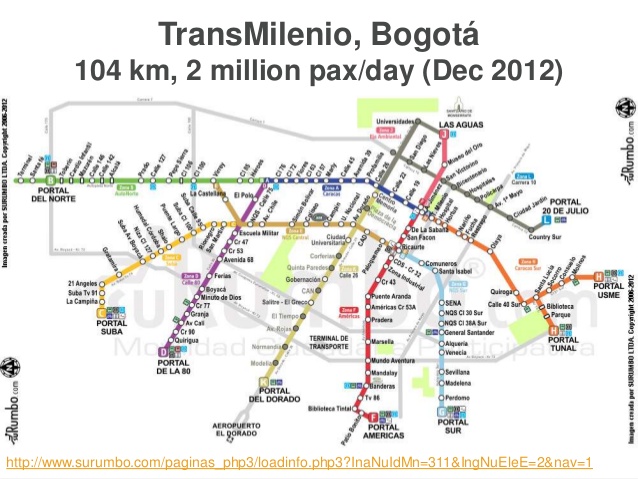
Suzi has worked in Bogota, way back in the 80’s when the Columbia capital was a pandemonium of aggressiveness, danger and pollution. Today, Bogota is a prosperous and fairly safe city with a extensive public transport.

What happened? A visionary mayor, Antanas Mockus, created a social transformation by creativity and leadership. A bit crazy, one of his well-known action was employing young people to  ridicule drivers bad behaviours. In parallel, his associates created infrastructure and deep institution changes.

We don’t know where we go. We need to be creative. There is a lot of private energy and it is better if the government helps. Reducing emissions is a huge opportunity for electric cars. Creating big fleets will enable energy storage. We need to innovate. Politicians wait for people support to pass emission reduction laws. It is down to politics.

Planting trees is definitely part of the solution with lots of co-benefits. If the government commit to maintain a regular carbon price, then it is an incentive to plant more trees as it can double the yield of planting trees. Down to a technical issue…

Solutions exist, and when they don’t yet, we can create them if we look.

All we need is to put climate change at the top of our agenda.


1 Comment

Climate Change Mitigation

This is a summary/extracts of the Climate Change 2014: Mitigation of Climate Change, Summary for Policymakers, IPCC. I’ve added some indicators: In red are the people’s potential for action, in green are the co-benefits.  I did not add any comment or anything that is not in the original 31-pages document.

Mitigation is a human intervention to reduce the sources or enhance the sinks of greenhouse gases.

Climate policies, to be effective, need to cross over all sectors and societal goals, include all countries and collective interests, based on sustainable development and equity. Addressing climate change creates co-benefits or adverse side-effects. No one action can itself solve the problem but working on all aspects has the potential to keep temperatures within 2 degrees increase (that is 450ppm) over the century, on which this report focuses.

Without additional effort to reduce GHG emissions, temperatures will have increased from 3.7 to 4.8 degrees celsius by the end of the century.

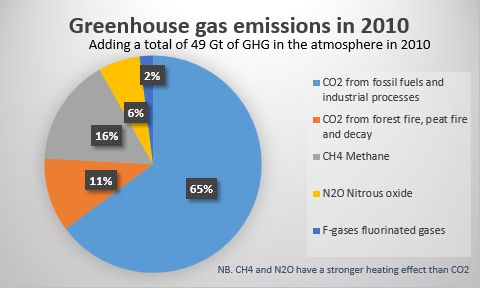
Anthropogenic (=man-made) greenhouse gas are CO2, methane, nitrous oxide and fluorinated gases. They’ve accumulated at an ever increasing rate in the atmosphere (+2.2% per year in the last 10 years).

GHG emissions

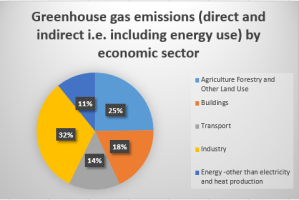
Now these gases come from these activities:

GHG by economic sector

It is demonstrated that the increase in population itself has not increased the CO2 emissions. It is the GDP per capita increase that has. Consumption has grown between 300% to more than 900% over the century.

Adverse side effect of mitigating climate change (within 2 degrees) is to reduce consumption growth by 0.04 to 0.14 percent points per year. Co-benefits include reduced costs for achieving air-quality and energy security,  significant benefits for human health and ecosystems. Overall, the potential co-benefits outweigh the adverse side-effects. Mitigation costs vary between countries.

Mitigation policy could devalue fossil fuel assets and reduce revenues for fossil fuels exporters.


ENERGY PRODUCTION

Energy demand will be reduced by efficiency enhancements and behavioural changes.

Energy use will be reduced by behaviour, lifestyle and culture change, complemented by technological and structural change.By Rama CC BY-SA 2.0

Decarbonizing (i.e. reducing the carbon intensity of) electricity generation is a key component of cost effective mitigation. The share of renewable energy, nuclear energy and carbon capture and storage (CCS) needs to increase to more than 80% of electricity generation by 2050 and fossil fuel power generation without CCS is phased out by 2100.

Renewable energy performance has improved and costs have reduced substantially, enable deployment on large scale.

Nuclear energy is a mature low GHG emission source of energy but barriers and risks exist: operational risks, and the associated concerns, uranium mining risks, financial and regulatory risks, unresolved waste management issues, nuclear weapon proliferation concerns, and adverse public opinion.

Natural gas power generation could act as a bridge technology.

Carbon dioxide capture and storage technology could reduce GHG emissions but has not yet been applied at a large scale. Also it raises concerns about operational safety and long-term integrity of CO2 storage.

Combining bioenergy with CCS offers prospects while it entails challenges and risks.


ENERGY USE

Transports

  • Technologies existing and in development improve vehicles performance: electric, methane-based fuel, biofuels (with CCS)
  • Integrated urban planning: investment in public transport systems and low-carbon infrastructure, transit -oriented development, more compact urban form that supports cycling and walking, high-speed rail systems…
  • Behavioural change to adopt these

A combination of the 3 strategies not only halve the transport contributions but also provide important co-benefits: improved access and mobility, better health and safety, greater energy security and cost and time savings.

Buildings

The energy demand for building is in expansion, as wealth, access and lifestyles improve. Opportunities to stabilize or reduce global buildings sector energy use by mid-century exist:

  • Energy efficiency policies, strengthening building codes and appliance standards
  • Implement recent advances in technologies and know-how
  • Retrofit existing building can achieve 50-90% of reductions of heating/cooling energy use.
  • Life, culture and behaviour significantly influence energy consumption in buildings (three- to five-fold difference).

Co-benefits: savings, energy security, health, environmental outcome, workplace productivity.

Industry

Currently the biggest emitter; Opportunities to reduce Industry GHG emissions below the 1990 baseline exist:

  • Energy efficiency can directly reduce emissions by 25%.
  • Process optimization, substitutions,
  • Resource use improvement, recycling, re-use

It is not only cost effective but it also comes with co-benefits for the health and environment.

Waste reduction and recycling are key to reduce landfill emissions.

Agriculture, forestry and other land use

A quarter of global emissions come from deforestation, emissions from soil, nutrient (fertilisers) management and livestock. Therefore solutions are: By DarKobra Urutseg Ain92 (File:Tango icon nature.svg File:Blank_template.svg) [CC BY-SA 3.0 (http://creativecommons.org/licenses/by-sa/3.0)], via Wikimedia Commons

  • afforestation (planting trees), and sustainable forest management
  • building humus,
  • improving cropland and livestock management
  • changes in diet and reduction of food loss

These strategies also benefit biodiversity, water resources and limit soil erosion.

Bioenergy can reduce GHG emissions only if fast growing species are used, land-use is well managed, biomass to bioenergy systems are efficient and biomass residues are well used.


Human settlements, infrastructure and spatial planning

Urbanization is a global trend and will include 64-69% of the world population in 2050. It comes with income increases which are correlated to higher consumption. The next 2 decades are a window of opportunity to get it right as a large proportion of urban areas will be developed during this time and it’s quite locked in. Mitigation strategies involve:

  • co-locating high residential with high employment densities (reduce urban sprawl),
  • high diversity and integration of land use,
  • increasing accessibility in public transport and other demand (access oriented development).

Advantages are better air and water quality, time and health benefits.

Mitigations policies and institutions

Sectoral and national policies

Currently USD1,200 billion are invested each year for energy security. Large changes in investment patterns are required:

  • decrease of 20% in fossil fuel technologies (-USD 30 billions per year). The complete removal of subsidies for fossil fuels in all countries could result in reductions in global emissions by 2050.
  • renewable energy investments double (+USD147  billions per year)
  • investing in upgrading existing transports, buildings and industry systems require another USD 336 per year.
  • achieving nearly universal access to electricity and clean fuel for cooking and heating are between USD72 and 95 billions per year until 2030 with minimal effects on GHG emissions while improving lives, environments and equity throughout the world.

That is plenty of opportunity for business and growth and it creates large energy efficiency gains.

Policies integrating multiple objectives, increasing co-benefits and reducing side-effects have started to be experimented and reveal that:

  • Regulations and information (education) widely used are often effective.
  • Cap and trade systems for GHGs (carbon offsets) could be effective if the caps are constraining.
  • Tax-based policies (for example on fuels) raise governments income and allow them to be proactive or to transfer to low-income groups.
  • Technology policy include public funded R&D and governmental procurement programs.
  • By lumaxart (Working Together Teamwork Puzzle Concept) [CC BY-SA 2.0 (http://creativecommons.org/licenses/by-sa/2.0)], via Wikimedia CommonsPrivate sector can contribute to 2/3 to 3/4 of cost of mitigation with appropriate and effective policies, i.e credit insurance, power purchase agreements, feed-in tariffs, concessional finance and rebates.


International cooperation

Various cooperation arrangements exist yet their impact on global mitigation is limited. Many climate policies can be more effective if implemented across geographical regions.


1 Comment

How climate change affects our region

Just like Wanaka is a “lifestyle reserve“, Wanaka is also likely to be far less affected by climate change than many other places in the world. Not worried by sea level rise! And a bit warmer wouldn’t hurt, would it?

However…

In our mountains, the biggest worry will be a shortened duration of seasonal snow lying, a rise in snow-line and a decrease in snowfall events. Glaciers will continue to melt.

The Ministry for the EnvironmentCopyright Ministry for the Environment Climate change projections for the Otago region page is worth reading. They predict:

  • around 0.9˚C warmer by 2040,
  • it will be wetter in winter and spring (more 29 % in Queenstown by 2090), drier in summer and autumn.
  • very heavy rainfall events are likely to become more frequent in Otago, increasing the risks of floods.
  • more often and stronger storms in winter (less in summer), with winds increasing between 2 and 5 per cent in winter, increasingly westerlies.
  • About the snow, “at heights between 1000 and 2000m:
    • the maximum seasonal snow depth is likely to decrease by approximately 20 per cent by 2040 and approximately 40 per cent by 2090
    • a low snow year is expected to be five times more likely by the 2090s.”

Unfortunately Treble Cone summit lies at 2088m and Cardrona at 1860m…

In the NIWA Natural hazard 2008 report, landslides, hailstorm, snow storms and electrical storms are all described for Otago. The fruit industry in Otago will be affected by summer droughts. The winter frosts will decline therefore bugs are likely to thrive.

And climate change is going to affect our native species, and their habitats in many diverse ways, states the Forest and Bird website. Birds and natives may have to move up to survive in their usual temperature but it is not always possible so it may mean they are out. Also some species, like tuataras -we don’t have any in our area to my knowledge- need a specific temperature for incubation therefore climate change is adding a threat to their survival.

Conversely, pests and insects are opportunist creatures and will make strides in changing conditions.

There is a last aspect I think is significant for our area: the impact of climate refugees, coming to live in our town because theirs is doomed. It may well have already started.

We are definitely all in there together!


1 Comment

It’s time to talk about climate change

Surely you’ve heard of it: the United Nations are having a conference in Paris in December to talk about climate change. And hopefully make some decisions. Well, they need help because they are going in the right direction but far too slow.

SO JOIN US FOR CLIMATE ACTION!

Climate march

What we need to know:

ErosionStClair beach98% scientists agree and the IPCC reports are peer-reviewed and include “skeptics” point of view. The IPCC report “Climate Change 2013: Physical Science Basis” summarizes all data with a level of confidence (depending on amount and quality of data as well as degree of agreement) and a measure of probability (based on models results and expert judgement).

Therefore any data or projection that comes with a high confidence and a very likely probability has -virtually certainly- happened or is going to happen. This is what the report states:

Climate change IS happening

  • Data collection around the world averages nearly 1°C increase in temperatures since 1870.
  • Extreme temperatures, droughts, floods, storms, have doubled or tripled since 1880.
  • Sea levels have risen 250mm since 1880
  • Glaciers have lost an average of 14 meters depth since 1950, particularly since 2004.
  • Wildlife has declined and species have migrated. Biodiversity main threat lies more in habitat destruction and wildlife trade than in climate change. However, the coral reef demise (only 12% of coral reef is left) is directly linked to ocean acidification which is due to CO2 increase.

Climate change IS human induced

Climate change is caused by the release in the atmosphere of vast quaE48400 - Lower part of Fox Glacier with glacier mouth, February 2013ntity of CO2 from coal and oil extracted by humans to create the extraordinary unprecedented growth since last century. Massive deforestation and other land use have also contributed to the increase in CO2 in the atmosphere. In the last 800 thousand years, atmospheric CO2 has varied between 100 and 300 ppm. Today it is nearly 400 ppm.

Methane and nitrous oxide (also created by humans – agriculture) are less concentrated but have a higher greenhouse effect than CO2 and therefore need to be considered as seriously as CO2.

Now, for people who still wonder why we should worry, click on the image below. Early humans appeared sometimes in Pleistocene and all the civilizations we know have developed in the relatively regular Holocene period. If we don’t prevent this sharp heating of our planet to happen, the world as we know it is GONE.
All palaeotemps

There is hope though. If we choose the right scenario, we can help make this temperature rise go slower, enabling as many as living creatures (includes humans) as possible to adapt…

What will happen?

Projections have been made for 4 scenarios (called Representative Concentration Pathways (RCPs).

  • RCP 2.6 is a mitigation scenario which aims at, with active policies, stabilizing then decreasing the CO2 emissions before 2100.
  • RCP 4.5 scenario aims at stabilising the CO2 concentrations by 2100.
  • RCP 6 scenario aims at stabilizing the CO2 concentrations after 2100.
  • Now RCP 8.5 is what will happen if we continue business as usual.

So I’ve been very nice and read everything for you and here is a summary of the effects, depending on the scenarios we choose:

Today RCP 2.6 RCP 4.5 RCP 6.0 RCP 8.5
Goal Reduction by 2100 Stabilisation before 2100 Stabilisation after 2100 Business as usual
CO2 concentration in 2100 398 ppm 421 ppm 538 ppm 670 ppm 936 ppm
Average air and ocean temperature(since 1870) +0.85°C +1.8°C stabilised +2.5°C +3°C +4°C (possibly +6°C)
Glaciers (cryosphere) 2% reduction since 1950 and accelerating 15 to 55% reduction 35 to 85% reduction(ice free Arctic ocean in September by 2050)
Ocean acidification 8.1 8.05 7.95 7.9 7.8
Sea level rise (does not include the “not agreed on” possible Antarctic shelf collapse) +1.7 meter since 1900 +0.26m to 0.55m (compared to the average sea level between 1986 and 2005) +0.32m to 0.63m(id) +0.33m to 0.63m(id) +0.45m to 0.82m(id)

And in Wanaka?

Just like Wanaka is a “lifestyle reserve“, Wanaka is also likely to be far less affected by climate change than many other places in the world. Not worried by sea level rise! And a bit warmer wouldn’t hurt, would it?

However…

In our mountains, the biggest worry will be a shortened duration of seasonal snow lying, a rise in snow-line and a decrease in snowfall events. Glaciers will continue to melt.

KeaThe Ministry for the Environment Climate change projections for the Otago region page is worth reading. They predict:

  • around 0.9˚C warmer by 2040,
  • it will be wetter in winter and spring (more 29 % in Queenstown by 2090), drier in summer and autumn.
  • very heavy rainfall events are likely to become more frequent in Otago, increasing the risks of floods.
  • more often and stronger storms in winter (less in summer), with winds increasing between 2 and 5 per cent in winter, increasingly westerlies.
  • About the snow, “at heights between 1000 and 2000m:
    • the maximum seasonal snow depth is likely to decrease by approximately 20 per cent by 2040 and approximately 40 per cent by 2090
    • a low snow year is expected to be five times more likely by the 2090s.”

Unfortunately Treble Cone summit lies at 2088m and Cardrona at 1860m…

In the NIWA Natural hazard 2008 report, landslides, hailstorm, snow storms and electrical storms are all described for Otago. The fruit industry in Otago will be affected by summer droughts. The winter frosts will decline therefore bugs are likely to thrive.

And climate change is going to affect our native species, and their habitats in many diverse ways, states the Forest and Bird website. Birds and natives may have to move up to survive in their usual temperature but it is not always possible so it may mean they are out. Also some species, like tuataras -we don’t have any in our area to my knowledge- need a specific temperature for incubation therefore climate change is adding a threat to their survival.

Conversely, pests and insects are opportunist creatures and will make strides in changing conditions.

There is a last aspect I think is significant for our area: the impact of climate refugees, coming to live in our town because theirs is doomed. This is why it is not only altruistic to act for the climate. We are definitely all in there together!

Solutions are well-known

We all urgently need to stop our petrol and coal consumption. There are so many other ways to produce energy (eg. solar panels), to save energy (e.g. insulate), avoid useless motorized traffic, buy local… And we need to make pressure on our local bodies so they create effective public transport systems, safe cycle lanes, better housing regulations. And we can put pressure on governments so that they encourage renewable energy rather than support fossil industry.
Worms-from-coffee-compost-pile
Agriculture and forestry also need to improve their practices. An IFOAM report explains in 2009 that “agriculture currently accounts for 10-12% of global greenhouse gas emissions” (ruminants and deforestation mainly) whereas, “global adoption of organic agriculture has the potential to sequester up to the equivalent of 32% of all current man-made GHG emissions“. So we can choose to buy organic, plant trees, have less meat and dairy… and again pressure governments so that they promote organics rather than throw some sand into their wheels.

We can choose to avoid plastic, to recycle, to grow our own food to build up our own soil… In fact, there are so many solutions, that it will be the object of another article!

Mostly, we need governments to take the right decisions at the next Climate Conference, to choose effective mitigation of climate change and we have the opportunity to tell them :

Come and participate in the Climate March here in Wanaka, on Sunday 29th November, at 2pm in the Dinosaur park.

We can choose to change our lifestyle OR the climate will change our lives.

Sources:

Watch the Climate March video here. 320 participants, beautiful day, thank you to all participants and passionate creative volunteers!


Leave a comment

Digging up our lawn

Lawns certainly have an aesthetic and social value and sometimes are a great play area. Closely cut green grass used for landscaping or leisure, lawns were historically created by wealthy people who could keep unproductive spaces. With the invention of lawn mowers, lawns spread and became a standard feature of suburbia. Lawns maintenance necessitates high inputs not only in fertilizers and pesticides, but also in natural resources like water and petrol to mow it. And they don’t hold any wildlife. To me, they reflect the man’s desire to control nature.
I think growing vegetables is a more productive way to use that space therefore we progressively dig up our lawn. Advantages are many:

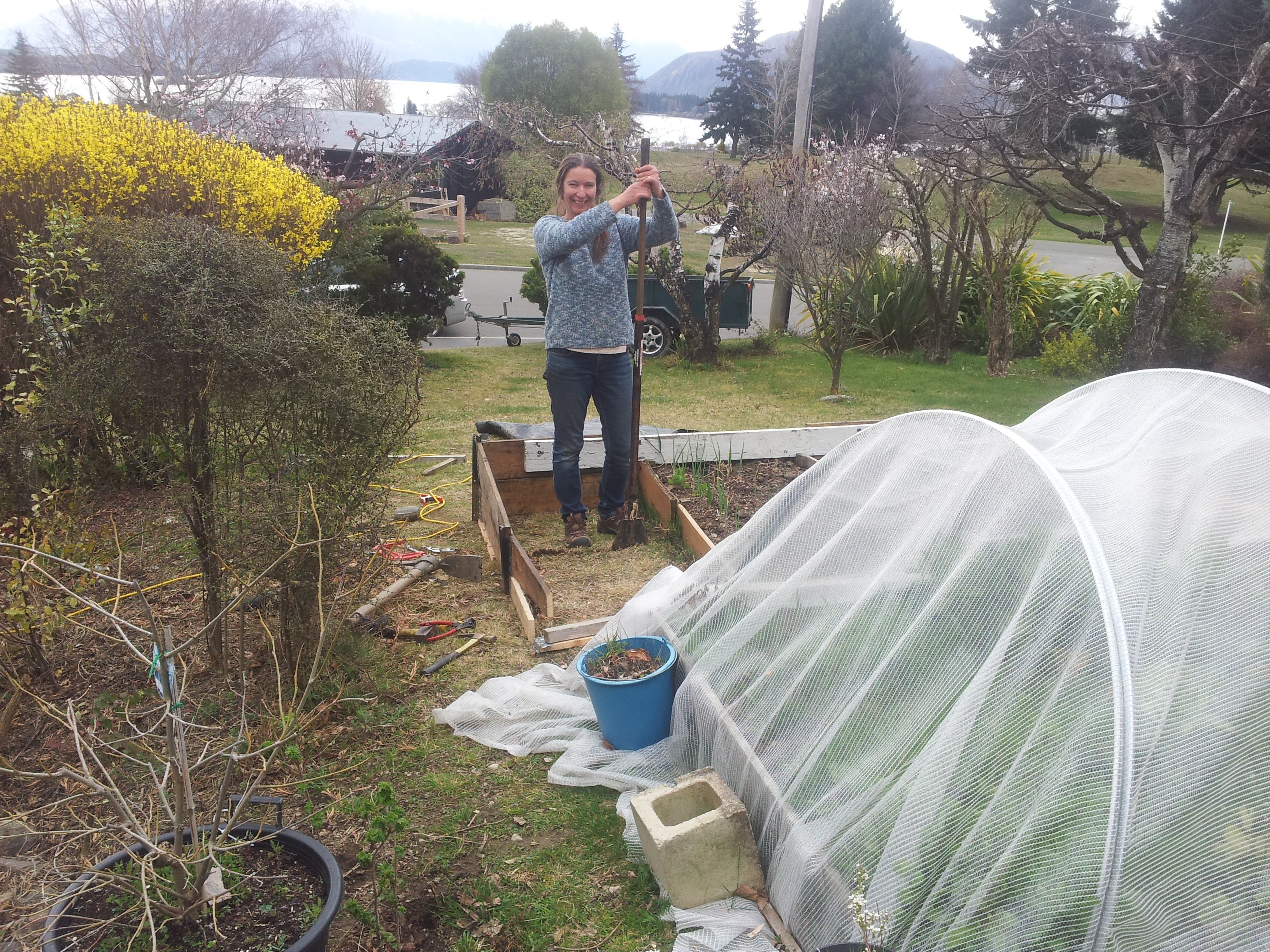
  • We transform wasted areas in productive and beautiful spaces.Using the slammer in the garden
  • We produce pesticides free veges, delicious and fresh from the garden, with zero food-kilometres and nearly for free. In her New Zealand footprint project, Ella Lawton has demonstrated that food and beverage makes up 56% of the total New Zealand footprint. The most efficient way to reduce our footprint is to produce half of our own food in our backyard, or at least eat locally grown food (page 27). It is slightly more efficient than becoming vegetarian.
  • We reduce our waste as all green waste is composted and used in the garden. It is even a way to
    store carbon therefore mitigate climate change
    .
    Organic gardening is good for the environment.
  • We take fresh air, build up muscles, stretch and burn calories. Gardening is good for our bodies.
  • When out in the garden, we hear birds and smell flowers, we connect with the slow pace of nature, reducing stress while providing a deeply meaningful and rewarding activity. Gardening is good for our minds.
  • We spend quality time together as a family.

Using a slammer, it is incredibly easy to remove patches of grass. Materials from Wanaka Wastebusters make frames.

Yes for a successful harvest, we need a lot of knowledge. It’s been built over the years, thanks to Dad, Terre Vivante where I worked for 7 years, Organic NZ, Dr Compost, permaculturists and friends’ wisdom. We also need seeds, also collected over the years and thanks to exchanges with friends or community swaps.

I’ve proudly added a Robert Guyton‘s Green Man sticker on my letter box and I am keeping an eye out for it in my community.

One advice: start small and expand over time. Now is a great time!