
Regenerative Livestyle Blog


3 Comments

Namaste Park and Gardens

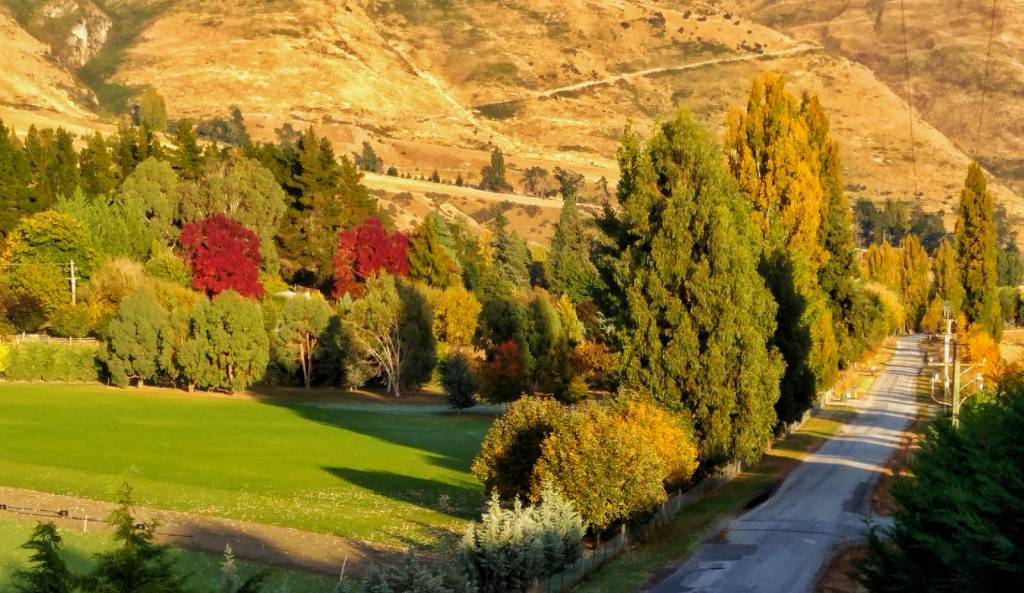
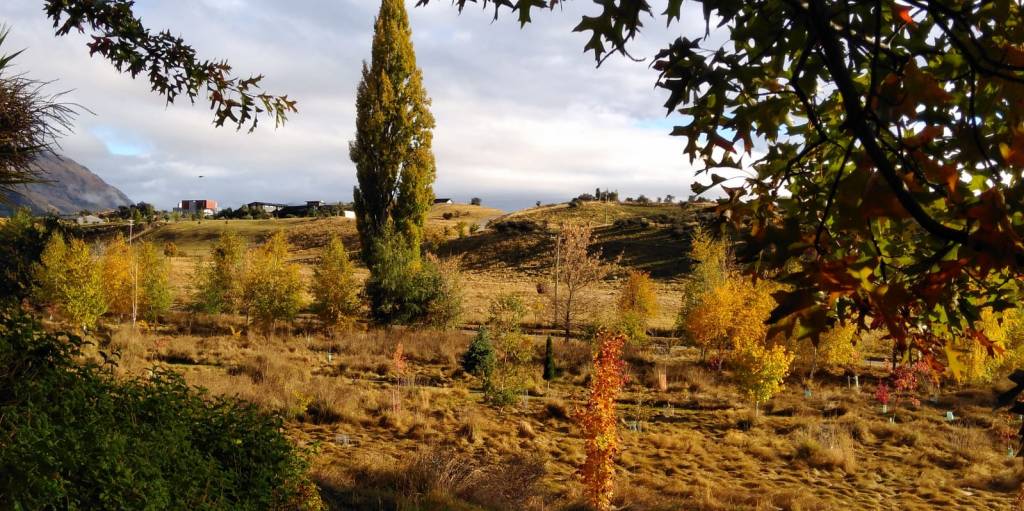
Namaste Park in autumn

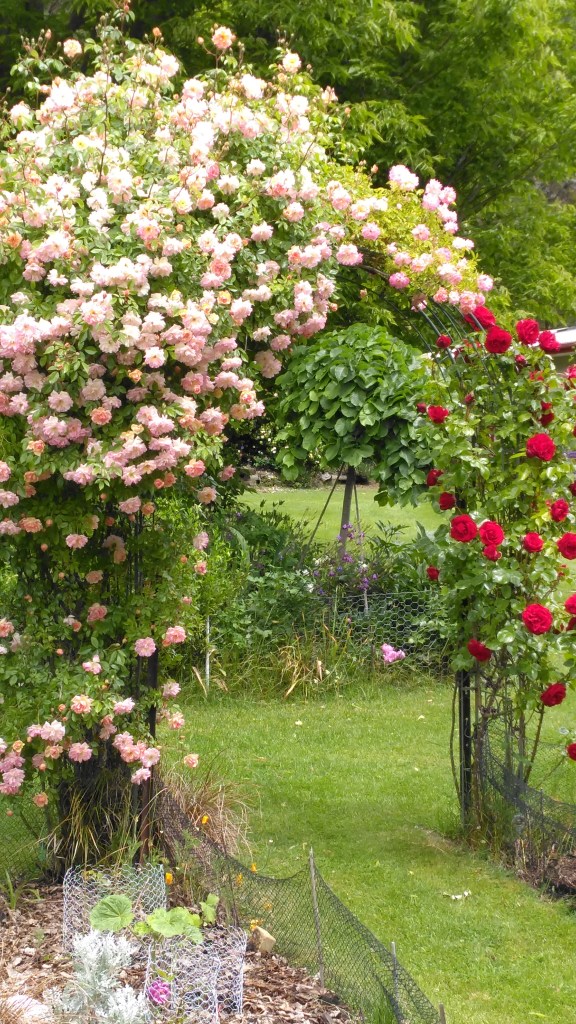
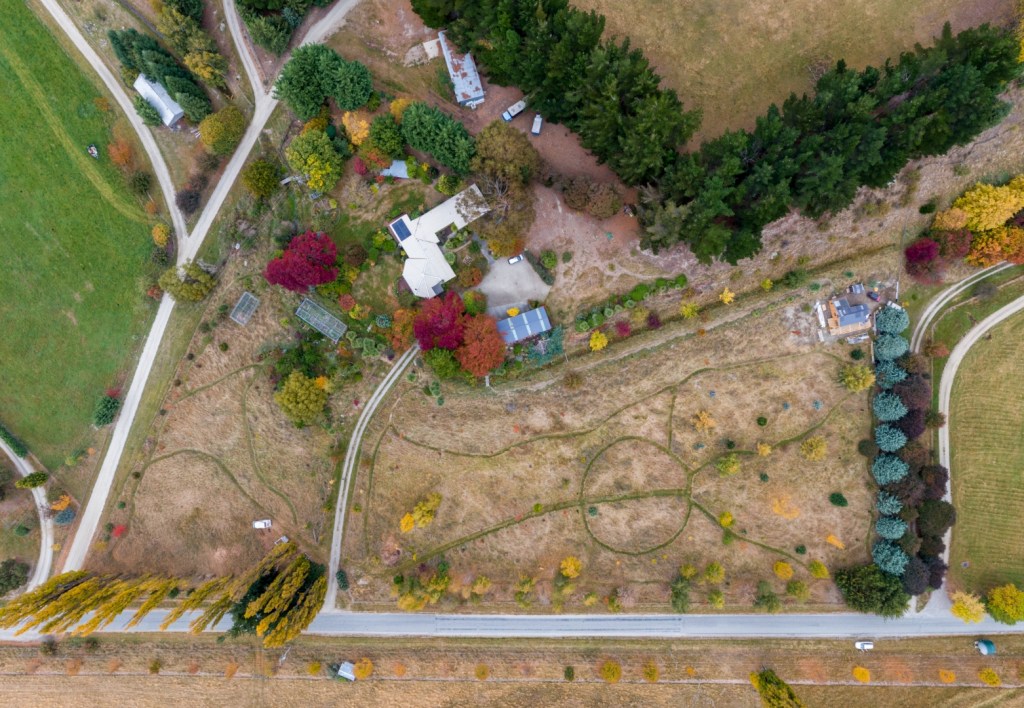
Namaste Park and Gardens is a 2.2 hectares lifestyle property on Studholme Road, Wanaka; currently on the urban boundary of Wanaka.
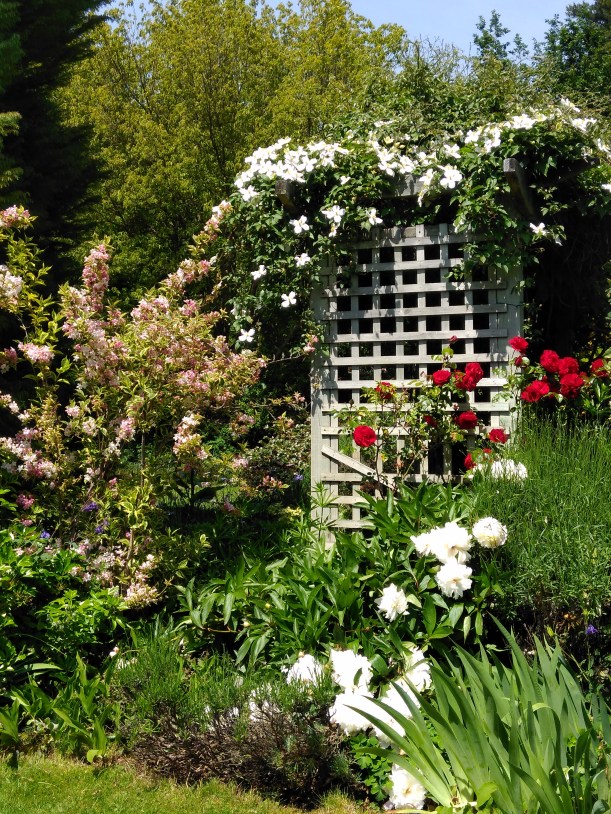
In the upper part of Namaste Gardens around the dwelling, the property hosts a dozen mature trees of significant height and hundreds of shrubs, trees and more formal gardens – home to abundant bird life.
The lower eastern side of the property hosts two small ponds, flower gardens, fruit and young nut trees and enclosed vegetable and berry patches.

Namaste Park

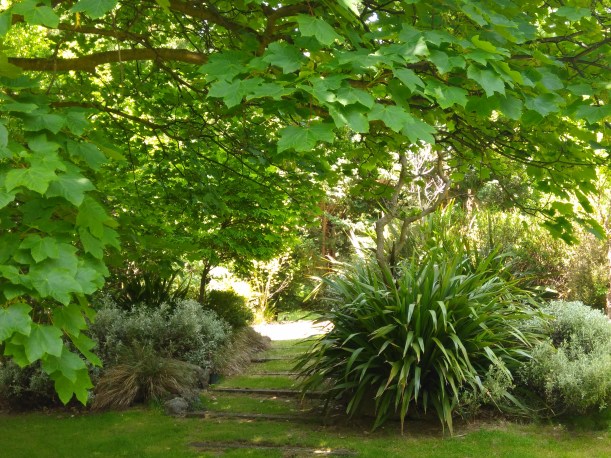
The lower part is a one-hectare arboretum planted by the current owner over the last 16 years. Once a bare pasture, the area has been planted with more than 500 trees, mostly all different, with a forest of silver birches on the road side, a grove of dogwoods, an area with crabapples, lots of maples, and many more different trees from all over the world that survive our Wanaka climate.
Established boundary trees of Cypress Glabra align the western boundary and a collection of Conifers are well underway over a fifth of the arboretum.
Many of the chosen trees are rare and unusual creating a significant collection of interest. In the heart of the park is a small native area.

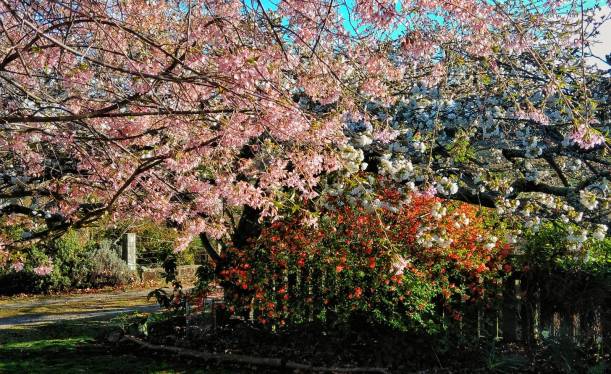
The park is a beautiful and lush open landscape, designed to show amazing blossom shows in spring and splendid foliage colours in autumn, along with benches and curved footpaths. Although the emphasis is not on natives, we believe the sheer variety of trees planted offer a unique and valuable open space for people and biodiversity.

Dogwood and maple “avenue”

Sustainability and Regeneration

As Studholme Road is a small valley floor it offers a unique corridor of biodiversity, attracting birdlife which would be lost if the number of established trees were to be removed. Birds include Fantails, Silvereyes, Bellbirds, German Owls, Ruru, Hawks, Oystercatchers, Quails and Tuis along with a number of more common bird species.

With the lawns being cut only on footpaths, the surrounding
grass is regenerating the land and is now home to insects,
birds and skinks.
No biodiversity inventory has been done yet.

The property doesn’t have any town water source and is serviced by a deep bore, which makes the regeneration of the land all the more important. The deep soil now retains enough moisture to keep green in summers with minimal drip irrigation watering.

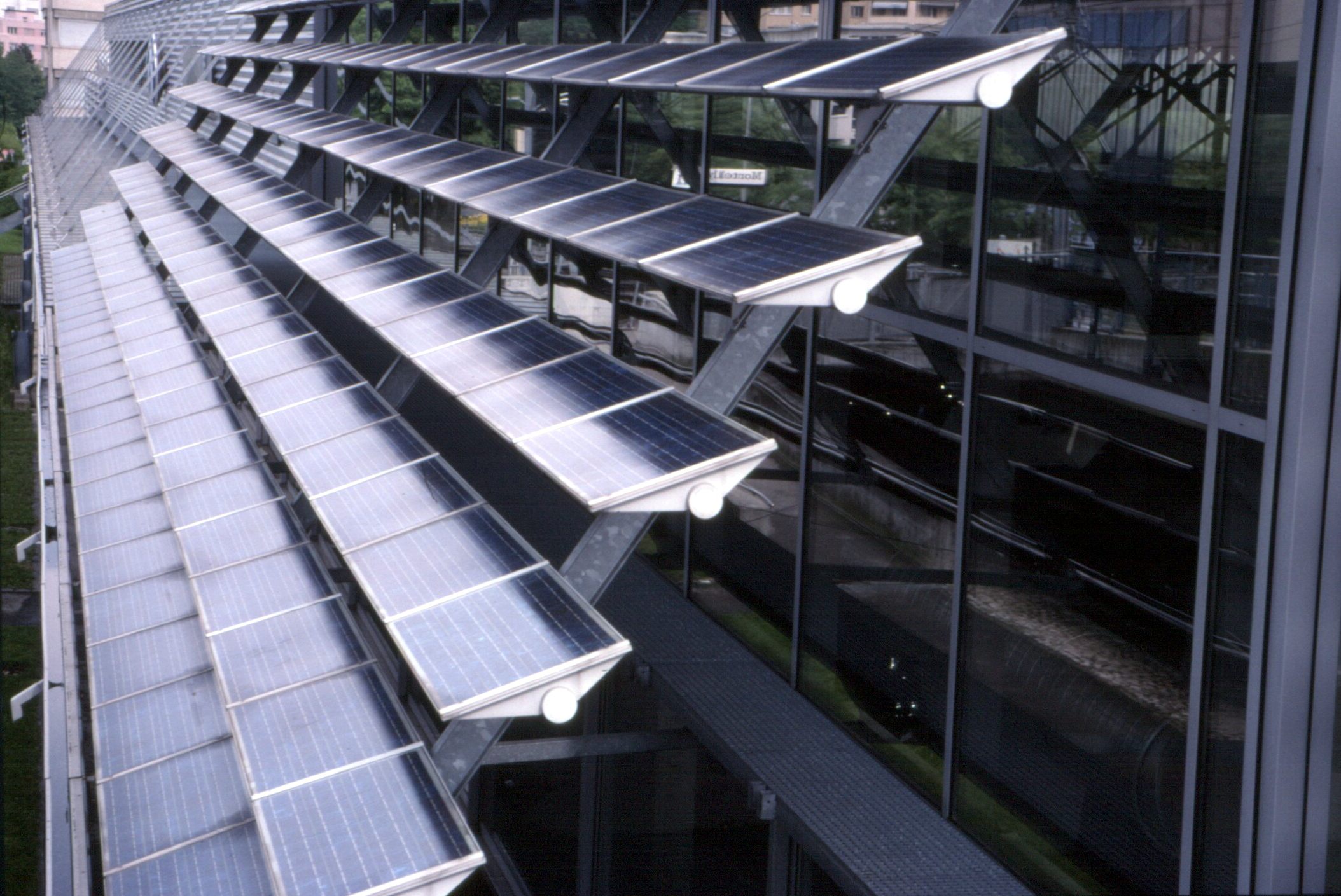
The whole property is cared for without chemicals and without fossil fuels (electric tools charged with solar panels). It is a fantastic example of how one person can regenerate bare grazed land in just 18 years, bringing the dawn chorus back (all day chorus actually).
The landowners intention is to keep the land as a whole, for perpetuity, with owners continuing guardianship and fostering nature life.
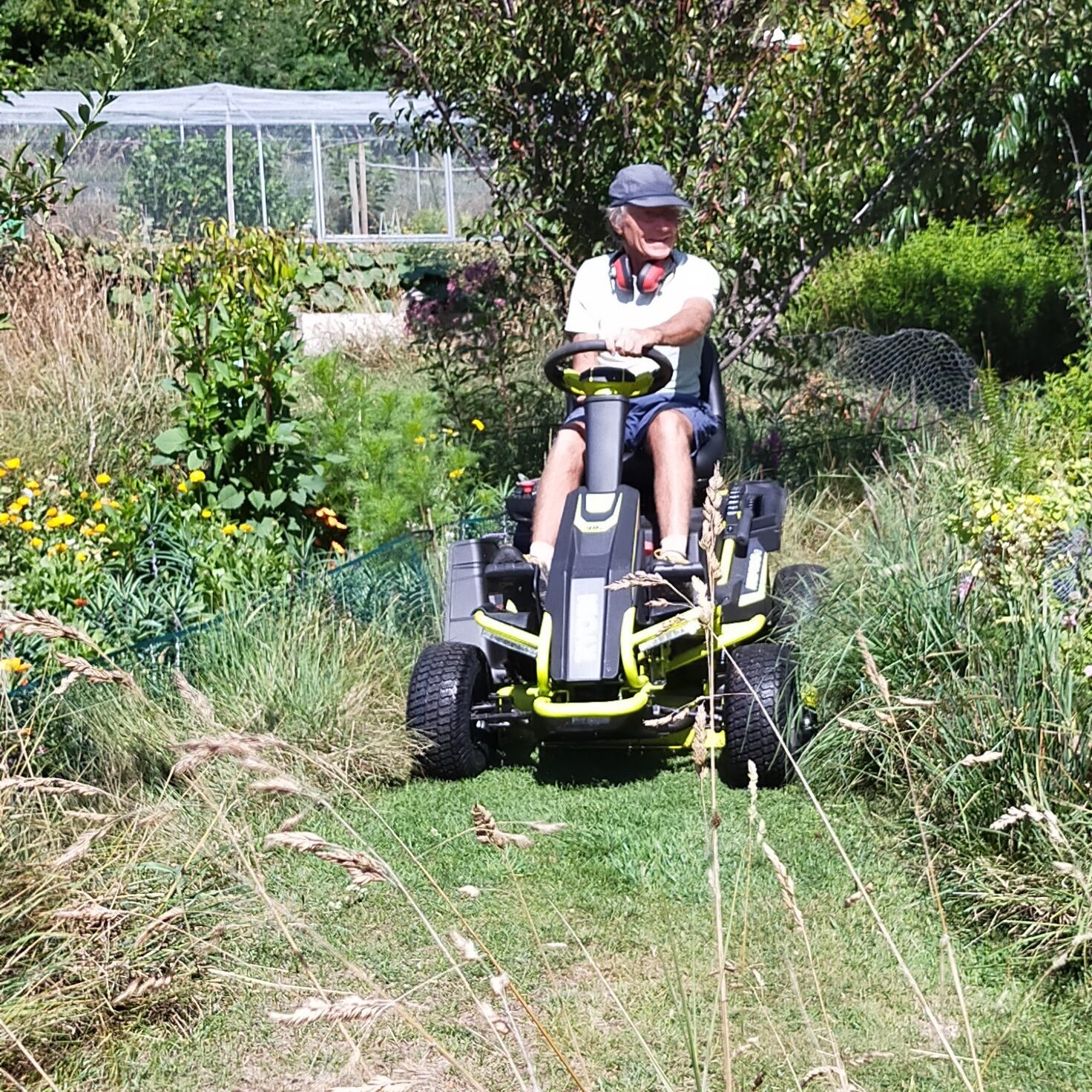
Electric ride-on lawnmower

Peri-urban context

The property is sitting in a zone planned to become urban within the next 28 years, which means the sections and trees in this zone will overtime be chopped up, leaving no nature in the area. Already both ends of Studholme road have been subdivided, at the upper end down to 400sq.m. If we look further on the town boundary along Orchard Rd there are currently intensive subdivisions taking place with the usual removal of all existing fauna, flora, top soil and land form.
Our park trees start to have enough growth and visibility to be admired by walkers from the road as well as visitors on guided garden tours.
It is our intention to open the arboretum to the public once more mature, thereby creating a valuable green space for locals and visitors. When the whole area around becomes dense housing, the Park will be a treasured haven for the community benefit and refuge for wildlife.

We are advocating the Council to create a regenerative land zoning or whichever way to enable people like us with properties planted with mature trees to be possibly preserved, but at this stage, council staff and councilors turn a blind eye.

There are other established zones of vegetation around Studholme Road so we have submitted for its inclusion in the Mount Alpha Outstanding Landscape zone.

The Wanaka Community Board have been consulted as well and have encouraged that this preservation be discussed with QLDC…

We have started a Biodiversity group on Studholme Road, facilitated by WAI, to encourage a more collective approach to ensuring open green spaces can be included in future Council rezoning.
We also have excellent support from Lake Wanaka Tourism who are keen to see more examples as outlined above.

We are working with QEII Trust to support us to enable long term protection of our property for the benefit of the “greater good”.

This beautiful place is visited as part of Beautiful Gardens of Wanaka guided garden tours and the place of Gardening in Harmony with Nature workshops.

It’s our beloved home, we enjoy enhancing the gardens, soil, wildlife. We love planting and nurturing the trees, watching them grow. We are privileged to be caring for this land in harmony with nature, guardianship, kaitiaki, gratitude 🙏🏵️
3 Comments

Regenerative Land Zoning

We are proposing a new Regenerative Land Zoning that encourages landowners to protect, regenerate and possibly share the land they are guardians of.

Context: the situation in Wānaka

In our district, urban growth is transforming the small town we love and pushing nature further and further away, decreasing inhabitants wellbeing and tourism appeal.

The urban area already stretches 10km from Bills Way to Albert Town bridge, which requires everyone to hop in a car to go anywhere, work, shopping, hobbies…

As developments start by removing all trees (incl. natives), massive earth moving and soil compacting, life, trees and soil present in the previously rural landscape are destroyed. It doesn’t have to be that way.

We now have kilometers of suburbia with houses four meters away from each other, where people can’t grow food let alone trees.

In 2023, we have to consider the climate, biodiversity and cost of living crises. To adapt, we need:

  • Connected pathways for commuting and recreation biking and walking
  • Plenty of trees and nature, 30% of land and water left to nature by 2030
  • Local food production

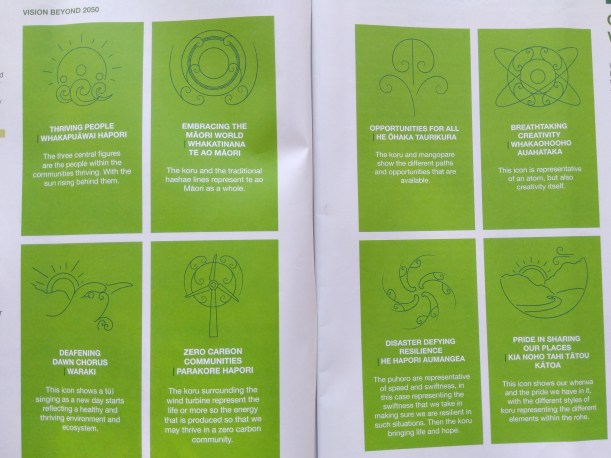
These 3 simple points enable low carbon living, good for nature and wellbeing, good for resilience and affordability. And it’s aligned to the QLDC Vision beyond 2050 principles:

Green belts exist on private land

The new subdivisions are now well beyond initially planned green belts and reserves.

Nature is pushed further and further away from the people. But in a sustainable resilient low carbon society, we do need nature and space for food production on our doorstep, not half an hour drive away.

Urban development is creeping on rural lifestyle areas, bulldozing them. Have a look at Orchard Road. It doesn’t have to be that way.

On many lifestyle properties in town and adjacent to town, landowners have planted trees and enhanced biodiversity on the land they are owners and guardians of. They are givers not takers. Kaitiakitanga. Thank you for having planted trees, established trees are treasures🙏 Taonga.

The current rules and price of land mean that when these creators sell, the land is chopped off with all the life on it. A simple optional new land zoning could prevent that.

Innovative Regenerative Land Zoning

We are proposing a regenerative land zoning, allowing landowners to voluntarily secure their land for perpetuity, providing they enhance biodiversity and/or the community.

The land can be sold with the same conditions.

The owners can choose how they want to regenerate: planting trees, native or not, restoring or creating wetlands, planting orchards for local food, planting fast growing well managed forests for local timber and firewood…

And the owners can choose whether they share it with the public or not, or which part of it. For example a strip along the road can be made into a bike lane; a grove of trees can be open as a park for the public; an orchard can be open for a time for locals to harvest; a land can be gardened by community groups or as plots…

It already happens. A few enlightened and generous landowners are already offering their land for the greater good.

A regenerative land zoning would foster green belts connections. It would create a network of biodiversity and community enhancing parks and corridors. Tracks through these corridors would enable low carbon transport. Food would be produced locally for resilience and affordability, and nature would be accessible for everyone with all its biodiversity and wellbeing benefits. Win-win-win.

Steps

I have shared the idea for two years, in emails to local influencers, including all the Councilors, several times. I have talked with many Council staff, I have presented it to several community groups and in the tourism sector, even prompting a standing ovation (at the WAO Regenerative Tourism hui October 2022). It IS a great idea with huge desirable benefits for all, thriving nature, resilient community and cheap for the Council.

Now is the time to sit around a table and make it happen.

Let’s start with the pioneers who have already created something beautiful which is at stake of being destroyed by growth. Let’s start with the landowners who already regenerate and share (or wish to).

What would encourage landowners to participate is yet to be discussed and finetuned, from rebate to maintenance or simply protection.

The Council is the entity capable of creating a land zoning and I am talking at a Council meeting on the 10th August to invite them to start the process. LWT, WAO, WAI, UCTT, Te Kakano, are invited in the discussion and action.

The innovative land zoning protects what we already have and deploys it to an exciting collective creation that, we all agree, would be great.

From landtaker to landmaker; From land management to guardianship; From $growth$ first to Nature first: a mindshift is happening.

One example of outstanding landscape, nature and biodiversity right on the urban boundary. Are we going to Love it? Or to bulldoze it?

To go deeper… here are 4 documents with more details.

Please contact us for any further information, if you are interested in participating, contributing, or if you know of similar public/private regenerative schemes in New Zealand and the world.


1 Comment

Gardening in Harmony with Nature Classes

Regenerative Lifestyle WORKSHOPS

Spring series, 6 Saturday mornings, 4 Nov – 9 December 23

  • Are you interested in taking care of your property in harmony with nature?
  • Do you want to regenerate your lifestyle property or garden without fossil fuels?
  • Do you love a healthy natural life?
  • Do you ask yourself “what would nature do?”?

Learn more than you expect with garden guide and regenerative lifestyle practitioner, Florence Micoud, in a relaxed atmosphere in the beautiful inspiring garden she is a grateful kaitiaki / caretaker of.

Contact Florence 02102792481 for more info or booking.

  • 6 sessions Saturdays 9am-12 pm starting 4 November
  • 3 to 7 Participants
  • Price: $240pp – $210pp with Community Service Card or Duet
  • Location: Namaste Park and Garden, 2 hectares of climate positive lifestyle block run in harmony with nature in Wanaka.
  • Level: Beginner, intermediate
  • Bring: Gloves, notebook+pen, jar+box for takeaways

Details of the sessions

Each session includes : 

+ Informative tour
+ Activity
+ Q&A
+ Stretch
+ Takeaways (garden goody & recipe)

Contact me 02102792481 for more info or booking, limited space

I’m looking forward to share garden and nature beauty and knowledge with you in spring,
it’s going to be awesome!

Florence


1 Comment

Climate Change Mitigation

This is a summary/extracts of the Climate Change 2014: Mitigation of Climate Change, Summary for Policymakers, IPCC. I’ve added some indicators: In red are the people’s potential for action, in green are the co-benefits.  I did not add any comment or anything that is not in the original 31-pages document.

Mitigation is a human intervention to reduce the sources or enhance the sinks of greenhouse gases.

Climate policies, to be effective, need to cross over all sectors and societal goals, include all countries and collective interests, based on sustainable development and equity. Addressing climate change creates co-benefits or adverse side-effects. No one action can itself solve the problem but working on all aspects has the potential to keep temperatures within 2 degrees increase (that is 450ppm) over the century, on which this report focuses.

Without additional effort to reduce GHG emissions, temperatures will have increased from 3.7 to 4.8 degrees celsius by the end of the century.

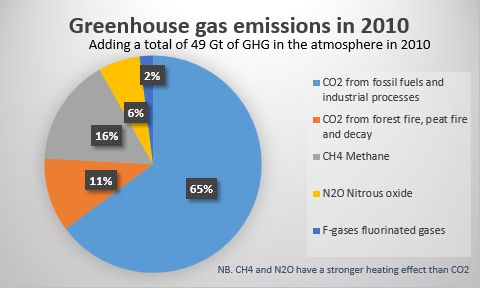
Anthropogenic (=man-made) greenhouse gas are CO2, methane, nitrous oxide and fluorinated gases. They’ve accumulated at an ever increasing rate in the atmosphere (+2.2% per year in the last 10 years).

GHG emissions

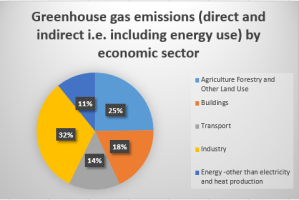
Now these gases come from these activities:

GHG by economic sector

It is demonstrated that the increase in population itself has not increased the CO2 emissions. It is the GDP per capita increase that has. Consumption has grown between 300% to more than 900% over the century.

Adverse side effect of mitigating climate change (within 2 degrees) is to reduce consumption growth by 0.04 to 0.14 percent points per year. Co-benefits include reduced costs for achieving air-quality and energy security,  significant benefits for human health and ecosystems. Overall, the potential co-benefits outweigh the adverse side-effects. Mitigation costs vary between countries.

Mitigation policy could devalue fossil fuel assets and reduce revenues for fossil fuels exporters.


ENERGY PRODUCTION

Energy demand will be reduced by efficiency enhancements and behavioural changes.

Energy use will be reduced by behaviour, lifestyle and culture change, complemented by technological and structural change.By Rama CC BY-SA 2.0

Decarbonizing (i.e. reducing the carbon intensity of) electricity generation is a key component of cost effective mitigation. The share of renewable energy, nuclear energy and carbon capture and storage (CCS) needs to increase to more than 80% of electricity generation by 2050 and fossil fuel power generation without CCS is phased out by 2100.

Renewable energy performance has improved and costs have reduced substantially, enable deployment on large scale.

Nuclear energy is a mature low GHG emission source of energy but barriers and risks exist: operational risks, and the associated concerns, uranium mining risks, financial and regulatory risks, unresolved waste management issues, nuclear weapon proliferation concerns, and adverse public opinion.

Natural gas power generation could act as a bridge technology.

Carbon dioxide capture and storage technology could reduce GHG emissions but has not yet been applied at a large scale. Also it raises concerns about operational safety and long-term integrity of CO2 storage.

Combining bioenergy with CCS offers prospects while it entails challenges and risks.


ENERGY USE

Transports

  • Technologies existing and in development improve vehicles performance: electric, methane-based fuel, biofuels (with CCS)
  • Integrated urban planning: investment in public transport systems and low-carbon infrastructure, transit -oriented development, more compact urban form that supports cycling and walking, high-speed rail systems…
  • Behavioural change to adopt these

A combination of the 3 strategies not only halve the transport contributions but also provide important co-benefits: improved access and mobility, better health and safety, greater energy security and cost and time savings.

Buildings

The energy demand for building is in expansion, as wealth, access and lifestyles improve. Opportunities to stabilize or reduce global buildings sector energy use by mid-century exist:

  • Energy efficiency policies, strengthening building codes and appliance standards
  • Implement recent advances in technologies and know-how
  • Retrofit existing building can achieve 50-90% of reductions of heating/cooling energy use.
  • Life, culture and behaviour significantly influence energy consumption in buildings (three- to five-fold difference).

Co-benefits: savings, energy security, health, environmental outcome, workplace productivity.

Industry

Currently the biggest emitter; Opportunities to reduce Industry GHG emissions below the 1990 baseline exist:

  • Energy efficiency can directly reduce emissions by 25%.
  • Process optimization, substitutions,
  • Resource use improvement, recycling, re-use

It is not only cost effective but it also comes with co-benefits for the health and environment.

Waste reduction and recycling are key to reduce landfill emissions.

Agriculture, forestry and other land use

A quarter of global emissions come from deforestation, emissions from soil, nutrient (fertilisers) management and livestock. Therefore solutions are: By DarKobra Urutseg Ain92 (File:Tango icon nature.svg File:Blank_template.svg) [CC BY-SA 3.0 (http://creativecommons.org/licenses/by-sa/3.0)], via Wikimedia Commons

  • afforestation (planting trees), and sustainable forest management
  • building humus,
  • improving cropland and livestock management
  • changes in diet and reduction of food loss

These strategies also benefit biodiversity, water resources and limit soil erosion.

Bioenergy can reduce GHG emissions only if fast growing species are used, land-use is well managed, biomass to bioenergy systems are efficient and biomass residues are well used.


Human settlements, infrastructure and spatial planning

Urbanization is a global trend and will include 64-69% of the world population in 2050. It comes with income increases which are correlated to higher consumption. The next 2 decades are a window of opportunity to get it right as a large proportion of urban areas will be developed during this time and it’s quite locked in. Mitigation strategies involve:

  • co-locating high residential with high employment densities (reduce urban sprawl),
  • high diversity and integration of land use,
  • increasing accessibility in public transport and other demand (access oriented development).

Advantages are better air and water quality, time and health benefits.

Mitigations policies and institutions

Sectoral and national policies

Currently USD1,200 billion are invested each year for energy security. Large changes in investment patterns are required:

  • decrease of 20% in fossil fuel technologies (-USD 30 billions per year). The complete removal of subsidies for fossil fuels in all countries could result in reductions in global emissions by 2050.
  • renewable energy investments double (+USD147  billions per year)
  • investing in upgrading existing transports, buildings and industry systems require another USD 336 per year.
  • achieving nearly universal access to electricity and clean fuel for cooking and heating are between USD72 and 95 billions per year until 2030 with minimal effects on GHG emissions while improving lives, environments and equity throughout the world.

That is plenty of opportunity for business and growth and it creates large energy efficiency gains.

Policies integrating multiple objectives, increasing co-benefits and reducing side-effects have started to be experimented and reveal that:

  • Regulations and information (education) widely used are often effective.
  • Cap and trade systems for GHGs (carbon offsets) could be effective if the caps are constraining.
  • Tax-based policies (for example on fuels) raise governments income and allow them to be proactive or to transfer to low-income groups.
  • Technology policy include public funded R&D and governmental procurement programs.
  • By lumaxart (Working Together Teamwork Puzzle Concept) [CC BY-SA 2.0 (http://creativecommons.org/licenses/by-sa/2.0)], via Wikimedia CommonsPrivate sector can contribute to 2/3 to 3/4 of cost of mitigation with appropriate and effective policies, i.e credit insurance, power purchase agreements, feed-in tariffs, concessional finance and rebates.
 

International cooperation

Various cooperation arrangements exist yet their impact on global mitigation is limited. Many climate policies can be more effective if implemented across geographical regions.


1 Comment

How climate change affects our region

Just like Wanaka is a “lifestyle reserve“, Wanaka is also likely to be far less affected by climate change than many other places in the world. Not worried by sea level rise! And a bit warmer wouldn’t hurt, would it?

However…

In our mountains, the biggest worry will be a shortened duration of seasonal snow lying, a rise in snow-line and a decrease in snowfall events. Glaciers will continue to melt.

The Ministry for the EnvironmentCopyright Ministry for the Environment Climate change projections for the Otago region page is worth reading. They predict:

  • around 0.9˚C warmer by 2040,
  • it will be wetter in winter and spring (more 29 % in Queenstown by 2090), drier in summer and autumn.
  • very heavy rainfall events are likely to become more frequent in Otago, increasing the risks of floods.
  • more often and stronger storms in winter (less in summer), with winds increasing between 2 and 5 per cent in winter, increasingly westerlies.
  • About the snow, “at heights between 1000 and 2000m:
    • the maximum seasonal snow depth is likely to decrease by approximately 20 per cent by 2040 and approximately 40 per cent by 2090
    • a low snow year is expected to be five times more likely by the 2090s.”

Unfortunately Treble Cone summit lies at 2088m and Cardrona at 1860m…

In the NIWA Natural hazard 2008 report, landslides, hailstorm, snow storms and electrical storms are all described for Otago. The fruit industry in Otago will be affected by summer droughts. The winter frosts will decline therefore bugs are likely to thrive.

And climate change is going to affect our native species, and their habitats in many diverse ways, states the Forest and Bird website. Birds and natives may have to move up to survive in their usual temperature but it is not always possible so it may mean they are out. Also some species, like tuataras -we don’t have any in our area to my knowledge- need a specific temperature for incubation therefore climate change is adding a threat to their survival.

Conversely, pests and insects are opportunist creatures and will make strides in changing conditions.

There is a last aspect I think is significant for our area: the impact of climate refugees, coming to live in our town because theirs is doomed. It may well have already started.

We are definitely all in there together!


Leave a comment

Digging up our lawn

Lawns certainly have an aesthetic and social value and sometimes are a great play area. Closely cut green grass used for landscaping or leisure, lawns were historically created by wealthy people who could keep unproductive spaces. With the invention of lawn mowers, lawns spread and became a standard feature of suburbia. Lawns maintenance necessitates high inputs not only in fertilizers and pesticides, but also in natural resources like water and petrol to mow it. And they don’t hold any wildlife. To me, they reflect the man’s desire to control nature.
I think growing vegetables is a more productive way to use that space therefore we progressively dig up our lawn. Advantages are many:

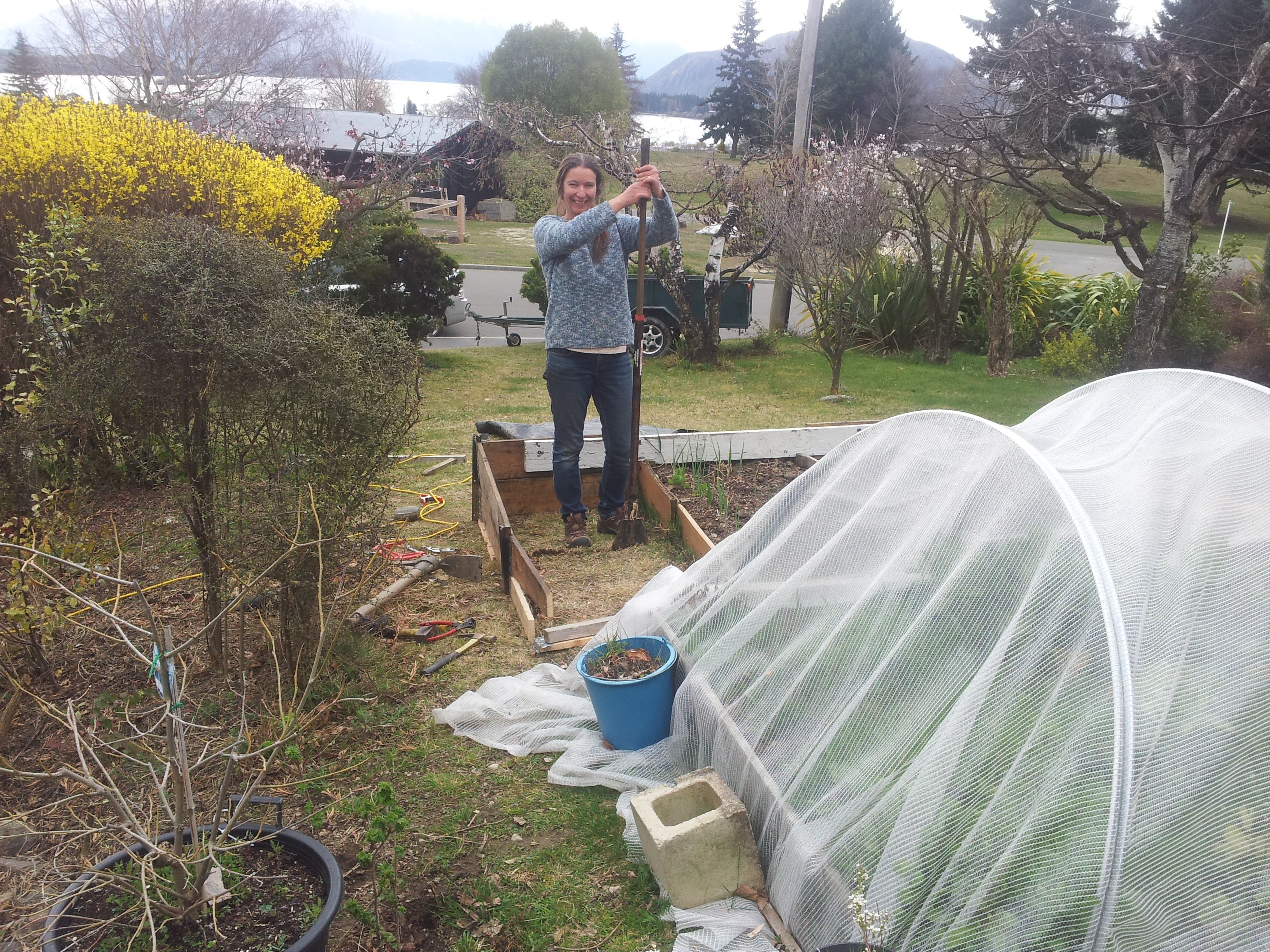
  • We transform wasted areas in productive and beautiful spaces.Using the slammer in the garden
  • We produce pesticides free veges, delicious and fresh from the garden, with zero food-kilometres and nearly for free. In her New Zealand footprint project, Ella Lawton has demonstrated that food and beverage makes up 56% of the total New Zealand footprint. The most efficient way to reduce our footprint is to produce half of our own food in our backyard, or at least eat locally grown food (page 27). It is slightly more efficient than becoming vegetarian.
  • We reduce our waste as all green waste is composted and used in the garden. It is even a way to
    store carbon therefore mitigate climate change
    .
    Organic gardening is good for the environment.
  • We take fresh air, build up muscles, stretch and burn calories. Gardening is good for our bodies.
  • When out in the garden, we hear birds and smell flowers, we connect with the slow pace of nature, reducing stress while providing a deeply meaningful and rewarding activity. Gardening is good for our minds.
  • We spend quality time together as a family.

Using a slammer, it is incredibly easy to remove patches of grass. Materials from Wanaka Wastebusters make frames.

Yes for a successful harvest, we need a lot of knowledge. It’s been built over the years, thanks to Dad, Terre Vivante where I worked for 7 years, Organic NZ, Dr Compost, permaculturists and friends’ wisdom. We also need seeds, also collected over the years and thanks to exchanges with friends or community swaps.

I’ve proudly added a Robert Guyton‘s Green Man sticker on my letter box and I am keeping an eye out for it in my community.

One advice: start small and expand over time. Now is a great time!


Leave a comment

I try, and I made it!

I’ve just finished to read “The Boy who Harnessed the Wind”, by William Kankwamba and it was so inspiring I wish everyone would read this book…

It’s the true story of an African boy who builds a windmill so that his family never has to live through famine again. He does this mostly alone without any money, with the help of a few library books, a lot of work and determination.

I value this book because William talks about his rural community.  It is not told by an ethnologist, a development officer or a tourist. It’s how life really is for more than one billion people and we hardly ever hear it from the inside.

Moreover, the local solution he offer is, I believe, the way to solve the global problem of scarcity in the world. I really like how he analyses that development must come from within.

Besides, we, in rich countries, take everything for granted (well, we do have more than everything) so we so have much to learn from this story. William is amazing in determination, simplicity, cleverness and altruism.

This book particularly resonates for me because I am librarian, like Mrs Sikelo, and my passion is to bring people the information they need. This story shows my work is all worthwhile as it can be life-changing.

It also tickled me deep inside because when I was 13-14, I told my science teacher that I wanted to be renewable energies engineer (way back in 1980) and he laughed at me… I gave up the dream. William did not give up. As he said in his first TED talk online: “I try, and I made it!” What a grand lesson!

Here is William’s blog, and his Moving Windmills Project website. Worth supporting.


3 Comments

1080, diquat and co.

100% Pure NZ is systematically sprinkled with persistent organic pollutants, but don’t worry! All the studies prove it’s OK.

Actually, independent source Pesticides Action Network PAN declares it’s not OK, these products are on the Highly Hazardous Pesticides list (HHP list).

What’s the problem?

They do not disappear despite some biodegradability, they enter the food chain and they accumulate. From highly acute toxicity to long term toxic effects (carcinogenic and mutations), endocrine disruption, environmental degradation (ozone layer, effects on animals…), to hazard to ecosystems services (bees), HHP effects are varied. Cause and effects are not always obvious, often long term. Only highly acute toxicity is tested in most cases.

DiquToxicat dibromide is on HHP list. It can be fatal if inhaled ; Also toxic by ingestion and  dermal contact, including neurologic effect. It is chemically close to agent orange and was used in Vietnam too. It makes rats infertile. It is often found in cow milk.  It is unlikely carcinogenic but is known as a potential ground water contaminator. Diquat is used every year in Lake Wanaka in an attempt to stop lagarosiphon spread. It doesn’t stop it nor prevent it to grow again. In fact, lagarosiphon is not toxic, it is a habitat for native species, it absorbs nitrogen. It does annoy boaties, getting stuck in propellers. It does disrupt hydro dams (turbine shutdown and lost energy production), obliging hydro companies to invest in expensive measures against the plant.

ToxicGlyphosate (RoundUp)  is listed on the HHP list. It is not as biodegradable as Monsanto says. Not only it is quite persistent in water and sediments but also its degradation creates other toxic substances. It is known to have long term health effect on kidneys and reproduction organs. Its massive use also leads many weeds to become resistant and it is present in many surface and ground water tables. Besides, glyphosate is often associated with other chemicals for the weedkiller to be more efficient so you get the perfect cocktail for unknown consequences. Actually not so unknown as many many studies show severe effects but Monsanto’s powerful marketing machine is still winning.

ToxicPindone (not on the HHP list), however on PAN database, it is listed as highly toxic, causing nosebleeds, bleeding gums, bloody urine, extensive bruising in the absence of injury (ecchymoses), also fatigue, shortness of breath (dyspnea) on exertion. It may cause fluid in lungs (pulmonary edema). It is fatal or highly toxic for fish. Toxicity data is missing (no study done/recorded) as to cancer, water pollution potential and the bees. It is used to kill rabbits, with some success, although rabbits invariably spread again, possibly getting resistant.

Toxic1080 (Sodium fluoroacetate), is on the bad guys list as Extremely hazardous (Class 1a) according to World Health Organisation and fatal if inhaled. May also be absorbed through the skin. Leads to convulsions, laboured breathing, unconsciousness and death if untreated. DOC says 1080 is OK for NZ because it targets mammals and there is no native mammals in this country. 1080 is not used in any other country in the world because it would destroy mammals. Well, sorry but I AM a mammal and my children too. More and more research show that it accumulates and that it has long term carcinogenic and reproductive effects… In the local papers today, DOC kindly reassures us that fish ingesting 1080 are safe to eat because you need to “eat several tonnes of affected fish” to get a fatal dose. For me, “not fatal” does not equal “safe”. What about everything in between?

2014 is a mast year

In 2011, the Parliamentary Commission for the Environment publishes a report that supports the use of 1080 as the best solution available to help protect our native birds. Interestingly, independent scientists demonstrate just the opposite on their site 1080science.co.nz. A lot of information is on the Ban 1080 website.

Solidly based on the PCE report, DOC launches the “Battle for our birds”, with a record dropping of 1080, when we know that 1080 kills about as many birds as it protects them.

Which to believe?

I am not a scientist but I see clearly there is not enough consensus on that matter among scientists to keep using these HHP without questioning.

I know about Rachel Carson landmark book, Silent Spring, which warned, in 1962, that the use of pesticides would lead to wildlife destruction and a dramatic increase in cancer cases.

I have read Our Stolen Future, by Theo Colborne, which demonstrated in 1996, that even tiny doses of pesticides can alter human development and reproduction, as they are endocrine disruptors.

So I wonder… and I worry…

What do the pro 1080 win? Lots of money $$$ from selling and applying their product. Pro-1080-diquat-and-so-on justify themselves by any mean to keep doing business as usual.

What do the anti 1080 win? Nothing! They must have good precautionary reasons to spend so much time and energy fighting this!

Solutions?

I am not saying I have solutions. I just want people stop saying these substances are solutions. They are not. They are dangerous and don’t solve problems, hardly mitigate them. Saying they are solutions prevents everyone from searching for better ways -non toxic please.

I think we must stop thinking in terms of pests that we need to eradicate. Maybe consider them as resources? Lagarosiphon is excellent composted. Possums of course have made the fortune of many trappers. Some rabbit terrines are served in the best restaurants in some countries…

Maybe widen the issue to the whole system? We don’t have a “pests” problem in an otherwise perfect world. I know this may shock but it strikes me that National Parks are protected (from destruction by humans) and DOC is sole responsible for their maintenance yet forests are becoming silent. I know of some valleys that are privately owned and well looked after by their owners. No possums, no stoats, lots of birds, lush native bush. Maybe the system needs revisiting…

What if humans became again guardians of the land, respectful of nature, not consumers and controllers of nature? This does require quite a mind-shift and a lot of open-minded discussions. I don’t have solutions. But if we don’t look for them, we won’t find any and we’ll keep doing the same things with the same results.

What you can do

  • Take the warning signs seriously! It IS dangerous!
  • Join groups who set traps
  • Take photos of abuse and send them to the media, OSH, local authorities and beyond
  • Love your weeds instead of poisoning them
  • Generally avoid using chemicals, they all add up!
  • Prompt debates…

PS- I could make a very similar article about the pesticides used in agriculture, less visible but more widespread…


1 Comment

Joel Salatin in Wanaka

Joel Salatin talk, last year in Wanaka, was an energizing speech as much in content as in the presentation itself, a great toastmaster exercise. Basically the recurring idea is orthodoxy vs heresy… These are my notes from the event.

Joel Salatin in Wanaka


Orthodoxy and heresy

People used to think the earth was flat – orthodoxy, then came Galileo saying that the earth was round – heresy. Even more when Copernicus said that the Sun was not going around the earth; the Earth was going around the sun- heresy. Then when slavery was the norm- orthodoxy, the Magnacarta established the right to be free- heresy.

We used to learn the Amazon as the ultimate wilderness- orthodoxy, whereas it is actually a planted and manicured forest- heresy …

In medicine, doctors used to think illnesses were spirits- orthodoxy, then it was discovered that it was due to bacterias and viruses… More recently, Pasteur established the germ theory, where we are victims, we can blame something else if we are sick. Meanwhile and more discreetly, Beauchamps was developing the terrain theory. Germ theory – orthodoxy vs terrain theory- heresy. Allelopathy is valid for illness but not for wellness. Heresy is to think you can create terrain for wellness instead of curing illness. More recently still, heresy is to upgrade genetic lines rather than repair genetic weaknesses…


Then, there was this joke…

Imagine we are a club of people who want to create the most unhealthy farm. Then we would choose only one specie, closed inside with no outdoor and a high density, no sun even aircond. All these criteria aggregate, encourage and nurture pathogens. It is the reality of industrial monoculture…

On the other hand, Nature cultivates diversity with an average of 20 species per square meters, to confuse pathogens, create balance and stability.

Today, orthodoxy on a farm is that fertility must be brought from outside, the government creates policies and agriculture rules. Heresy is to believe nature creates fertility, trusting the powerful carbon cycle. Nature is not sterile by definition. The orthodoxy is to grow quicker, cheaper, better, bigger pigs or corn.

The heresy is to grow balanced meaningful biological soup for species to thrive for itself. Let a pig express his pigness!


Then wider…

If a bull was destroying your flower garden, you would sue the bulls owner. GMO are imposed on our flower garden and we are being sued for not accepting being imposed them!

Society promotes segregated food systems instead of integrated food systems. One side producer / one side sellers / one side buyers vs producers/sellers/consumers, all local on site.

We destroyed a lot but we can heal, restore, via environmental participation.

A strong society has few rules and is not compromised by the choice of some individuals, be they different, on the contrary,  a strong society nourishes on different progressive ideas.

A weak society is fearful and paranoid and creates many rules to protect itself from change.

So listen to the heretics!


There are many solutions.

Edible landscaping

Lawn was started by British Royalty as a sign of richness, to show you don’t have to cultivate all your land to survive. This does not mean you do not have a food garden…

Participate viscerally with the earth and sun to create sufficiency and live in abundance.

Build up soils

The biomass creates itself if not impaired. Let the grass grow, so that the total energy/matter on the farm does not deplete with eggs and meat leaving the farm for sale. Lawn and low grass is dramatic in NZ because it does not let nature build up biomass into the soil. High grass not only nurtures soil but it is also a habitat for predator/eater therefore nurtures  biodiversity. Let herb grow to build up soil.

Read the whole story in Joel’s book, now available at Mount Aspiring College Library

Only 1/5 of soil depth is left after 50 years of grazed land. Letting the grass grow sequesters more carbon. Re-carboning the soil is one way of adapting to climate change, as just doubling soil depth would absorb most carbon released since industrialization.

Also build dams, ponds, water retention systems. Build up organic matter.

Local local…

Market locally to avoid transport. 50% of an average farm cost is fuel…. On Salatin’s farm, there is only 5% oil cost.

It does not matter if everyone is still asleep and brainwashed. Do not contribute to the problem. Grow your food, eat locally, grow your grass, build up soil!


Leave a comment

Surprise Tomatillos

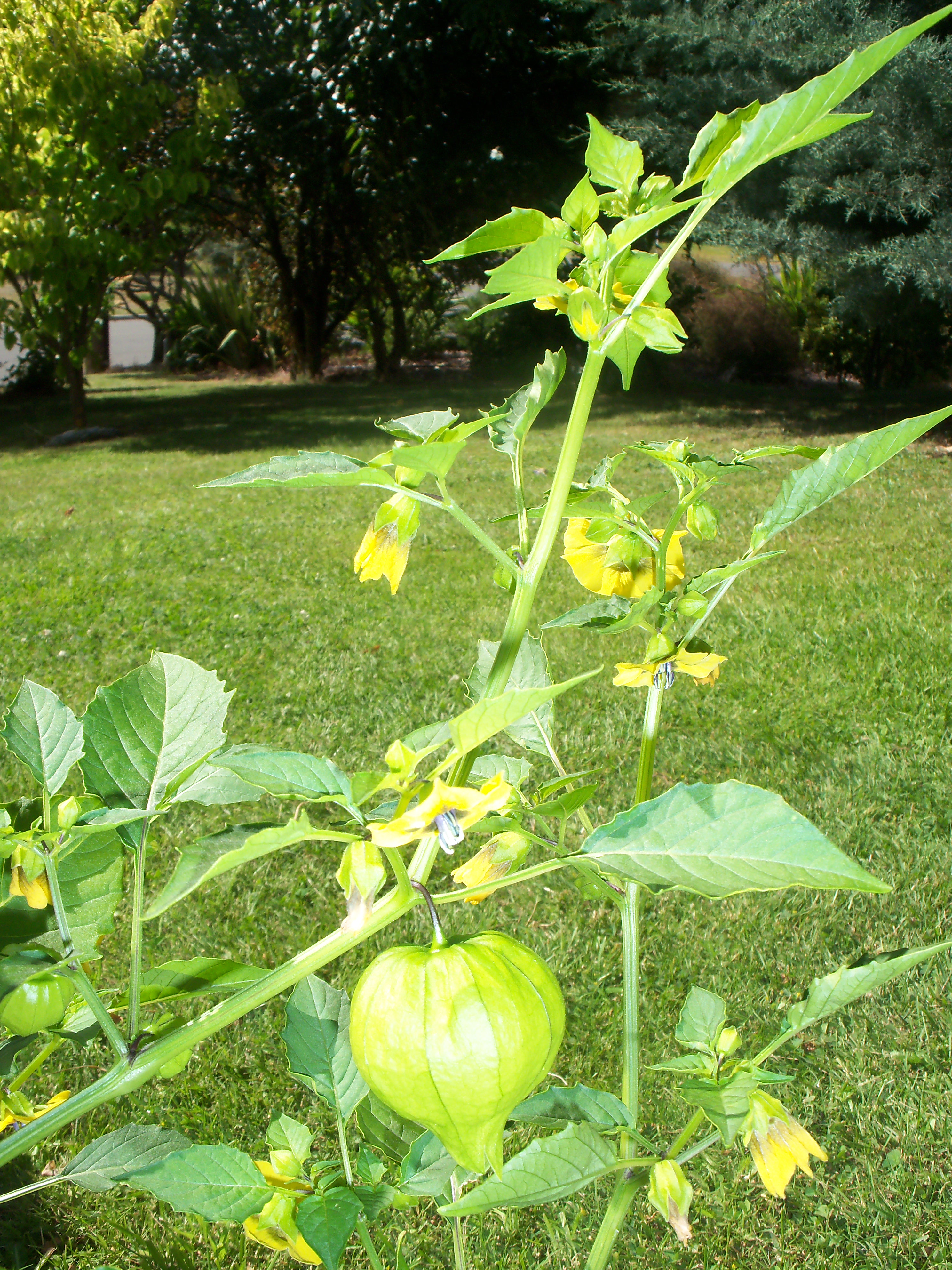
A beautiful plant with interesting capsulesLast year in my garden, shortly after I had planted my tomatoes, I found new strong-going regularly-arranged never-seen-before sorts of weeds. I started pulling them off then decided to keep a few, by curiosity.

They became stronger and larger and I started asking around what they could be. When they became covered with small yellow flowers, resembling potatoes’ flowers, we knew they were solanacees. Nightshade family I was told, very toxic plant. Then a friend recognized them as physalis and the next day, they displayed some capsules confirming this diagnostic. Toxic yes, but when the fruits are ripe, they are edible.

Where did they possibly come from?! I sort of remembered that two years ago, I had bought a punnet of tomatillos from the Mediterranean Market, and I had thrown the last three of them in the compost. I had added some compost when planting the tomatoes… That’s where they came from. 

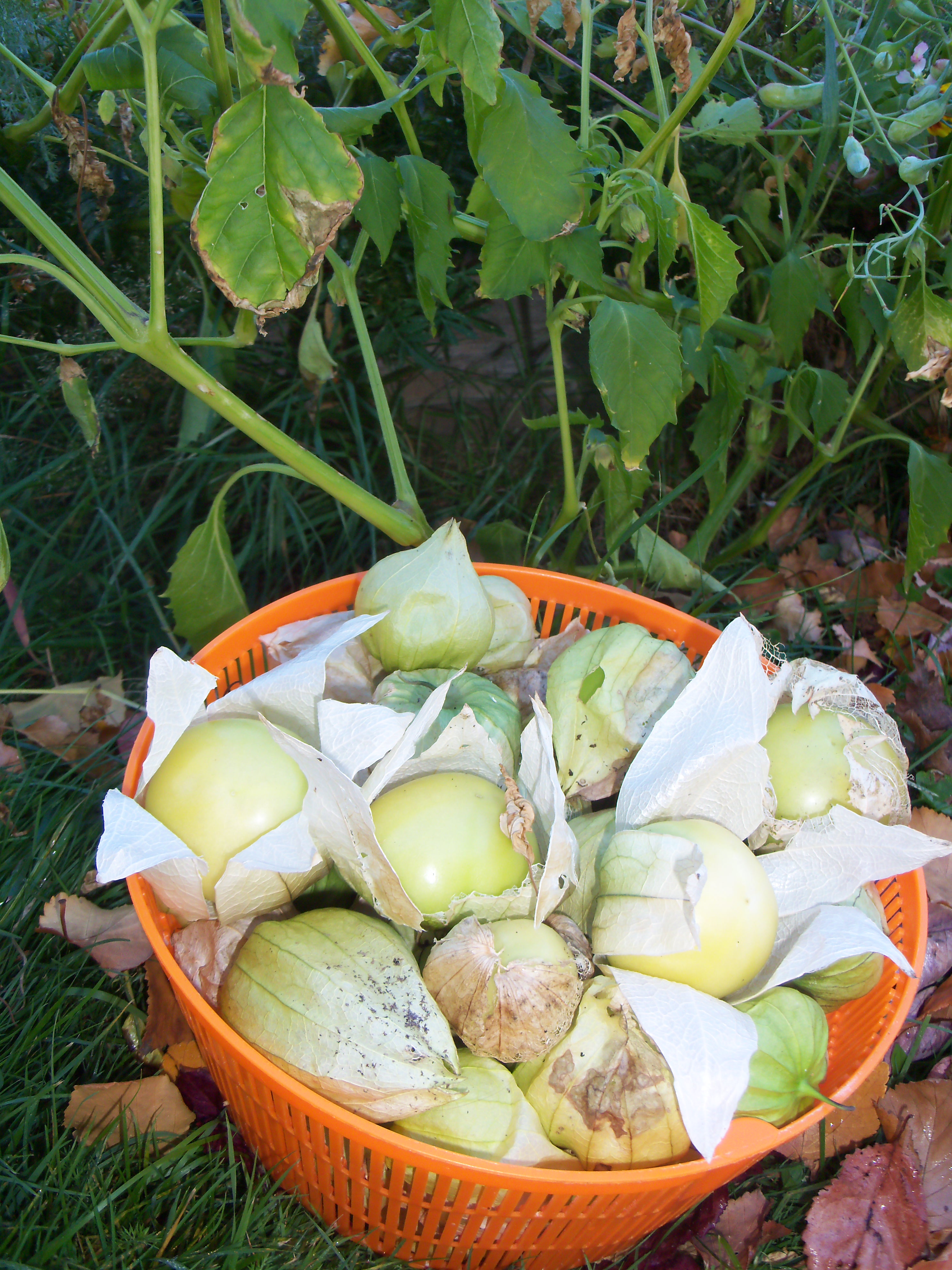
And they grew and grew and produced more than 3 kilos of fruits each, making it a quite productive plant, worthwhile considering in our climate. The fruits are ripe when they fill in the capsule. I looked for recipes and made some salsa verde, which did not look too good but had an interesting taste with Mexican food.

The recipe we preferred was with prawns and coconut milk, to accompany rice.

I am so pleased I did not kill them. I kept some seeds and grow them again this year. This time willingly, therefore I plan for some space around them!

Recipe:

The detailed recipe is here but basically, we brown one onion and a few garlic cloves in oil, then add sliced washed tomatillos then frozen shrimps. Cook for 15 mn-ish. When the mixture is drying in the pan, add coconut milk. Season with pepper, lemon and coriander. Add feta pieces. Serve with rice. Delicious!