Regenerative Livestyle Blog


2 Comments

Climate Action

What do we want?
CLIMATE ACTION!
When do we want it?
NOW!

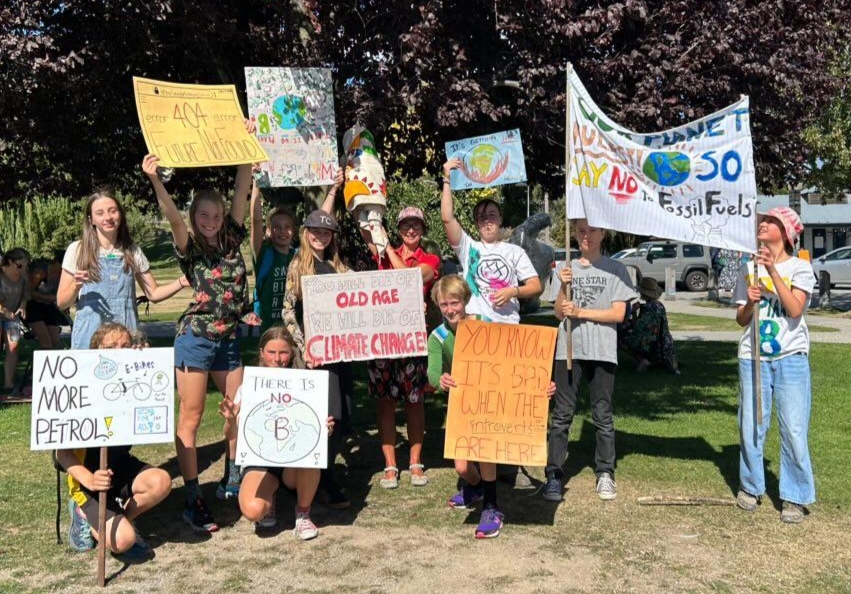
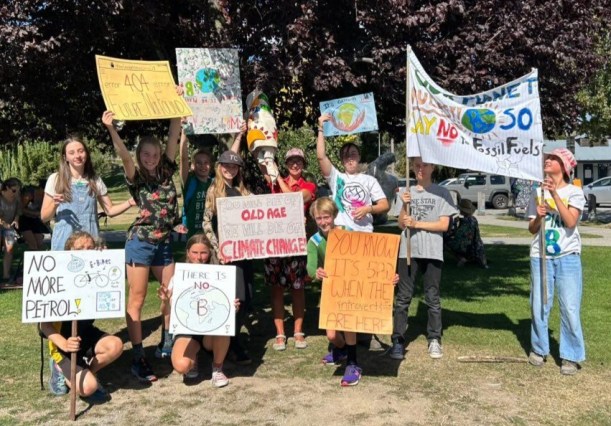
Following and chanting in the Wanaka Climate March on Friday 5 April behind my ex-students (feeling very proud of them!), I reflected on MY climate actions. Here they are, small steps in all aspects of life…

These are actions one person can do at home in their lives. I share these ideas to inspire. I would love to know what you already do to mitigate climate change and enhance biodiversity. Let’s save the planet together, because “We have to“, says Janet Goodall in her Book of Hope.

“Halve our emissions by 2030…”

“…And halve that again by 2040“, says local climate scientist Carly Green. For a long time, I have been looking at my emissions and phasing out fossil fuels and embedded carbon, in plastics, transport, chemicals, consumption, energy, land management, food…
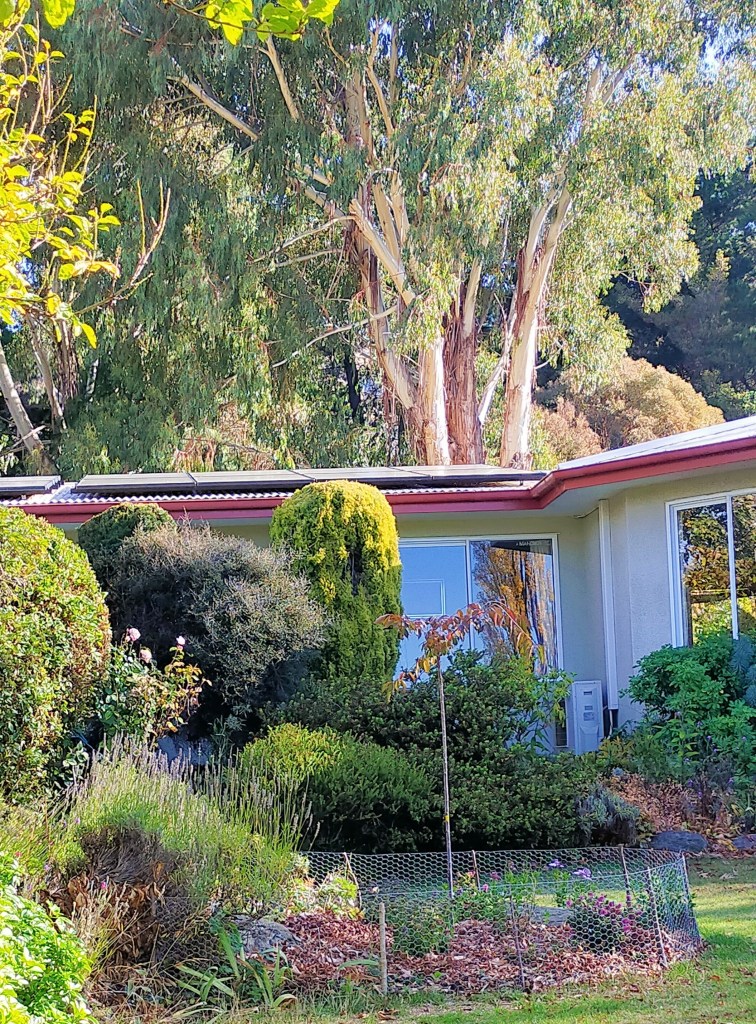
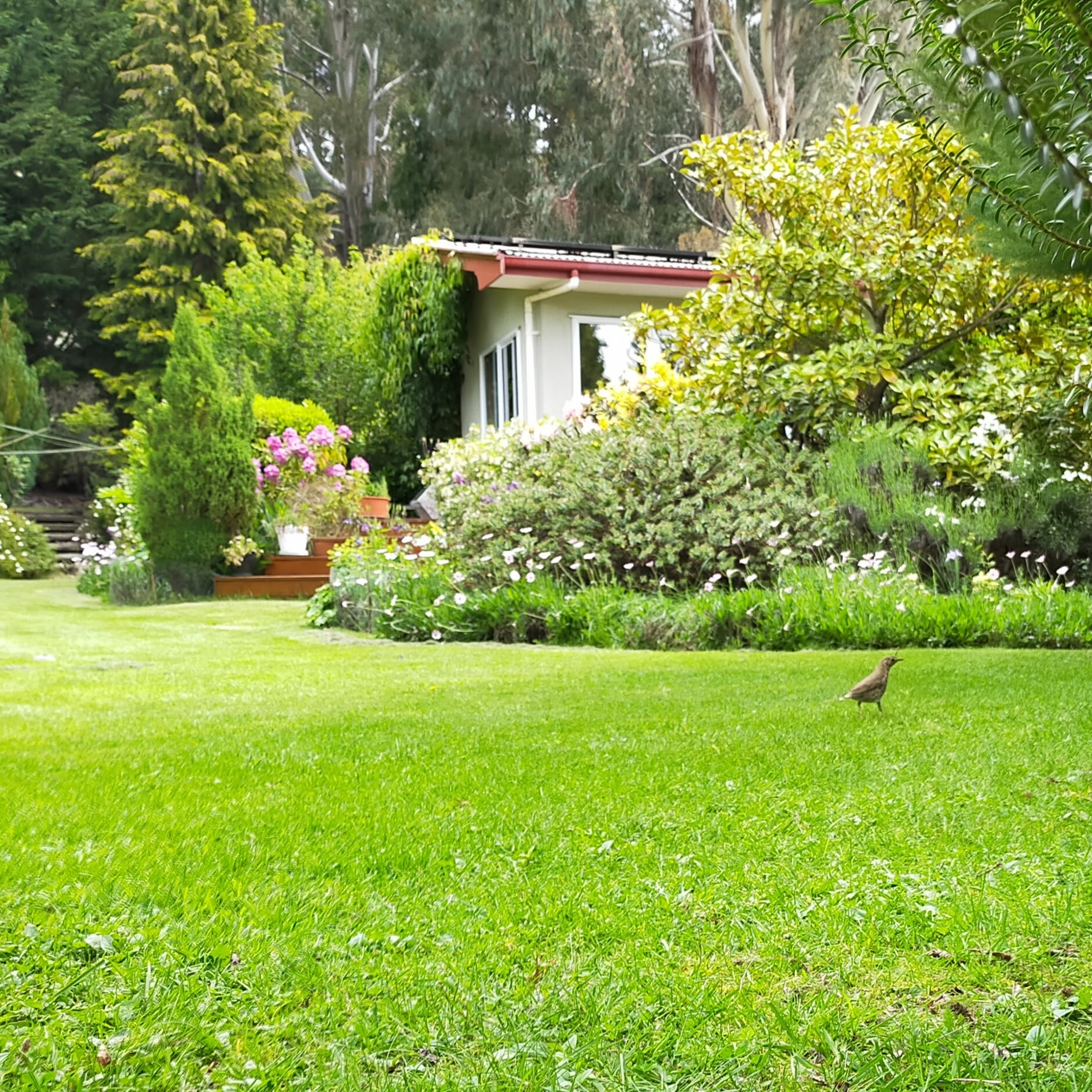
Solar panels, gardens, lots of trees, beautiful and relaxing

So here is a list of changes I and we have done over time, in no particular order.

Plastic and waste

For years, I stopped single use plastic personally and always carrying bags and cups. If I forget my cup, I don’t get a single use cup: I either sit and have my drink there, or I don’t have any. Then I don’t forget anymore. When shopping, we are phasing out plastic items, always choosing the non-packaged, wood, bamboo, hemp or cardboard option and this is still ongoing.
We refill the same plastic pockets for bulk nuts, lentils, etc. No gladwrap here! Instead we have a bunch of beeswax food wraps, reused and reused.
We are not zero waste, yet: Our rubbish bin goes out every two months, our recycling once a month approximately.
I make our crackers, bread, etc, to avoid plastic but we still have plant milk cartons.
I separate and recycle soft plastics and tetra packs.

I have campaigned the Council for years so they use a chip in the wheelie bins to count people’s waste and practice the Polluter Pays Principle rather than a blanket rate for waste that enables, therefore encourages people to fill a whole wheelie bin of rubbish every week.

I have lived in Wanaka for 20 years, raising my family.
I have been involved in several local community groups and initiatives. Green drinks, Transition Towns, Kapa Haka, Mac Team Green, 2015 Climate March, Local Food Wanaka, Plastic Free Wanaka, Friends of Wanaka Wastebusters, Te Kakano, a lot of fun really.
I have now retired from all these community involvements but I continue nature advocacy at the local Council level and
wholeheartedly admire WAO, WAI and Grow Wanaka work for nature and community education.

Transport

In 2015, I swapped my car to a Prius and had hybrid vehicles since. It means, I have halved my fuel consumption all this time and I halved my fuel bills too.
Now with an ebike, all local trips are solar and muscle powered. And I love it, smiling away like a teenager on their moped, just silent and more careful!
We make sure our activities and hobbies are not carbon intensive.
We have decided to halved our travels, nationally and overseas. This hurts a bit but ethically, I had to! Now, we plan ahead and will stay “there” a bit longer. Many people tell us the planes fly anyway. Of course, until many people also halve their travels and there will be twice less planes. Electric planes are coming up so that will ease emissions of national transports.
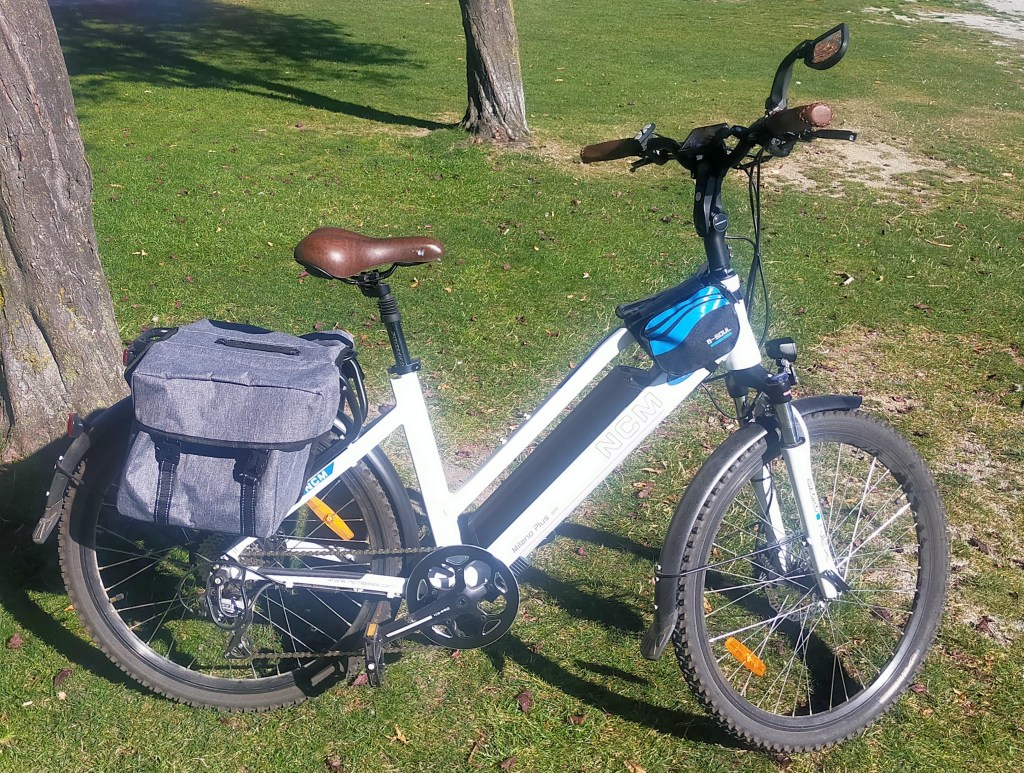
With panniers for shopping and mirror for safety
Chemical free

Chemicals are made from fossil fuels, they are polluting and bad for health.
So I have always chosen chemical free soaps, creams, cleaning products… Skin Deep database has been helpful to identify the risks of cosmetics. Reading the labels and googling it is helpful too. Making my own oils and cleaning products (easy) is even better.
Likewise, we don’t use synthetic chemicals in the garden, fertilisers nor pest/weed sprays, instead we use natural soil enhancers, a lot generated on the land, compost, comfrey tea, etc.
To support agriculture without chemicals, I am buying organic as often as possible.
Better for the planet, better for our health and delicious.

Energy

We are nearly off the grid. This is important because 20% of NZ electricity still comes from fossil fuels. We initially installed 10 solar panels, then a few years later, another 10 panels and a year later, a battery. Over the years, we have swapped all our tools to electric versions. As powerful, lighter, not smelly, not noisy. Our latest car drives 55km on a charge, which is sufficient for most of our trips. It feels good to be powered by the sun and our electricity company owes us money!
We have also reduced our own energy use. There are lots of ways to do that: short showers, lights and standby off, replacing bulbs with led, heating the oven for all the baking at once, putting on a jumper instead of a heater, just being mindful of energy, we are energy too, we can tune in…

The solar panels return on investment is immediate!
If you have $10K in the bank and put them on the roof, the next bill is $100 cheaper, that’s equivalent of a 12% interest rate!
Oh! and it’s so easy to install with local solar pioneer Wanaka Solar and it feels so good to cook, shower, travel, work with the sun!

Several NZ banks now offer a zero% interest loan on solar panels so you can reimburse with the gains.

Rewiring NZ reports that households can save money and also significantly reduce their emissions by electrifying their appliances and vehicles. Let’s ride the ‘electrification tipping point’ together!

In gratitude and awe with the Sun and nature, thank you.
Consume less

For years, I have reduced my consumption, asking myself if I really need it before I buy it, always looking at Wastebusters first and we repair stuff. It’s fun and also cheaper! I am content with what I have, I don’t want more, I prefer simplicity. Granted it doesn’t contribute to the “economy”, it is about degrowth, but degrow we must to come back within the Planetary Boundaries.

A simple way to stop contributing to climate change is to divest my own money from being invested in the fossil fuel industries. I checked the MindFul Money comparison tool and made sure my money is in a bank 100% not invested in fossil fuel, and divested my kiwisaver too.
The returns are excellent and it feels good.

Clearly GDP is not a good indicator of progress: disasters creates reconstruction jobs, sickness creates a medical industry, crime creates lots of security devices, war is fostering weapon industry, all tallying up in the GDP. When the economy contracts (0.3% in the last month in NZ), economists, businesses and people freak out, they fear of lacking so they accumulate as much as they can, in case of a rainy day. Thereby creating a rainy day! In fact, it is best for the climate and the planet if we are buying less stuff, making less stuff, working less, needing less. The best policy the government could do is to accompany recession to soften the impacts. A universal salary is a good start, then people would no longer fear lacking. I personally feel I have enough and it is not luck, it is a conscious choice. To me, having “enough” is better than wanting “more”.
Another way to look at economics is the Doughnut concept (really good presentation of the Doughnut in NZ here): putting people and the planet first, decoupling economic growth from carbon use, investing in clean technologies, putting the economy back in its role as a tool not an end. Dunedin Council started in 2020 and is going for it (see ODT article here).
The Happiness Index seems more holistic, fair, relevant and climate-friendly too.
Maybe Confucius said: “Live simply and happy“. No he didn’t! But it is true.

Land management

Here is how we manage our land in harmony with nature to enhance biodiversity, on our 2.5 hectares just on the outskirts of a growing town: 

  • planting hundreds of different trees, creating an arboretum. No monoculture here!
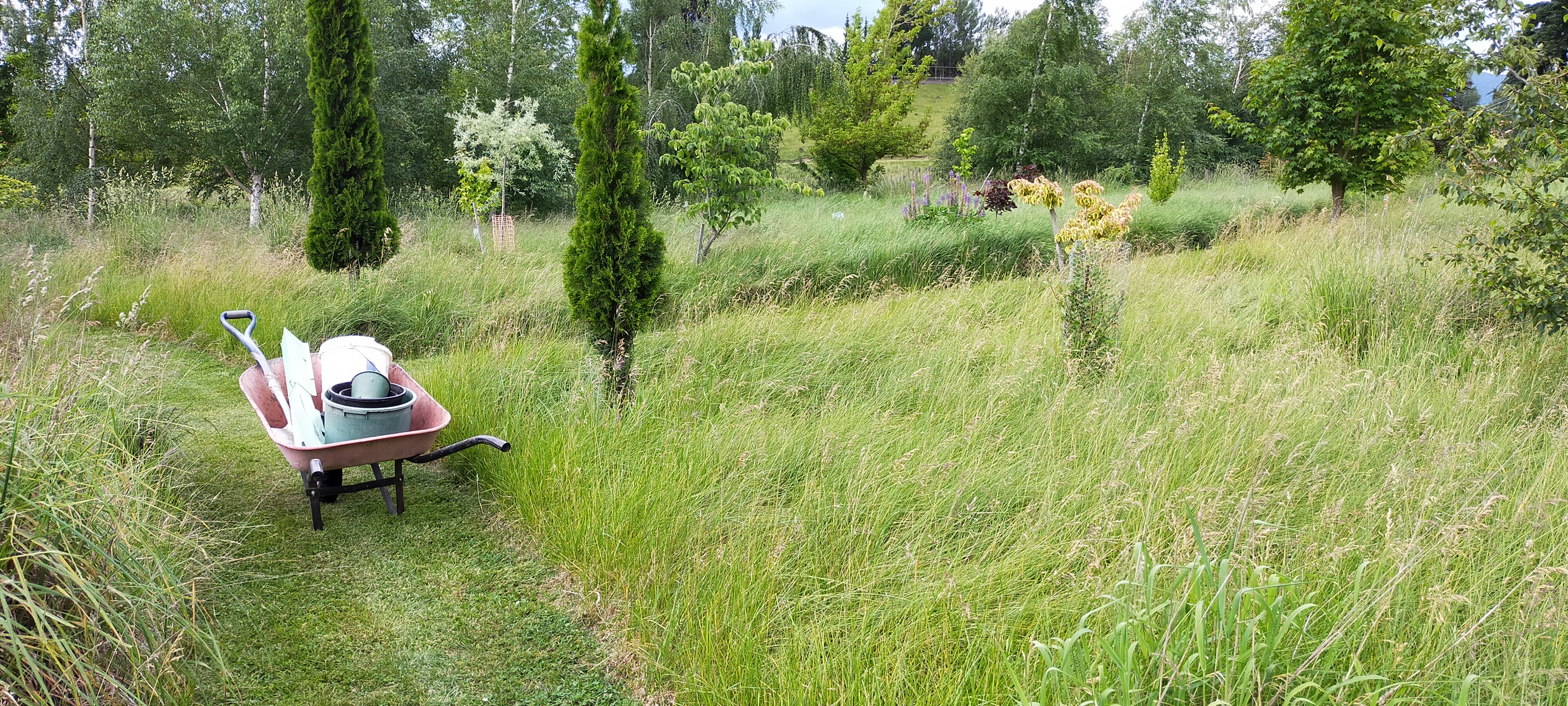
  • the park is not mowed, lawns are only cut around the house and on footpaths. The uncut uneaten grass grows and dies back every year, absorbing carbon, becoming a sponge, regenerating the land and now a home to insects, birds and skinks.
  • the whole property is cared for without chemicals and without fossil fuels (electric tools, incl. the lawn mower are charged with solar panels)
  • we share the land: the park is open to the public as part of guided garden tours and the land is shared with another household in a tiny house. And we share the story and how-to as part of the garden tours and Regenerative Lifestyle classes. 
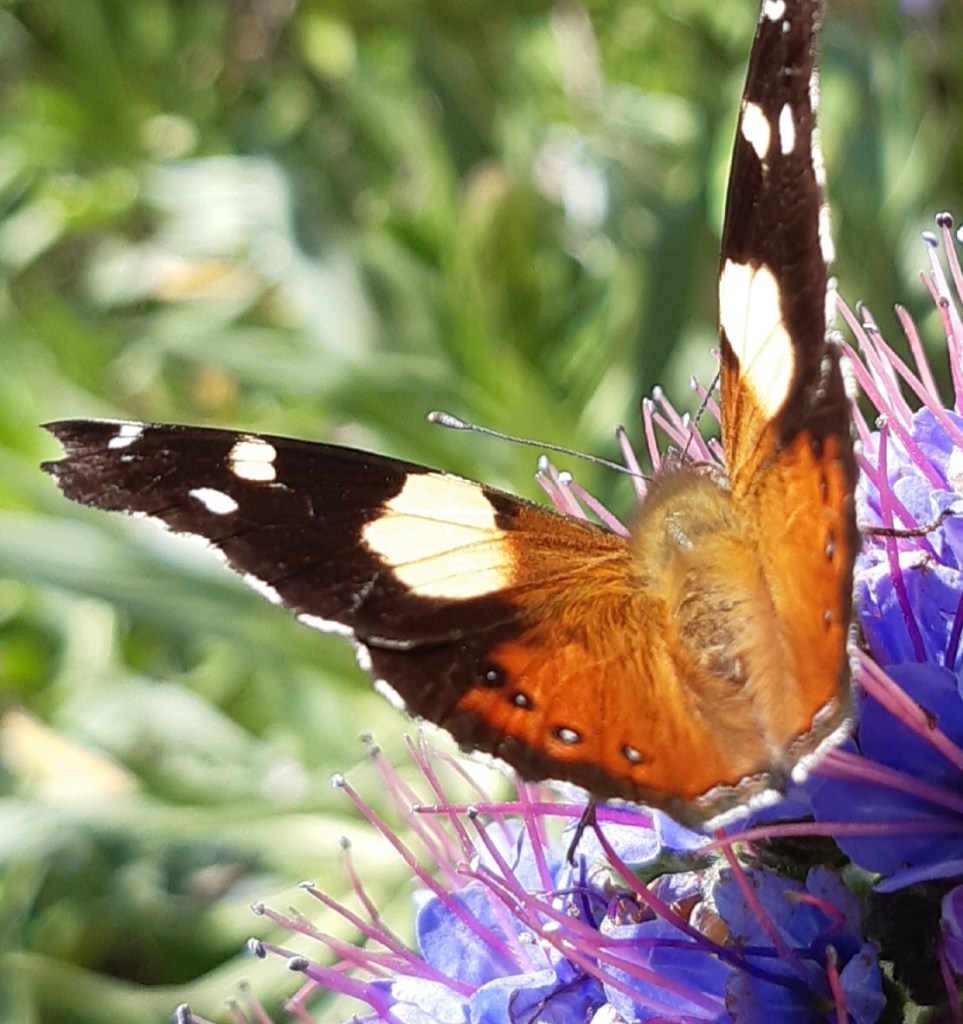
Good for the bees, and beautiful too
Food

Food has one of the biggest impact on the climate. In the Drawdown, Solution 3 is “reduced food waste”, solution 4 is “plant based diet”, silvopasture and regenerative agriculture are close behind.
Reducing consumption of meat, milk, cheese, and butter are a critical way to reduce our carbon footprint.

I have never been a big meat eater and became vegetarian since my pledge at the first Wanaka school strike for climate March in 2019. And I love it, I feel more healthy. Now, meat production looks unnatural and unethical to me. Fish? Oceans are in crisis so I let the fish replenish. No loss there.

Climate friendly food is a variety of cereal, with lots of vegetables and fruit everyday, a dose of protein: beans, lentils tofu, tempe, and a dollop of seeds, a handful of nuts. Simple, healthy, delicious, affordable and allegedly better for the planet too.

Planet friendly food is also:

  • seasonal (cheaper too), 
  • as local and organic as possible (less transport km, no chemicals which embed a lot of carbon and pollute),
  • not processed, as most processes require energy, degrades the food wholesomeness and comes with packaging. So I make our bread, muffins, juices, etc.
  • not peeled for all the goodness and fiber (only if organic), 
  • not cooked long (also saves energy), 
  • without fat (easier to wash the dishes, using less water and hardly no dishwashing liquid),
  • hardly any salt nor sugar (better for health too)
  • leftovers are reused or frozen.
  • all the peelings goes to bokashi or compost, without the fruit sticker!

It is important to read the ingredients to avoid chemicals and ban palm oil, best within 2 lines of ingredients.

Lots of vegetables, many from the garden

A report published in 2010 by Ella Lawton and R. Vale concluded that in remote areas like Wanaka, the biggest difference we can make is to grow our own food. So we do. Not all of it, but more and more and it is fun. Grow Wanaka Community gardens is a great place to start and learn, as well as the Wanaka Vegetable Growers club.

Action to hope

Do these little things make a difference? Yes they do! All the plastic I haven’t bought and discarded, all the petrol I haven’t consumed, for years… I adds up.
I have calculated our household carbon footprint with this tool https://www.futurefit.nz/ and it turns out, we are emitting less than the “target”!

We are nonetheless continuing to reduce our waste, energy, consumption, travel and planting more trees, because we love it.
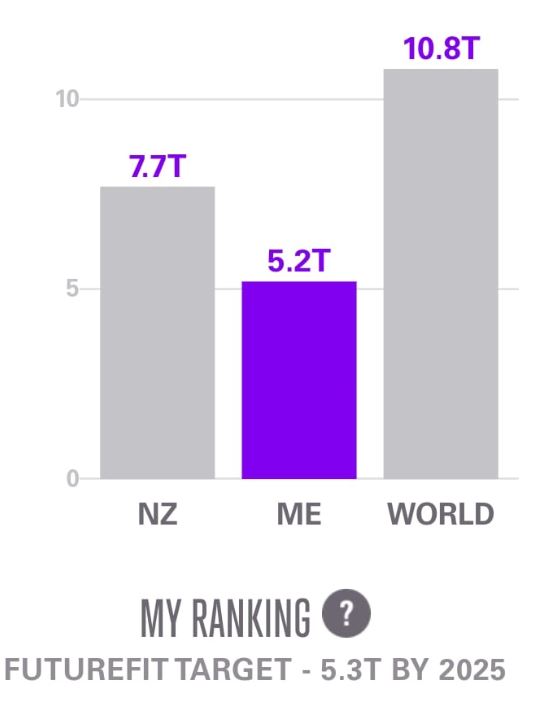
My personal carbon footprint is below the 2025 Future Fit GHGe target

I act to keep hope, I feel the need to share my vision of the world and climate friendly practices. So I am advocating online (BlueSky, Regenerative Wanaka FB group and in this blog), in submissions, in climate marches, in community speeches… It has been my job to collate practical ecology information all my career. And it’s my hobby too, my purpose! I love to share solutions, positive actions, no grumble, no judgement, we are together in these crises on one planet. I continuously learn more about nature (trees are incredible!!)

Most importantly, we spend a lot of time in the garden, not only to grow our own food, plant a lot of trees and plants adding diversity and beauty, but also to enjoy nature. Connecting with nature, trees, peace, calm, simplicity, I think this is the key, nature changes us. 

Relax, do and eat less, be and love more.

Many things that many people can do, if they choose to. It’s no hardship, it’s caring, it’s loving. Because I love nature, because I love children. It is a little effort, a focus, like we attend to our children. I hope I gave you some ideas and inspiration. I believe all these little actions make a difference for the climate and the planet, therefore young people and future generations.
What do you think?
What are your climate actions?
What are you ready to change ?

1 Comment

Calendula wonders

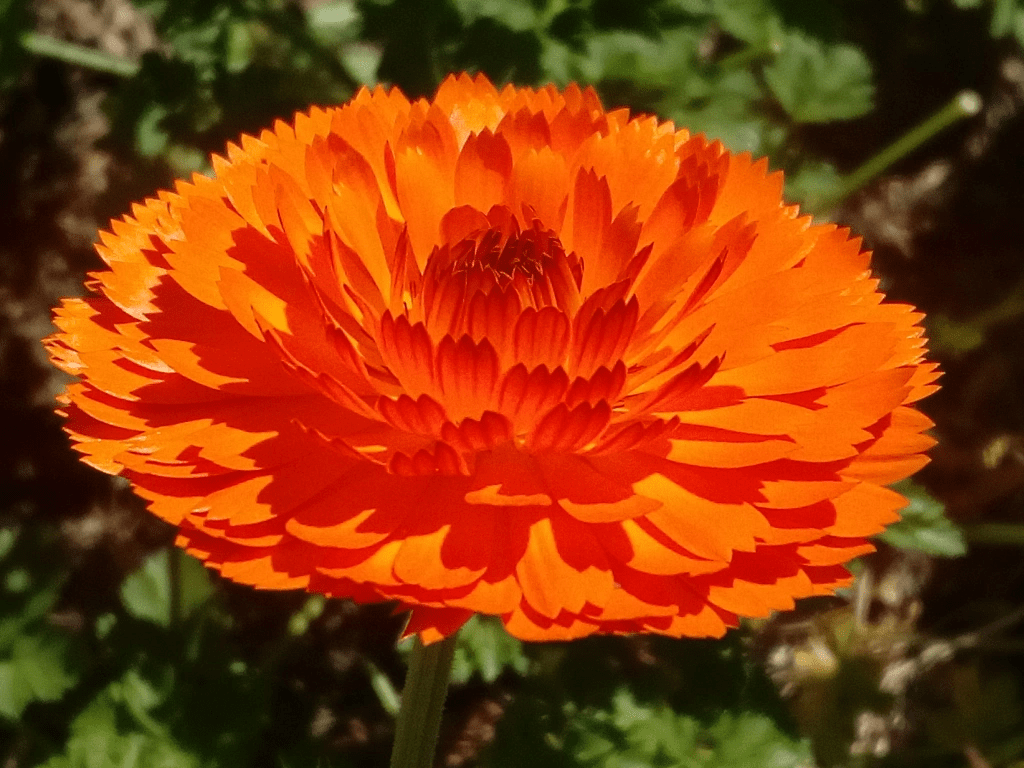
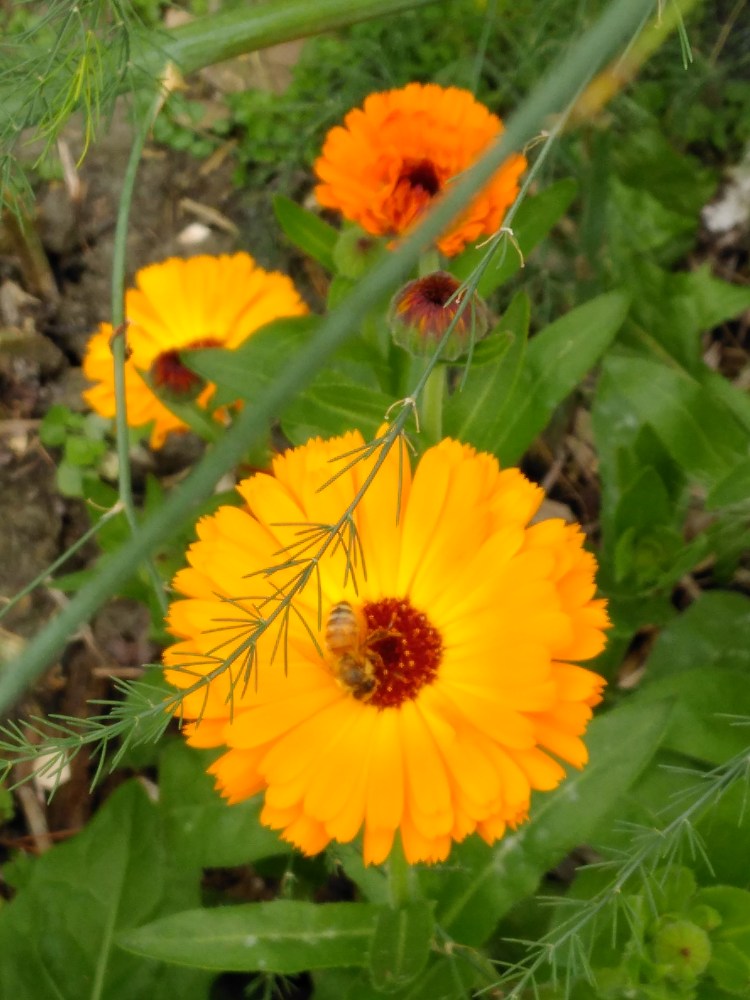
We love Calendula, the English Marigold. Orange beauty, it brightens the veggie patch, flower gardens and other corners. The Calendula name comes from the word Calendar and I think it is because it flowers every month of the year! Easy to cultivate, we use it as companion plant, in salad, tea and skin ointments.

Culture

Calendula is an annual, rustic plant, forming 40 to 60cm compact plants.
Large yellow to orange flowers will bloom all year round and massively from October to frosts. 

Seed in autumn or spring in full sun or partially shadowed. They grow anywhere, even in poor soil, even in our dry and frosty climate. After flowering, the heads become seed heads, easy to snap off for esthetics or keep for seeds.

They self seeds easily and can be replanted where wanted. They are also very easy to pull out when we need the space, they won’t come back from the roots.

Companion plant

Calendula attracts and feeds insects when no other flowers are available thereby enhancing biodiversity.
They attracts natural predators to aphids (ladybirds, hoverflies…);
Their roots hold good nematodes for a healthy soil.

We cultivate calendula in the veggie garden, one plant in each raised bed to attract favourable insects.

They also grow everywhere in our flower beds, filling in the gaps and adding their joyful colours.

How we use it

Comestible plant, we add petals to salads to brighten them up.
I add some petals in the “garden tea” but not leaves as I find them quite bitter.

I make a beauty oil: I harvest nice fresh parts of the plant, leaves, flowers and stalks, cut roughly and macerate for several weeks in a variety of oils (sweet almond, grapeseed, avocado, apricot kernel…). Then it is simply strained and funneled into a glass jar with a dropper lid. I used to make a cream with beeswax but it was longer and quite messy so I simplified to oil. Of course we can add essential oils to perfume and help our skin, lavender, geranium or rose. I sometimes mix cistus leaves and flowers into the oil maceration, cistus is good for aging skin!

Medicinal uses 

Its Latin name is calendula officinalis and for good reason. My Maria Treben’s Cures book (Steyr: Ennsthaler, 2000) has 2 pages on it. Here is a summary:

Depurative, blood-cleansing, purifying, stimulating for blood, antiseptic. Also the plant of the skin, wonderful for wound healing. 

Drink two cups per day of calendula herbal tea to help cure jaundice, wounds, digestive illnesses, intestine or liver or stomach pain, colitis, dropsy, and hematuria. Calendula herbal tea is ideal to help with all viral and bacterial infections. Also effective vermifuge and laxative. Calendula herbal tea applied on eyes helps vision.

Some recent study show good results with cancer, skin cancer, breast cancer, stomach and ulcers. In this case, fresh plant juice is more effective.

In cream or oil ointment, calendula is wonderful for skin. From post-chirurgical wounds to fungus, blues, strains, scars, piles and varicose veins, sunburns, dryness, age pigmentation, also purulent or swelling wounds.

Calendula TM is a powerful antiseptic and helps skin recovery. It can be used on any wounds and post-natal or postoperative situations: infant umbilicus, lesions, sore… 

Good to know and beautiful to grow!

A pharmacy in your garden!


3 Comments

Namaste Park and Gardens

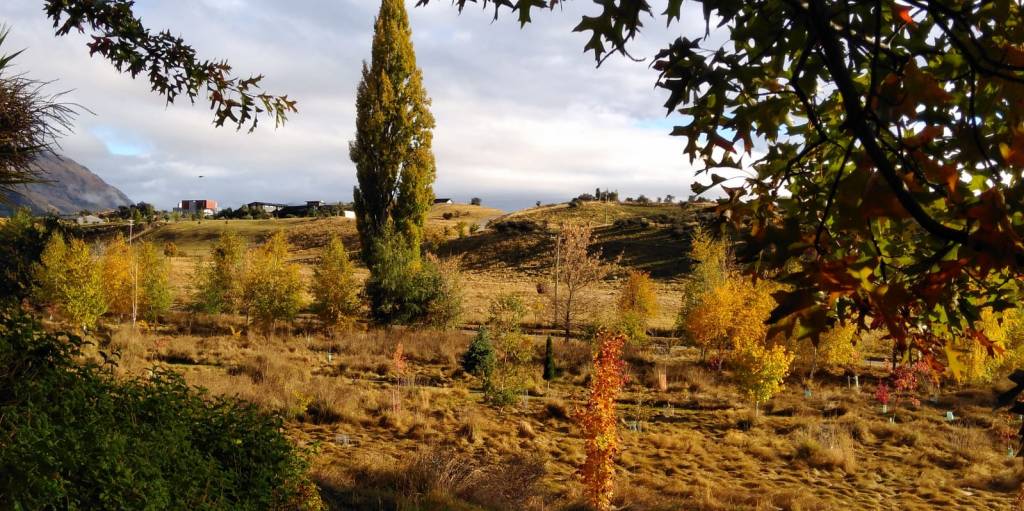
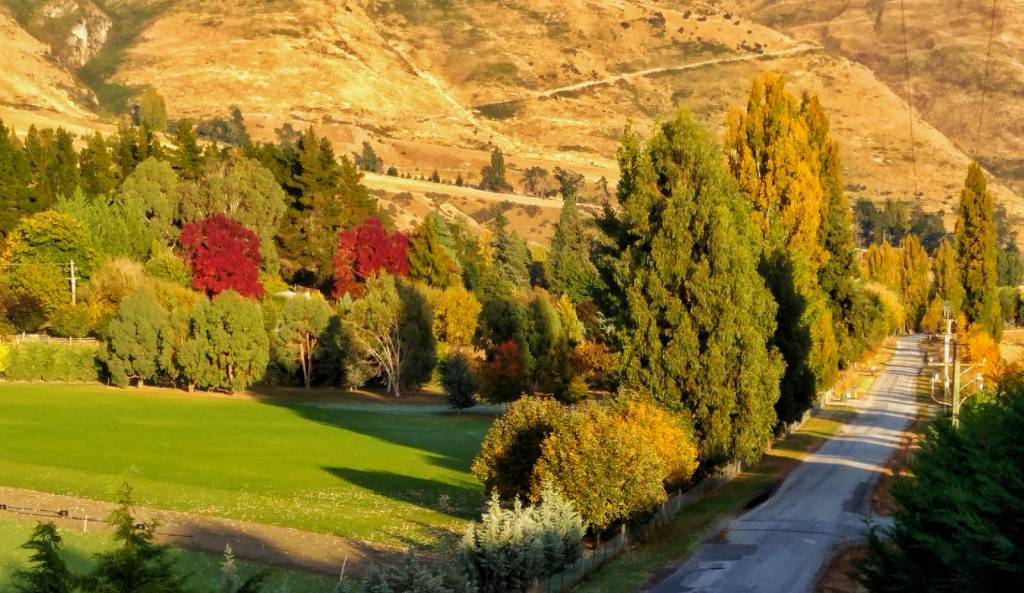
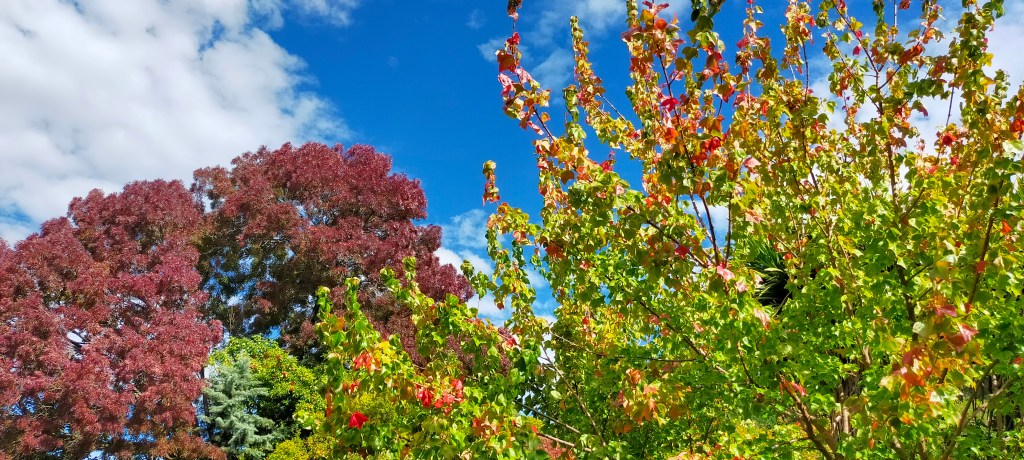
Namaste Park in autumn

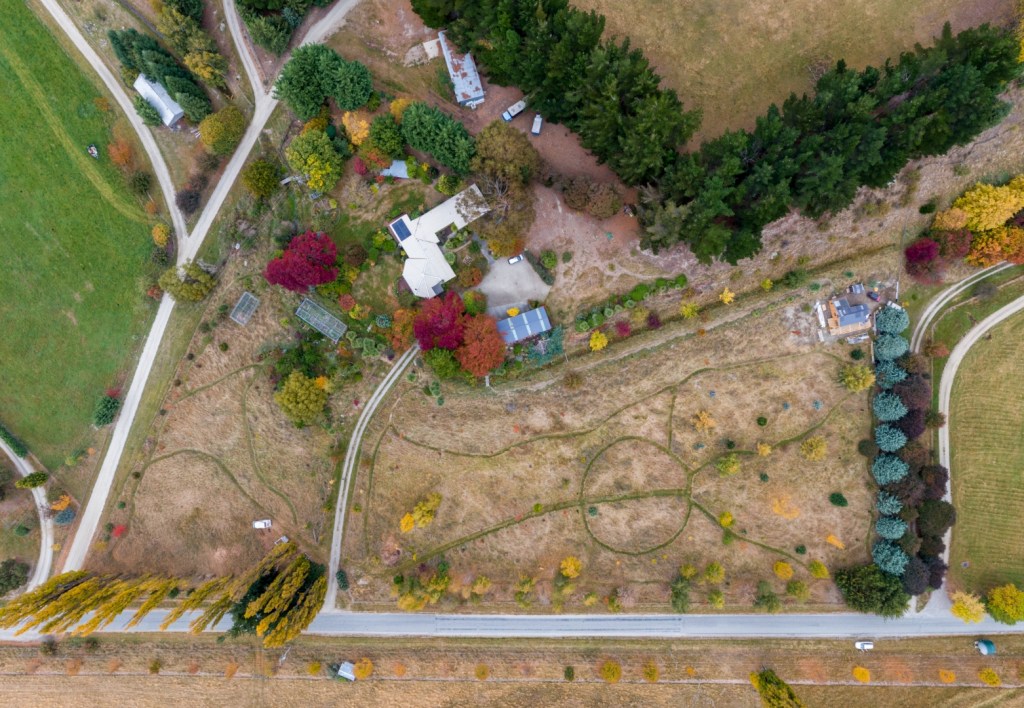
Namaste Park and Gardens is a 2.2 hectares lifestyle property on Studholme Road, Wanaka; currently on the urban boundary of Wanaka.
In the upper part of Namaste Gardens around the dwelling, the property hosts a dozen mature trees of significant height and hundreds of shrubs, trees and more formal gardens – home to abundant bird life.
The lower eastern side of the property hosts two small ponds, flower gardens, fruit and young nut trees and enclosed vegetable and berry patches.

Namaste Park

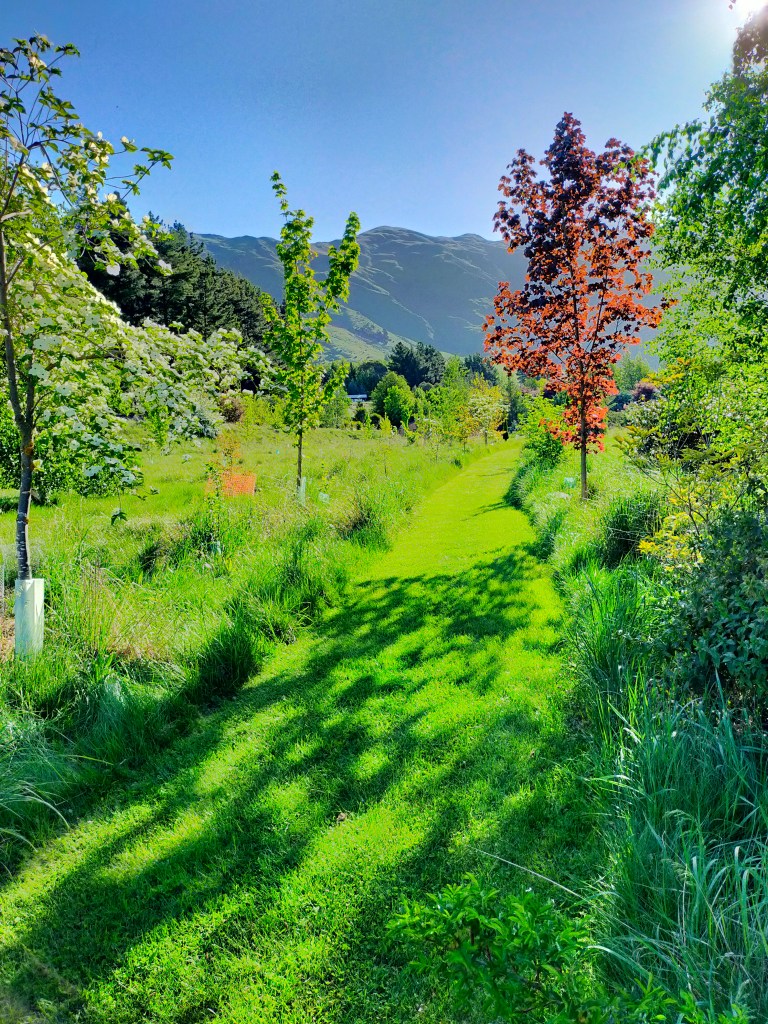
The lower part is a one-hectare arboretum planted by the current owner over the last 16 years. Once a bare pasture, the area has been planted with more than 500 trees, mostly all different, with a forest of silver birches on the road side, a grove of dogwoods, an area with crabapples, lots of maples, and many more different trees from all over the world that survive our Wanaka climate.
Established boundary trees of Cypress Glabra align the western boundary and a collection of Conifers are well underway over a fifth of the arboretum.
Many of the chosen trees are rare and unusual creating a significant collection of interest. In the heart of the park is a small native area.

The park is a beautiful and lush open landscape, designed to show amazing blossom shows in spring and splendid foliage colours in autumn, along with benches and curved footpaths. Although the emphasis is not on natives, we believe the sheer variety of trees planted offer a unique and valuable open space for people and biodiversity.

Dogwood and maple “avenue”

Sustainability and Regeneration

As Studholme Road is a small valley floor it offers a unique corridor of biodiversity, attracting birdlife which would be lost if the number of established trees were to be removed. Birds include Fantails, Silvereyes, Bellbirds, German Owls, Ruru, Hawks, Oystercatchers, Quails and Tuis along with a number of more common bird species.

With the lawns being cut only on footpaths, the surrounding
grass is regenerating the land and is now home to insects,
birds and skinks.
No biodiversity inventory has been done yet.

The property doesn’t have any town water source and is serviced by a deep bore, which makes the regeneration of the land all the more important. The deep soil now retains enough moisture to keep green in summers with minimal drip irrigation watering.

The whole property is cared for without chemicals and without fossil fuels (electric tools charged with solar panels). It is a fantastic example of how one person can regenerate bare grazed land in just 18 years, bringing the dawn chorus back (all day chorus actually).
The landowners intention is to keep the land as a whole, for perpetuity, with owners continuing guardianship and fostering nature life.

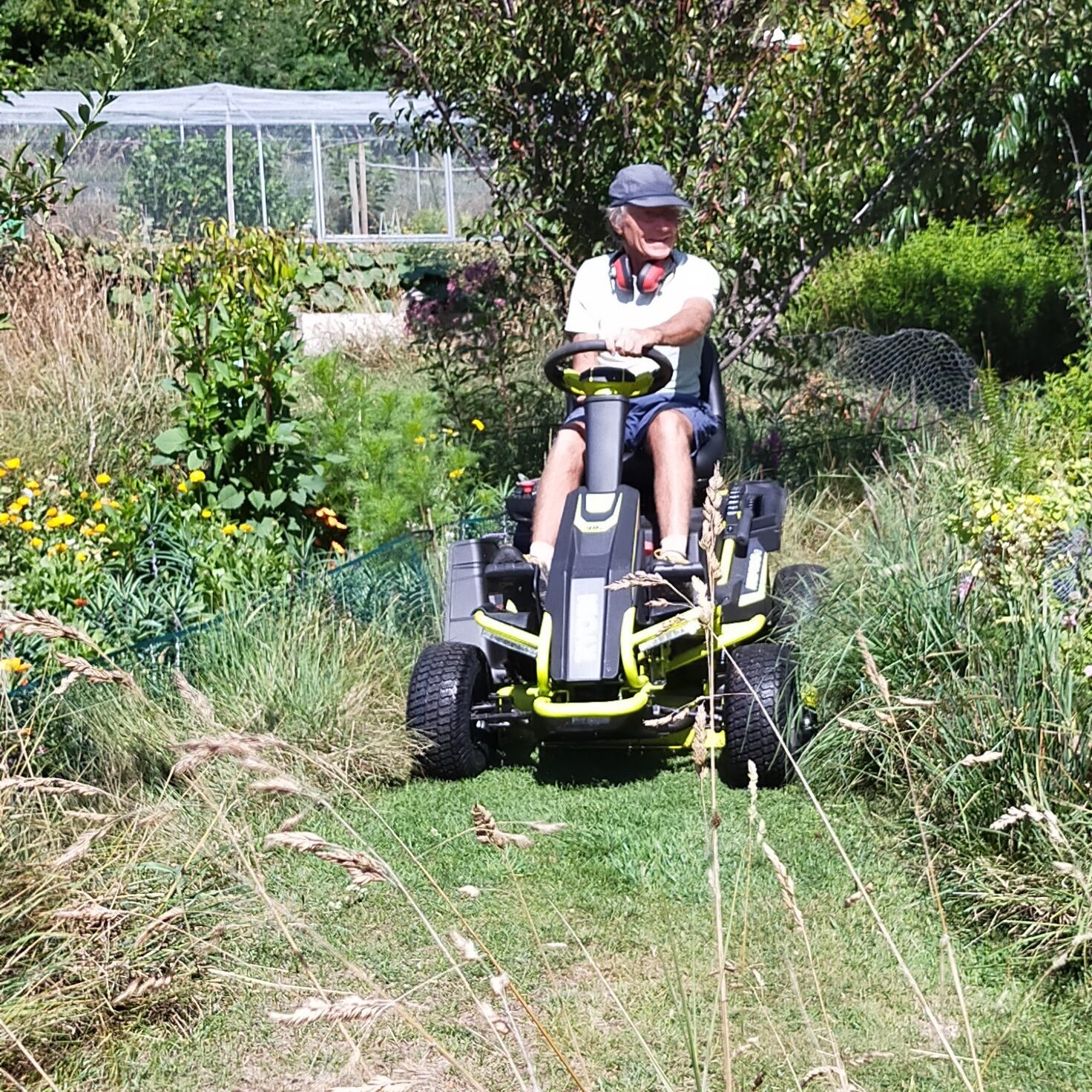
Electric ride-on lawnmower

Peri-urban context

The property is sitting in a zone planned to become urban within the next 28 years, which means the sections and trees in this zone will overtime be chopped up, leaving no nature in the area. Already both ends of Studholme road have been subdivided, at the upper end down to 400sq.m. If we look further on the town boundary along Orchard Rd there are currently intensive subdivisions taking place with the usual removal of all existing fauna, flora, top soil and land form.
Our park trees start to have enough growth and visibility to be admired by walkers from the road as well as visitors on guided garden tours.
It is our intention to open the arboretum to the public once more mature, thereby creating a valuable green space for locals and visitors. When the whole area around becomes dense housing, the Park will be a treasured haven for the community benefit and refuge for wildlife.

We are advocating the Council to create a regenerative land zoning or whichever way to enable people like us with properties planted with mature trees to be possibly preserved, but at this stage, council staff and councilors turn a blind eye.

There are other established zones of vegetation around Studholme Road so we have submitted for its inclusion in the Mount Alpha Outstanding Landscape zone.

The Wanaka Community Board have been consulted as well and have encouraged that this preservation be discussed with QLDC…

We have started a Biodiversity group on Studholme Road, facilitated by WAI, to encourage a more collective approach to ensuring open green spaces can be included in future Council rezoning.
We also have excellent support from Lake Wanaka Tourism who are keen to see more examples as outlined above.

We are working with QEII Trust to support us to enable long term protection of our property for the benefit of the “greater good”.

This beautiful place is visited as part of Beautiful Gardens of Wanaka guided garden tours and the place of Gardening in Harmony with Nature workshops.

It’s our beloved home, we enjoy enhancing the gardens, soil, wildlife. We love planting and nurturing the trees, watching them grow. We are privileged to be caring for this land in harmony with nature, guardianship, kaitiaki, gratitude 🙏🏵️


4 Comments

Regenerative Land Zoning

We are proposing a new Regenerative Land Zoning that encourages landowners to protect, regenerate and possibly share the land they are guardians of.

Context: the situation in Wānaka

In our district, urban growth is transforming the small town we love and pushing nature further and further away, decreasing inhabitants wellbeing and tourism appeal.

The urban area already stretches 10km from Bills Way to Albert Town bridge, which requires everyone to hop in a car to go anywhere, work, shopping, hobbies…

As developments start by removing all trees (incl. natives), massive earth moving and soil compacting, life, trees and soil present in the previously rural landscape are destroyed. It doesn’t have to be that way.

We now have kilometers of suburbia with houses four meters away from each other, where people can’t grow food let alone trees.

In 2023, we have to consider the climate, biodiversity and cost of living crises. To adapt, we need:

  • Connected pathways for commuting and recreation biking and walking
  • Plenty of trees and nature, 30% of land and water left to nature by 2030
  • Local food production

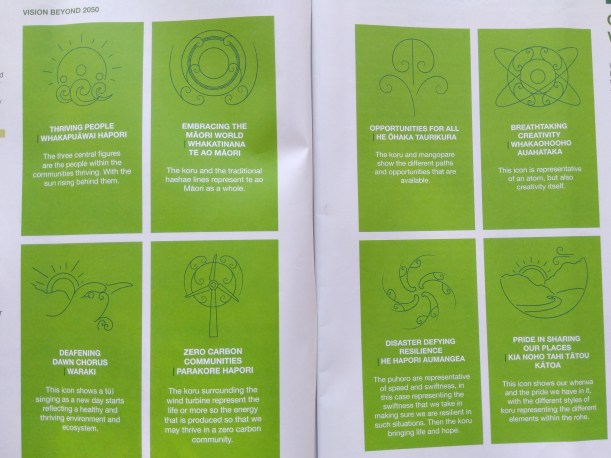
These 3 simple points enable low carbon living, good for nature and wellbeing, good for resilience and affordability. And it’s aligned to the QLDC Vision beyond 2050 principles:

Green belts exist on private land

The new subdivisions are now well beyond initially planned green belts and reserves.

Nature is pushed further and further away from the people. But in a sustainable resilient low carbon society, we do need nature and space for food production on our doorstep, not half an hour drive away.

Urban development is creeping on rural lifestyle areas, bulldozing them. Have a look at Orchard Road. It doesn’t have to be that way.

On many lifestyle properties in town and adjacent to town, landowners have planted trees and enhanced biodiversity on the land they are owners and guardians of. They are givers not takers. Kaitiakitanga. Thank you for having planted trees, established trees are treasures🙏 Taonga.

The current rules and price of land mean that when these creators sell, the land is chopped off with all the life on it. A simple optional new land zoning could prevent that.

Innovative Regenerative Land Zoning

We are proposing a regenerative land zoning, allowing landowners to voluntarily secure their land for perpetuity, providing they enhance biodiversity and/or the community.

The land can be sold with the same conditions.

The owners can choose how they want to regenerate: planting trees, native or not, restoring or creating wetlands, planting orchards for local food, planting fast growing well managed forests for local timber and firewood…

And the owners can choose whether they share it with the public or not, or which part of it. For example a strip along the road can be made into a bike lane; a grove of trees can be open as a park for the public; an orchard can be open for a time for locals to harvest; a land can be gardened by community groups or as plots…

It already happens. A few enlightened and generous landowners are already offering their land for the greater good.

A regenerative land zoning would foster green belts connections. It would create a network of biodiversity and community enhancing parks and corridors. Tracks through these corridors would enable low carbon transport. Food would be produced locally for resilience and affordability, and nature would be accessible for everyone with all its biodiversity and wellbeing benefits. Win-win-win.

Steps

I have shared the idea for two years, in emails to local influencers, including all the Councilors, several times. I have talked with many Council staff, I have presented it to several community groups and in the tourism sector, even prompting a standing ovation (at the WAO Regenerative Tourism hui October 2022). It IS a great idea with huge desirable benefits for all, thriving nature, resilient community and cheap for the Council.

Now is the time to sit around a table and make it happen.

Let’s start with the pioneers who have already created something beautiful which is at stake of being destroyed by growth. Let’s start with the landowners who already regenerate and share (or wish to).

What would encourage landowners to participate is yet to be discussed and finetuned, from rebate to maintenance or simply protection.

The Council is the entity capable of creating a land zoning and I am talking at a Council meeting on the 10th August to invite them to start the process. LWT, WAO, WAI, UCTT, Te Kakano, are invited in the discussion and action.

The innovative land zoning protects what we already have and deploys it to an exciting collective creation that, we all agree, would be great.

From landtaker to landmaker; From land management to guardianship; From $growth$ first to Nature first: a mindshift is happening.

One example of outstanding landscape, nature and biodiversity right on the urban boundary. Are we going to Love it? Or to bulldoze it?

To go deeper… here are 4 documents with more details.

Please contact us for any further information, if you are interested in participating, contributing, or if you know of similar public/private regenerative schemes in New Zealand and the world.


1 Comment

I am Tree

I looove Nature ; I looove Trees.

More than Loving, I AM NATURE!

I feel one with nature, with trees;

I believe humans (me and you) nature and trees are one.

I AM TREE! I realize it’s a bit extreme…

But it’s the story of my life and my purpose to protect them.

Growing with trees

Pun intended, as a child, I was often found in the garden observing or dreaming, up in “my” cherry tree.

Always, I found solace sitting against a big tree. I remember running to the park nearby to calm down after exams.

I feel the trees’ sap pulsing
I feel the trees strength and grounding infuse and calm me.

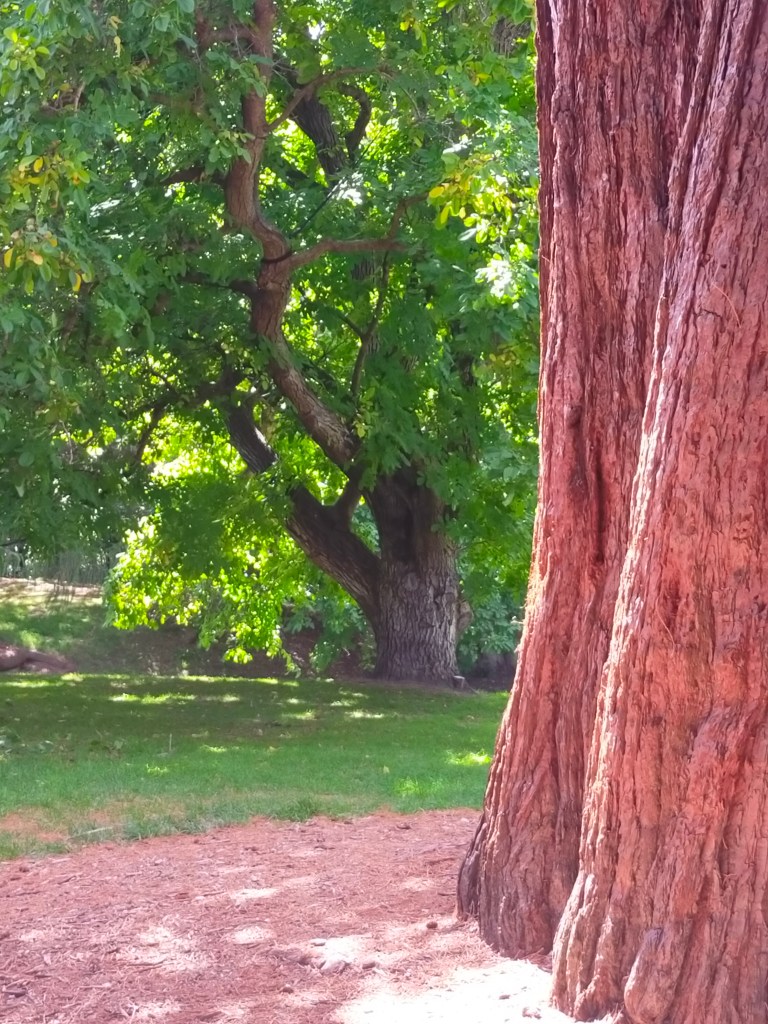
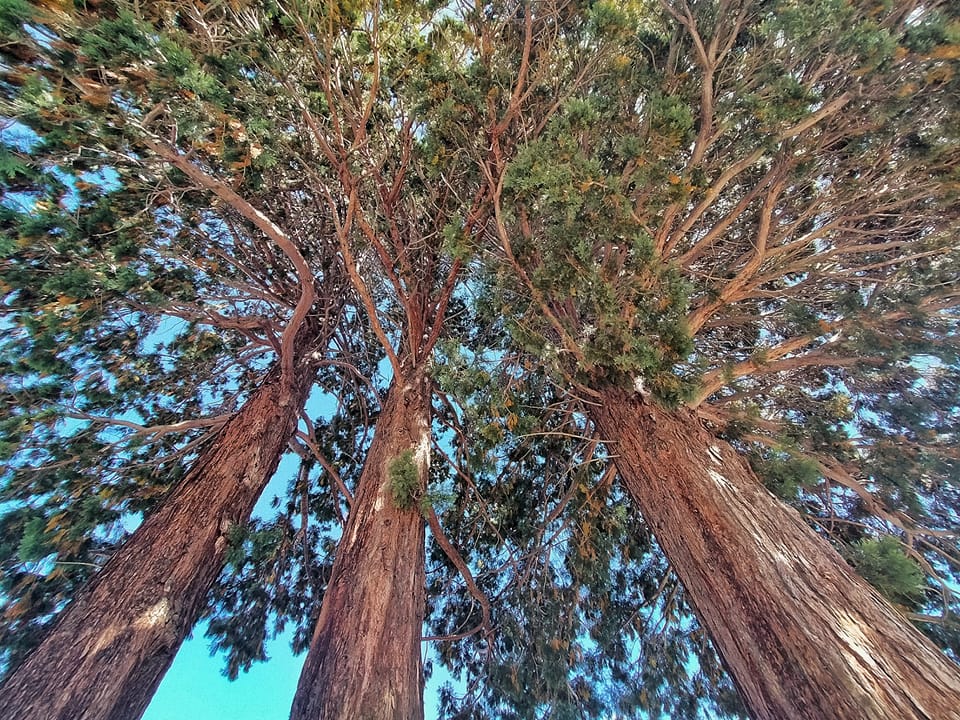
A sequoia nook. Powerful!

Seeing oneness

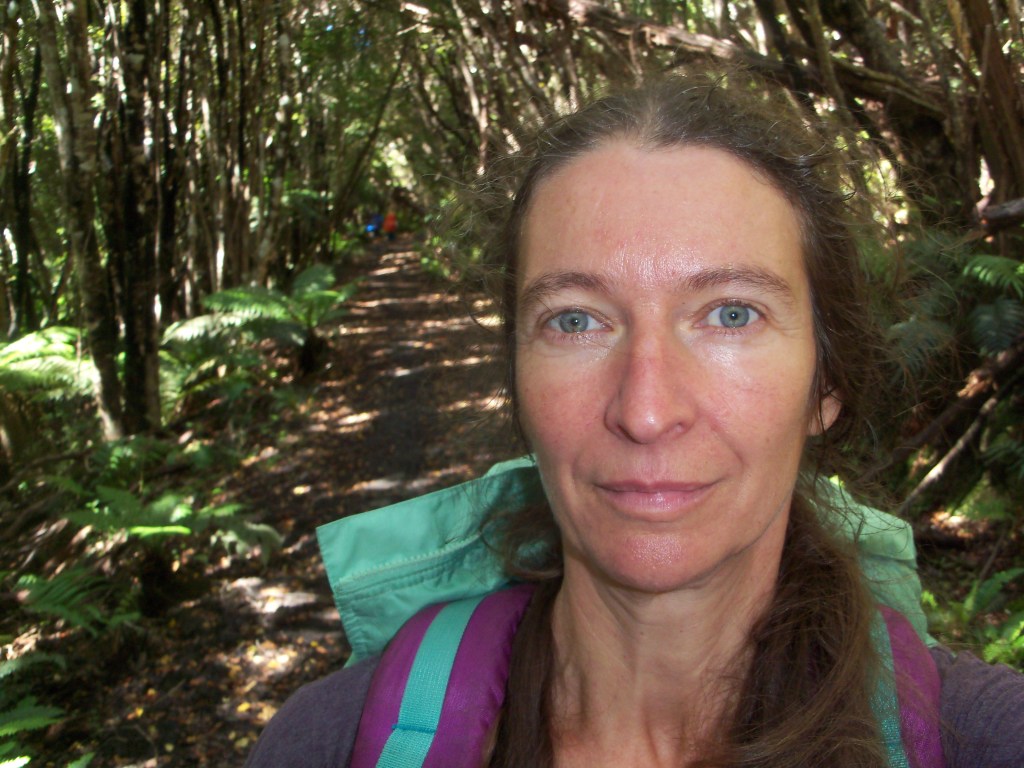
But it’s only at 50 that I experienced ONENESS with nature and trees, in Rakiura, after 3 days walking in the forest.

I had slowed down, influenced by the calm, on the lookout for wildlife and photos, to enjoy it longer, and surely the feet and the back were getting tired!

I stopped to drink the delicious champagne of the sky collected at the last hut.
I realized that THIS water had surely been in THOSE trees before.

  • DID YOU KNOW?
  • Trees are 50% water and humans 60% approx
  • The rest is mostly carbon

We are the same! Trees are just much bigger, rooted, many old and wise, living in beautiful living communities.

I was standing there in that forest, amazed, open.

I felt my blood and the sap pulsating together, just at a way different speed
I felt the life force in the trees and my self as one, as a big healthy body
I felt small but nurtured, in full gratitude and humbleness
I felt WE ARE LIFE.

A deep connection moment

Once you’ve seen that,

there is no unseeing.

Valuing Trees

Now, we all know that trees, forests and nature are degraded for resources, agriculture, housing, or for a revamp or for water reservoirs right here in Wanaka.
In our society, trees have value as timber, when they are dead;
In our society, nature has value per square meter, when it is bare.

Luckily, more and more people realize that trees provide great habitat, air cleaning, water sponge, shade and wellbeing and other “ecosystem services” and we need them.
Importantly, trees are fantastic carbon absorption machines.
So trees are now central to climate action.

For me, trees are beings.
They have intrinsic value.
Because they are, because they live. Thank you
🙏🏼

Trees communicate, trees feel, taste, touch, see…
Trees adapt, they help each other.

An immense intelligence that we don’t understand.
Trees are sentient beings.
Their consciousness is beyond ours.
But the life in me recognize the life in them.

ONENESS – LOVE – RESPECT

A Canadian study found that Mother trees send more nutrients to their baby offspring compared to other seedlings!

Action for nature and trees

So what do I do with this realization?

  • All my life, I linked in nature-related jobs and groups
  • All my life, I planted and gardened where I could, and now, it’s a lot!
  • All my life, I learnt about nature and trees…
  • And now, I share the joy in guided garden tours.

For years, I have spoken for the trees. The Lorax you know.
I talk at meetings, I write submissions and letters, I sign, I march, and I share on social media to protect nature and trees.

“Don’t cut trees!” – “Put nature first!” – “Plant more diversity” over and over…

But at the Wanaka Climate March earlier this month, I publicly pledged to do more so I launched the #LoveWanakaTrees campaign to create a tree loving culture.

At the Wanaka Climate March earlier this month organized by Mac Team Green, I pledged to create a tree loving culture #lovewanakatrees. With love, comes respect and protection.

With MAC Team Green – Climate March
March 2023

CREATING A TREE LOVING CULTURE

#lovewanakatrees is an invitation to everyone to take note and photos of trees around them, in parks and gardens, when driving around Wanaka or from the carpark to the office.

  • Stop and look.
  • Admire! The leaves turning day after day into beautiful colours.
  • Observe! The cones, the bark, catkins and samaras, maybe a nest;
  • Listen! To the birds, the insects, the wind, maybe the tree 😉
  • And give a thought to whoever planted them.
  • Breathe.
  • Thank the trees, honour them, enjoy them, love them.

You can share photos of our favourite trees with #lovewanakatrees or post on Love Wanaka Trees Facebook Group.

Loving trees changes life. I feel better for loving trees.

Let’s see if you, Wanaka, and the planet, feel better for loving trees too.


1 Comment

Gardening in Harmony with Nature Classes

Regenerative Lifestyle WORKSHOPS

Spring series, 6 Saturday mornings, 4 Nov – 9 December 23

  • Are you interested in taking care of your property in harmony with nature?
  • Do you want to regenerate your lifestyle property or garden without fossil fuels?
  • Do you love a healthy natural life?
  • Do you ask yourself “what would nature do?”?

Learn more than you expect with garden guide and regenerative lifestyle practitioner, Florence Micoud, in a relaxed atmosphere in the beautiful inspiring garden she is a grateful kaitiaki / caretaker of.

Contact Florence 02102792481 for more info or booking.

  • 6 sessions Saturdays 9am-12 pm starting 4 November
  • 3 to 7 Participants
  • Price: $240pp – $210pp with Community Service Card or Duet
  • Location: Namaste Park and Garden, 2 hectares of climate positive lifestyle block run in harmony with nature in Wanaka.
  • Level: Beginner, intermediate
  • Bring: Gloves, notebook+pen, jar+box for takeaways

Details of the sessions

Each session includes : 

+ Informative tour
+ Activity
+ Q&A
+ Stretch
+ Takeaways (garden goody & recipe)

Contact me 02102792481 for more info or booking, limited space

I’m looking forward to share garden and nature beauty and knowledge with you in spring,
it’s going to be awesome!

Florence


Leave a comment

From Lawn to Meadow

Lawn practice is changing. Public reserves are mowed less often. Many urban garden owners keep an unmowed strip of grass for biodiversity.

Lawns use up to 75% of household water use, they use and leach fertilizer and as all monocultures, lawns are not conducive to biodiversity… Not regenerative! 

Let’s revisit our views on lawns https://phys.org/news/2022-09-experts-lawns.html

In the news at the end of October 2022, lawns being a big contributor to climate change – there was a call to dig up some lawn to plant #trees, save on energy (to mow the lawn), on fertilizers and on water.

To regenerate more, why not plant a veggie patch (to reduce food km), mow just a footpath, grow bee friendly flowers… All adds to biodiversity, reduce carbon use and the noise for the neighbours, specially with an electric ride on lawn mower!

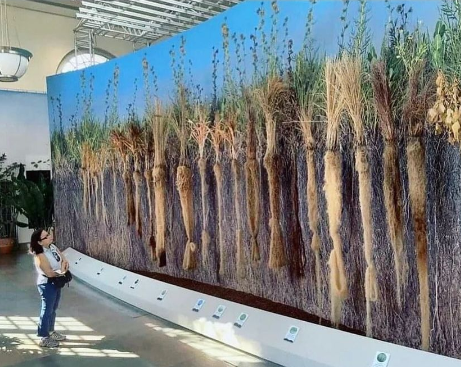
Grass roots act like sponge, they absorb water and retain it, reducing flooding and irrigation needs. From The Secret Life of Roots exhibition by US Botanic Garden

We grow a meadow

Here in the park of our property, once a compacted pasture grazed by horses, the grass has been growing for 15 years. It hasn’t been mowed nor cut nor eaten.

We mow footpaths with our new electric ride on lawnmower. Much more silent than the petrol one, clean and free to run, at the same price. All the mowing is done in one hour on a 2.5 hectares property.

Every winter the grass is drying and flattening. Healthy new grass grows through it in spring and summer. And it breaks down in the winter.  It is creating a thick mattress. The land is regenerating. 

  • deep brown rich soil, 
  • absorbing rain and keeping moist in summer, 
  • less work, less energy use, less noise,
  • more and more insects and skinks therefore birds

We observe that our meadow evolves over time. After 15 years, some patches remain green even in the heat of the summer when every unirrigated land is fawn. It’s beautiful and lush. It is a soft big sponge!

While it clearly absorbs carbon and water, as there is a visible improvement of the soil and biodiversity, we have no data.

The Zirkle study says unmowed uneaten grass can absorb from 25gr to 204gr of carbon per m2 per year, depending on conditions, that’s 40000m2 to 4900m2 to absorb a tonne of Carbon per year. That’s quite significant although still very vague.

I am looking for more information on how much carbon does grass capture when left to grow (not grazed, not mowed), decompose and regrow. Let me know!

We love our grass

Grass growing is a natural process creating an abundant source of matter. So we use it.

We keep a row of tall grass between the flower borders and the footpath: it holds the mulch and leaves what the birds usually scatter. Grass grows and hides the rabbit fences. 

Grass is great material to layer the compost, to mulch a small footpath or a plant. By breaking down, it enriches the soil.

Grass is not a threat nor a fight, we don’t control grass. We don’t “weed”!

To clear a grassed area to plant a tree or create a new garden, we cut out and remove the top 5cm, full of roots. Then we loosen the soil and pull more roots. And yes, that’s hard work.

Then grass regrows in competition with our plants, so we pull the roots out which aerates the soil as well. This is caring for our plants, never drudgery. I often thank the blades of couch for pointing in the direction of the roots!

It’s best to use a small tool to pull as much root as possible (specially the dandelion roots, that I clean, dry, roast and grind for my “coffee” – but that’s another post!)

We only pull the shoots we recognise, and observe what grows. Some returning annuals are pleasant surprises.

Mulching generously after cleaning an area limits the regrowth. The thickness of mulch makes it easier to pull the grass out the following time.

The first year we open a garden, we remove the grass regrowth three times, the second and third year a couple of times, then once a year. Overtime, the grass doesn’t grow back much. 

Grass is left in the background but it’s clean and mulched around the bulbs

I nearly forgot to say we do have lawn around the house! It is nice to sit or lie down. Less than 10% of the land is regularly cut and irrigated. That’s a lot of water saving and reduction in mowing time and noise (and dirty fuel usually but not in our case since our ride-on lawnmower is electric, as all our tools are).


Leave a comment

All we need is ♥… a mindshift

I did it!

20 times, I walked past the glass house, telling myself “I want to” redevelop it. It was in the too-hard-basket don’t-know-where-to-start for a while.

Then I set my mind to it, looked at what was needed, researched and got bits. Then I did it, in four or five sessions, helped by my partner ♡ and we now have a clean and lush source of seedlings and joy. Done. Happy.

What happened? I chose to do it. I switched to I-can-do-it, I looked deeper, with a bit of curiosity, adventure and creation, one step at a time, it was easy. And fun.

Quite an ordinary experience, isn’t it? We know how to do new stuff, we do it all the time. All change, small or big, starts with a conscious choice, a decision, a mindshift.

Our renewed glasshouse

For the big challenge of climate change, we need is a mindshift too. And it’s happening. TVNZ has started a Climate Special programme, showcasing solutions and opportunities. They said 51% of people don’t know what to do. Here it is:

Start with a mindshift

  • Shift to NOW, not in 2030. In my case, I have chosen sustainability and regeneration for a long time. I don’t wait for a law that forces us to do it. Whatever carbon I don’t use now, is not in the atmosphere. Over the years, that’s a lot of carbon that I haven’t added in the atmosphere.

Wean yourself off fossil fuels

I switch to electric vehicles and tools, solar panels, local food, renewable energy provider, I divest…

In what I buy, in what I do, I look for carbon and embedded carbon (eg. plastic, chemicals, kilometres, waste) and find the best I can, or stop altogether. 

Choose nature

I chose nature a long time ago. I defend nature, enhance nature (plant trees, foster biodiversity…), mimic nature. I align with nature, I slow down, it’s relaxing. Forest bathing is now a thing, it changes us, it is our nature. I convey the experience within Beautiful Gardens of Wānaka guided garden tours, admiring and immersing in nature. Knowing nature better to care for her better. 
And for everyone to enjoy connecting with nature, I am advocating for Biodiversity and Community enhancing Parks and Corridors. It’s an elegant solution to many local issues and it is getting traction.

I value nature more than money. In our society still very much based on monetary value, it’s a big mindshift. From “I want/I need more/fear of lacking” to “I have enough“, simplicity, contentement. I can’t think of something that has more value than an old tree, or a forest, it can’t be bought, it can’t be replaced. I take all my decisions on how it will impact nature, not how much it costs.

Flower bathing, guiding a garden tour

In short, I care.

I care for my garden, feeling in gratitude for being a guardian of this beautiful part of Papatuanuku.

I care for my community by contributing to the local Regenerative Tourism intiative and facilitating Regenerative Wanaka discussion page.

I care for the planet and all its beings, and specially trees. I love trees -but that will be another post.

And I care for myself. Because this is where I have most effect. I choose what I eat; Food that is good for us and for the planet is one of the major solutions of the climate crisis (this food subject also deserves an entire post). I choose what I drink, what I put on my skin, what I wear… I choose as local, natural and least transformed as possible. I care for my mental health, I breathe, I exercise, in nature, in the garden. I become aware, conscious and this is a big mindshift, always work in progress!

Becoming aware…

  • I stopped saying it’s difficult: this stops me from trying! Instead, I tell myself it IS easy and I find a way.
  • I stopped blaming others, the council, the media… Instead, I ask myself: “How can I help?” and I take responsibility, I connect and inform as best as I can. It is a humbling exercise in vulnerability.
  • I stopped saying “I will.., I can’t, they should…” Instead, I create the world I envision. I do. It is very empowering, creative, fun, beautiful.  

I choose to care for the planet, the community and life now, in all ways and to contribute to the regenerative culture shift.

Enough talking, next post will be about grassroots. Literally grass roots!

Feel free to share other mindshift examples♡
Simply being in nature, connecting, with all senses


Leave a comment

Good Good Christmas presents

Gift an experience: a guided garden tour (gift vouchers available here), a cruise, a bike or kayak rental… so many things to do in Wanaka, to do together, or with their choice of companionship.

Gift trees: to the local community nursery Te Kakano or nationwide https://grow.treesthatcount.co.nz/fund/trees

Gift services: massages, carwash, house cleaning, garden tidy-up… you can do yourself or get a professional to do…

And if you really want to gift a thing, go to Wastebusters annual Sustainable Christmas Market is on 26th November 2022.

Follow Plastic Free Wanaka for tips about waste free christmas.

Plant a Christmas tree!
eg. Norwegian spruce.


Leave a comment

Courage comes from the heart

Courage comes from the french word Coeur : Heart. Care.

I have plenty of it and I begin sharing publicly my experience of regenerative lifestyle.

I have the privilege to share the guardianship of a piece of land on heavenly Mother Earth and have the joy to foster its regeneration. Sharing how we do it is a pillar of this blog.

How can I be helpful?” was the prompt for Paul Hawken career.

Focus on what we can do, what we care about, that’s all you can do, that’s sufficient“. He added. This made it for me!

I care a lot for nature, for the trees.

No time, nor pretexte (“not good enough”, “who am I to give advice?”!), nor need to wait to create a beautiful regenerated world, safe and abundant for everyone, every being, and that includes the trees. And all the living beings.

Having a lot of knowledge and experience, I here now show leadership and passion, I allow my view of the world to shine, in a loving and compassionate, positive and practical way. And hopefully fun, I certainly enjoy it. Curiosity, open to change, openness, connectedness.

Paul Hawken explains: Let’s start by connecting with nature and the living world. Slow down. Go outside. We are living organisms. Interconnection with nature will change us. Once we realise we are part of nature, we have faith in nature and healing, we are empowered,. Regeneration is within us. So let’s go (back) to our true nature and align with life (again). It’s easy, it’s the flow. It’s being in love with all, and with the living world.

More inspiration from Paul Hawken coming soon, follow the blog to stay tuned. It’s starting and it feels good.

Florence