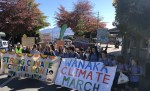

What do we want?
CLIMATE ACTION!
When do we want it?
NOW!
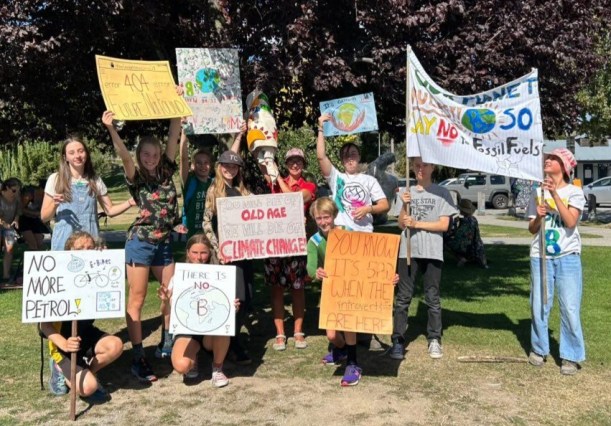
Following and chanting in the Wanaka Climate March on Friday 5 April behind my ex-students (feeling very proud of them!), I reflected on MY climate actions. Here they are, small steps in all aspects of life…
These are actions one person can do at home in their lives. I share these ideas to inspire. I would love to know what you already do to mitigate climate change and enhance biodiversity. Let’s save the planet together, because “We have to“, says Janet Goodall in her Book of Hope.
“Halve our emissions by 2030…”
“…And halve that again by 2040“, says local climate scientist Carly Green. For a long time, I have been looking at my emissions and phasing out fossil fuels and embedded carbon, in plastics, transport, chemicals, consumption, energy, land management, food…
So here is a list of changes I and we have done over time, in no particular order.
Plastic and waste
For years, I stopped single use plastic, always carrying bags and cups. If I forget my cup, I don’t get a single use cup: I either sit and have my drink there, or I don’t have any. Then I don’t forget anymore. When shopping, we are phasing out plastic items, always choosing the non-packaged, wood, bamboo, hemp or cardboard option and this is still ongoing.
We refill the same plastic pockets for bulk nuts, lentils, etc. No gladwrap here! Instead we have a bunch of beeswax food wraps, reused and reused.
We are not zero waste, yet: Our rubbish bin goes out every two months, our recycling once a month approximately.
I make our crackers, bread, etc, to avoid plastic but we still have plant milk cartons.
I separate and recycle soft plastics and tetra packs.
I have campaigned the Council for years so they use a chip in the wheelie bins to count people’s waste and practice the Polluter Pays Principle rather than a blanket rate for waste that enables, therefore encourages people to fill a whole wheelie bin of rubbish every week.
I have lived in Wanaka for 20 years, raising my family.
I have been involved in several local community groups and initiatives. Green drinks, Transition Towns, Kapa Haka, Mac Team Green, 2015 Climate March, Local Food Wanaka, Plastic Free Wanaka, Friends of Wanaka Wastebusters, Te Kakano, a lot of fun really.
I have now retired from all these community involvements but I continue nature advocacy at the local Council level and
wholeheartedly admire WAO, WAI and Grow Wanaka work for nature and community education.
Transport
In 2015, I swapped my car to a Prius and had hybrid vehicles since. It means, I have halved my fuel consumption all this time and I halved my fuel bills too.
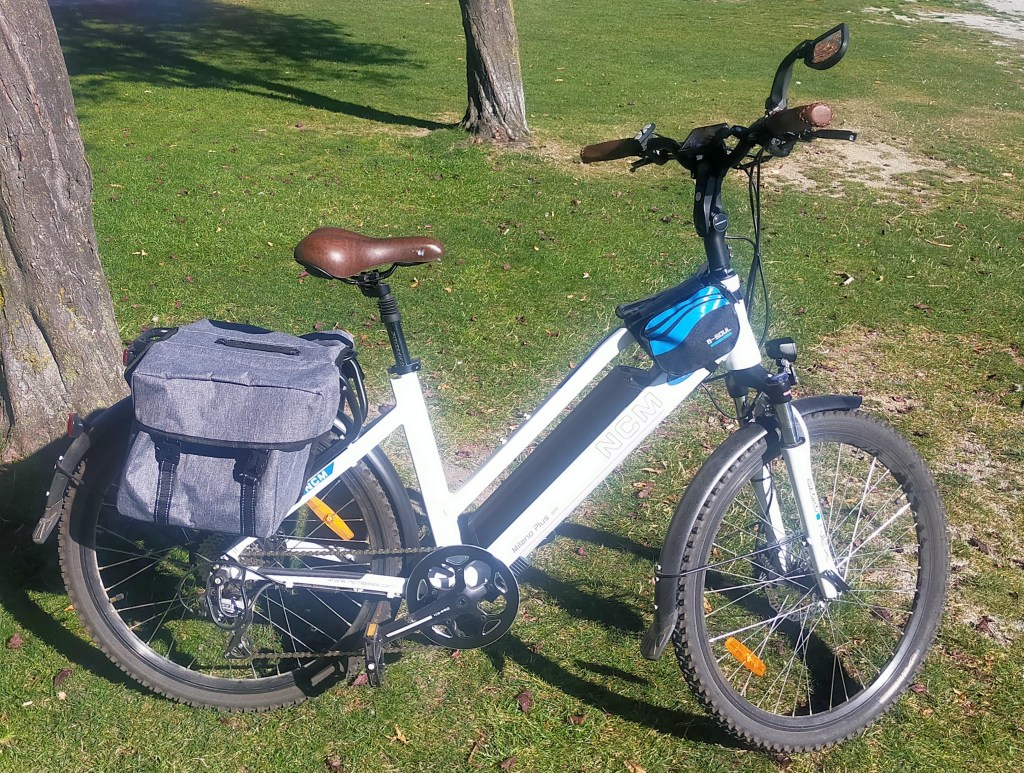
Now with an ebike, all local trips are solar and muscle powered. And I love it, smiling away like a teenager on their moped, just silent and more careful!
We make sure our activities and hobbies are not carbon intensive.
We have decided to halved our travels, nationally and overseas. This hurts a bit but ethically, I had to! Now, we plan ahead and will stay “there” a bit longer. Many people tell us the planes fly anyway. Of course, until many people also halve their travels and there will be twice less planes. Electric planes are coming up so that will ease emissions of national transports.
Chemical free
Chemicals are made from fossil fuels, they are polluting and bad for health.
So I have always chosen chemical free soaps, creams, cleaning products… Skin Deep database has been helpful to identify the risks of cosmetics. Reading the labels and googling it is helpful too. Making my own oils and cleaning products (easy) is even better.
Likewise, we don’t use synthetic chemicals in the garden, fertilisers nor pest/weed sprays, instead we use natural soil enhancers, a lot generated on the land, compost, comfrey tea, etc.
To support agriculture without chemicals, I am buying organic as often as possible.
Energy
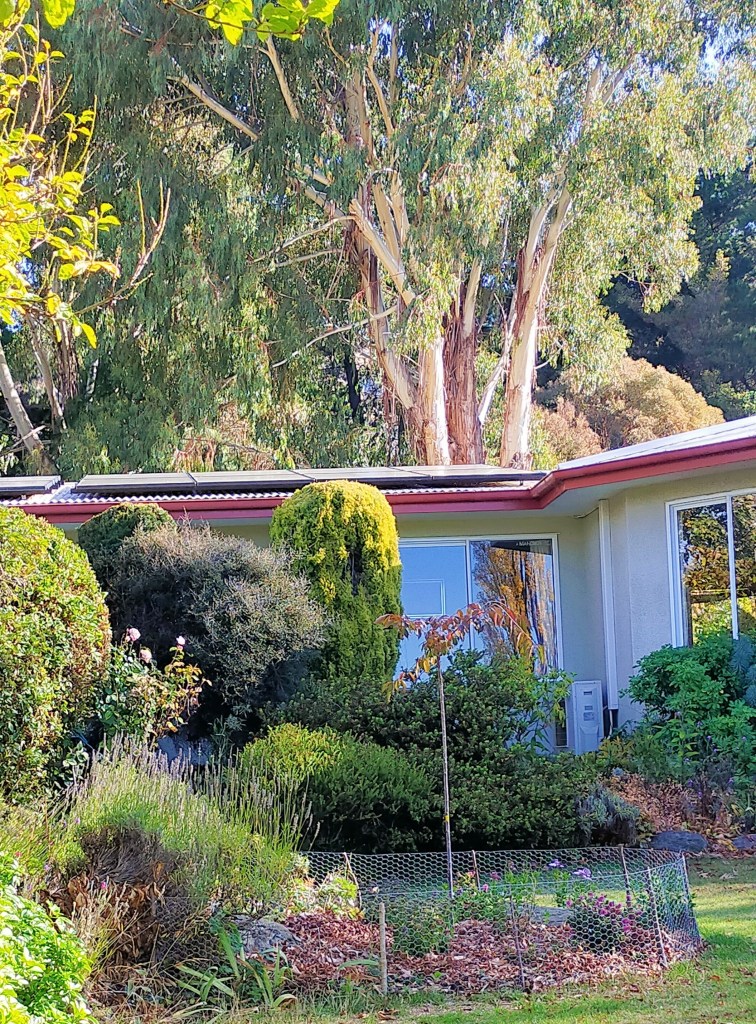
We are nearly off the grid. This is important because 20% of NZ electricity still comes from fossil fuels. We initially installed 10 solar panels, then a few years later, another 10 panels and a year later, a battery. Over the years, we have swapped all our tools to electric versions. As powerful, lighter, not smelly, not noisy. Our latest car drives 55km on a charge, which is sufficient for most of our trips. It feels good to be powered by the sun and our electricity company owes us money!
We have also reduced our own energy use. There are lots of ways to do that: short showers, lights and standby off, replacing bulbs with led, heating the oven for all the baking at once, putting on a jumper instead of a heater, just being mindful of energy, we are energy too, we can tune in…
The solar panels return on investment is immediate!
If you have $10K in the bank and put them on the roof, the next bill is $100 cheaper, that’s equivalent of a 12% interest rate!
Oh! and it’s so easy to install with local solar pioneer Wanaka Solar and it feels so good to cook, shower, travel, work with the sun!
Several NZ banks now offer a zero% interest loan on solar panels so you can reimburse with the gains.
Rewiring NZ reports that households can save money and also significantly reduce their emissions by electrifying their appliances and vehicles. Let’s ride the ‘electrification tipping point’ together!

Consume less
For years, I have reduced my consumption, asking myself if I really need it before I buy it, always looking at Wastebusters first and we repair stuff. It’s fun and also cheaper! I am content with what I have, I don’t want more, I prefer simplicity. Granted it doesn’t contribute to the “economy”, it is about degrowth, but degrow we must to come back within the Planetary Boundaries.
A simple way to stop contributing to climate change is to divest my own money from being invested in the fossil fuel industries. I checked the MindFul Money comparison tool and made sure my money is in a bank 100% not invested in fossil fuel, and divested my kiwisaver too.
The returns are excellent and it feels good.
Clearly GDP is not a good indicator of progress: disasters creates reconstruction jobs, sickness creates a medical industry, crime creates lots of security devices, war is fostering weapon industry, all tallying up in the GDP. When the economy contracts (0.3% in the last month in NZ), economists, businesses and people freak out, they fear of lacking so they accumulate as much as they can, in case of a rainy day. Thereby creating a rainy day! In fact, it is best for the climate and the planet if we are buying less stuff, making less stuff, working less, needing less. The best policy the government could do is to accompany recession to soften the impacts. A universal salary is a good start, then people would no longer fear lacking. I personally feel I have enough and it is not luck, it is a conscious choice. To me, having “enough” is better than wanting “more”.
Another way to look at economics is the Doughnut concept (really good presentation of the Doughnut in NZ here): putting people and the planet first, decoupling economic growth from carbon use, investing in clean technologies, putting the economy back in its role as a tool not an end. Dunedin Council started in 2020 and is going for it (see ODT article here).
The Happiness Index seems more holistic, fair, relevant and climate-friendly too.
Maybe Confucius said: “Live simply and happy“. No he didn’t! But it is true.
Land management
Here is how we manage our land in harmony with nature to enhance biodiversity, on our 2.5 hectares just on the outskirts of a growing town:
- planting hundreds of different trees, creating an arboretum. No monoculture here!
- the park is not mowed, lawns are only cut around the house and on footpaths. The uncut uneaten grass grows and dies back every year, absorbing carbon, becoming a sponge, regenerating the land and now a home to insects, birds and skinks.
- the whole property is cared for without chemicals and without fossil fuels (electric tools, incl. the lawn mower are charged with solar panels)
- we share the land: the park is open to the public as part of guided garden tours and the land is shared with another household in a tiny house. And we share the story and how-to as part of the garden tours and Regenerative Lifestyle classes.

Food
Food has one of the biggest impact on the climate. In the Drawdown, Solution 3 is “reduced food waste”, solution 4 is “plant based diet”, silvopasture and regenerative agriculture are close behind.
Reducing consumption of meat, milk, cheese, and butter are a critical way to reduce our carbon footprint.
I have never been a big meat eater and became vegetarian since my pledge at the first Wanaka school strike for climate March in 2019. And I love it, I feel more healthy. Now, meat production looks unnatural and unethical to me. Fish? Oceans are in crisis so I let the fish replenish. No loss there.
Climate friendly food is a variety of cereal, with lots of vegetables and fruit everyday, a dose of beans or other protein, with a dollop of seeds, a handful of nuts. Simple, healthy, delicious, affordable and allegedly better for the planet too. Planet friendly food is also:
- seasonal (cheaper too),
- as local and organic as possible (less transport km, no chemicals which embed a lot of carbon and pollute),
- not processed, as most processes require energy, degrades the food wholesomeness and comes with packaging. So I make our bread, muffins, juices, etc.
- not peeled for all the goodness and fiber (only if organic),
- not cooked long (also saves energy),
- without fat (easier to wash the dishes, using less water and hardly no dishwashing liquid),
- hardly any salt nor sugar (better for health too)
- leftovers are reused or frozen.
- all the peelings goes to bokashi or compost, without the fruit sticker!
It is important to read the ingredients to avoid chemicals and ban palm oil.

A report published in 2010 by Ella Lawton and R. Vale concluded that in remote areas like Wanaka, the biggest difference we can make is to grow our own food. So we do. Not all of it, but more and more and it is fun. Grow Wanaka Community gardens is a great place to start and learn, as well as the Wanaka Vegetable Growers club.
Action to hope
Do these little things make a difference? Yes they do! All the plastic I haven’t bought and discarded, all the petrol I haven’t consumed, for years… I adds up.
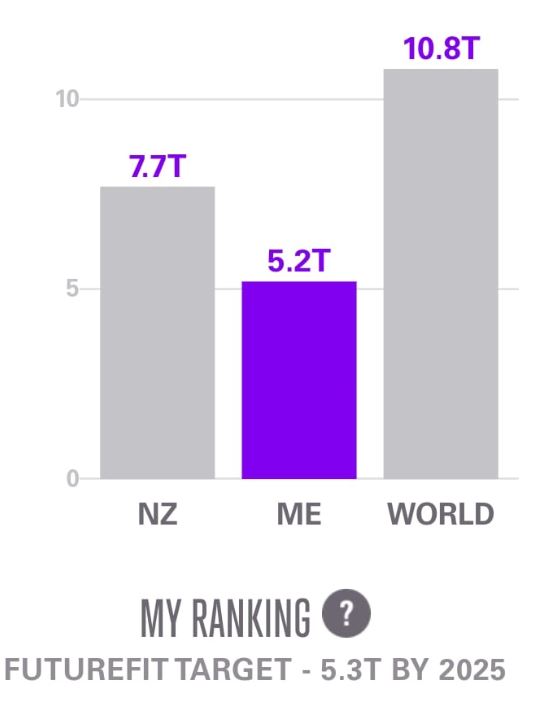
I have calculated our household carbon footprint with this tool https://www.futurefit.nz/ and it turns out, we are emitting less than the “target”!
We are nonetheless continuing to reduce our waste, energy, consumption, travel and planting more trees, because we love it.
I act to keep hope, I feel the need to share my vision of the world and climate friendly practices. So I am advocating online (Twitter, Regenerative Wanaka and in this blog), in submissions, in climate marches, in community speeches… I love to share solutions, positive actions, no grumble, no judgement, we are together in these crises on one planet. It’s my hobby! I continuously learn more about nature (trees are incredible!!)
Most importantly, we spend a lot of time in the garden, not only to grow our own food, plant a lot of trees and plants adding diversity and beauty, but also to enjoy nature. Connecting with nature, trees, peace, calm, simplicity, I think this is the key, nature changes us.

Many things that many people can do, if they choose to. It’s no hardship, it’s caring, it’s loving. Because I love nature, because I love children. It is a little effort, a focus, like we attend to our children. I hope I gave you some ideas and inspiration. I believe all these little actions make a difference for the climate and the planet, therefore young people and future generations.
What do you think?
What are your climate actions?
What are you ready to change ?
 Regenerative Livestyle Blog