 Take a dry area, beautiful and lean and decide to make dairy farms here! It will be costly… But it’s all right, the ratepayers will pay for it… Sounds unbelievable? or only too familiar?
I have published below the full story and call for help by some Tarras residents, together with the links to the submission documents, to fill in and send by the 3rd of May to the ORC if you care… Click here to see my submission, feel free to copy/paste it and just change the name and address. Cheers.
Florence
Subject: Submission to Otago Regional draft annual plan – Tarras water scheme
Dear friend,
As part of the Otago Regional Council (ORC) draft annual plan, the ORC proposes a $ 3.6 million dollar investment in a privately owned irrigation scheme in the Tarras area (230 residents). The Council’s investment will be even higher as there are ongoing costs during the proposed 5 year investment, bringing the spending of public money up to $ 6-7 million. It is proposed to fund this investment through rates increases.
Any Otago rate payer and resident can make a submission to the Council on this investment proposal. This is your opportunity to have your opinion heard by the 11 councillors who are divided on the subject. Public submissions on the plan close this coming Friday, 3 May 2013, and the councillors will have to make a decision on the proposed investment at their meeting on 24 June 2013.
You might have read some reports over the last few months in the Otago Daily Times on the Tarras water scheme. Here is a brief summary:
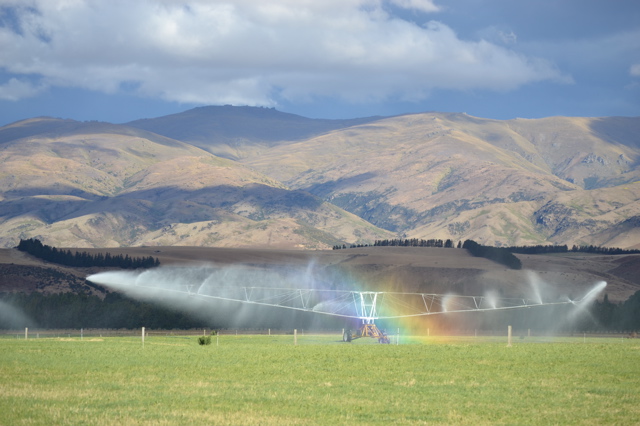
Tarras Water Ltd. (TWL), a privately owned company, proposes to pump water from the Clutha river to 6000 hectares of hitherto unirrigated land in the Tarras district. Currently, there are 40 shareholders, mostly farmers, with 8 farmers controlling 90% of the company, four of which are also directors of TWL. The proposed cost for this project ($ 37 million) requires a large bank loan ($ 26 million, 20% of which would be guaranteed by the Central Otago District Council) and the ORC investment in order to proceed. TWL shareholders would fund $ 7-8 million themselves upfront.
Even though the water scheme was initially promoted and presented as a “community” water scheme and public grants sought and used for preliminary studies, the cost of the scheme for the vast majority of the Tarras community is too high to be part of.
However, TWL continues to rely on public money for this private enterprise. TWL proposes the ORC to become a “dry” shareholder, i.e. hold 30% of the shares in the scheme without using the water. The ORC would only recoup its investment if it were able to sell the 30% of the shareholding over a five year period. However, over the last 6 months some landowners in Tarras have already invested in their own irrigation schemes, with others not interested in the TWL scheme for reasons of cost. The high cost will inevitably lead to intensified farming in the area, with the most likely outcome being dairy support and dairy farming in general over the proposed 6000 hectares.
While the ORC is being asked to become an investor in a private irrigation scheme, by law it also has to handle resource consents for water permits, as well as enforcing legislation relating to water quality and use in the Otago area, in other words it would put itself in a position of conflict of interest (private investor and regulator at the same time).
Such an investment would also set a precedent for other irrigation schemes in the wider Otago region, the latest one proposed for the Maniototo area. In fact, it would set a precedent for any private business to ask the ORC for public money to partially fund their enterprise, whatever it might be!
Despite being asked by the ORC for information on alternative funding, TWL has not sought private business investment in its scheme, suggesting that it doesn’t stack up as a good deal. TWL solely relies on public money input and very strongly lobbies the 11 ORC councillors to vote in favour of the investment.
Again, TWL is a private company which asks the ORC for millions of dollars of public money, funded through rates increases affecting every Otago rate payer, with a high risk to the Council to be able to recoup the investment. And TWL is effectively owned by a small number of wealthy farmers.
Should you be concerned about the use of public money in this fashion, please use the attached form to make a submission to the Otago Regional Council by Friday, 3rd May 2013.
The draft annual plan with the TWL investment proposal is available on the ORC home page, www.orc.govt.nz
Please, also forward this email to anyone you think might like to make a submission.
Best regards,
Holger Reinecke


 Regenerative Livestyle Blog