Regenerative Livestyle Blog


Leave a comment

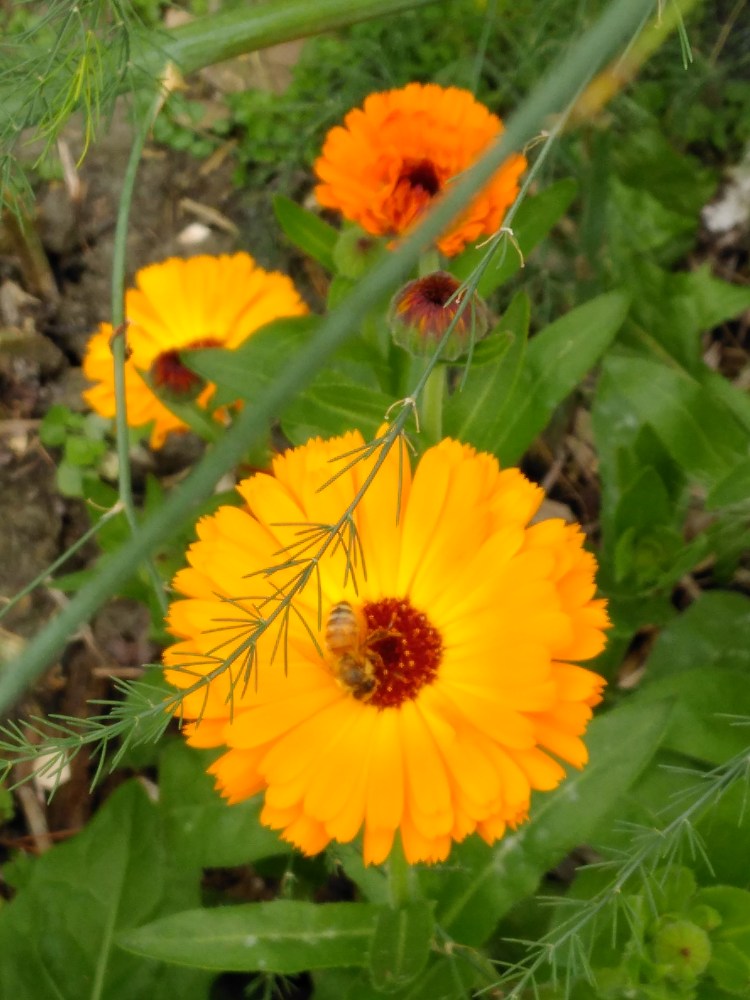
Calendula wonders

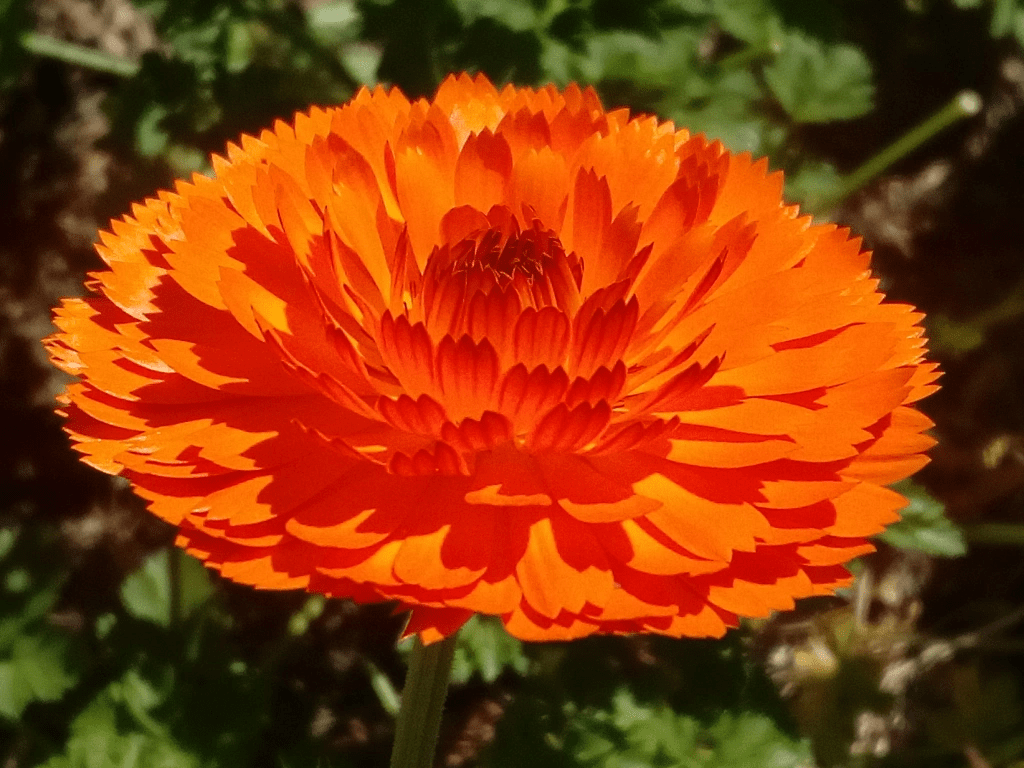
We love Calendula, the English Marigold. Orange beauty, it brightens the veggie patch, flower gardens and other corners. The Calendula name comes from the word Calendar and I think it is because it flowers every month of the year! Easy to cultivate, we use it as companion plant, in salad, tea and skin ointments.

Culture

Calendula is an annual, rustic plant, forming 40 to 60cm compact plants.
Large yellow to orange flowers will bloom all year round and massively from October to frosts. 

Seed in autumn or spring in full sun or partially shadowed. They grow anywhere, even in poor soil, even in our dry and frosty climate. After flowering, the heads become seed heads, easy to snap off for esthetics or keep for seeds.

They self seeds easily and can be replanted where wanted. They are also very easy to pull out when we need the space, they won’t come back from the roots.

Companion plant

Calendula attracts and feeds insects when no other flowers are available thereby enhancing biodiversity.
They attracts natural predators to aphids (ladybirds, hoverflies…);
Their roots hold good nematodes for a healthy soil.

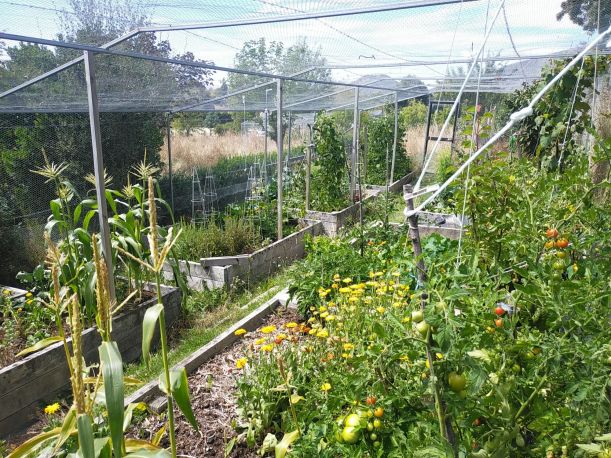
We cultivate calendula in the veggie garden, one plant in each raised bed to attract favourable insects.

They also grow everywhere in our flower beds, filling in the gaps and adding their joyful colours.

How we use it

Comestible plant, we add petals to salads to brighten them up.
I add some petals in the “garden tea” but not leaves as I find them quite bitter.

I make a beauty oil: I harvest nice fresh parts of the plant, leaves, flowers and stalks, cut roughly and macerate for several weeks in a variety of oils (sweet almond, grapeseed, avocado, apricot kernel…). Then it is simply strained and funneled into a glass jar with a dropper lid. I used to make a cream with beeswax but it was longer and quite messy so I simplified to oil. Of course we can add essential oils to perfume and help our skin, lavender, geranium or rose. I sometimes mix cistus leaves and flowers into the oil maceration, cistus is good for aging skin!

Medicinal uses 

Its Latin name is calendula officinalis and for good reason. My Maria Treben’s Cures book (Steyr: Ennsthaler, 2000) has 2 pages on it. Here is a summary:

Depurative, blood-cleansing, purifying, stimulating for blood, antiseptic. Also the plant of the skin, wonderful for wound healing. 

Drink two cups per day of calendula herbal tea to help cure jaundice, wounds, digestive illnesses, intestine or liver or stomach pain, colitis, dropsy, and hematuria. Calendula herbal tea is ideal to help with all viral and bacterial infections. Also effective vermifuge and laxative. Calendula herbal tea applied on eyes helps vision.

Some recent study show good results with cancer, skin cancer, breast cancer, stomach and ulcers. In this case, fresh plant juice is more effective.

In cream or oil ointment, calendula is wonderful for skin. From post-chirurgical wounds to fungus, blues, strains, scars, piles and varicose veins, sunburns, dryness, age pigmentation, also purulent or swelling wounds.

Calendula TM is a powerful antiseptic and helps skin recovery. It can be used on any wounds and post-natal or postoperative situations: infant umbilicus, lesions, sore… 

Good to know and beautiful to grow!

A pharmacy in your garden!


Leave a comment

Digging up our lawn

Lawns certainly have an aesthetic and social value and sometimes are a great play area. Closely cut green grass used for landscaping or leisure, lawns were historically created by wealthy people who could keep unproductive spaces. With the invention of lawn mowers, lawns spread and became a standard feature of suburbia. Lawns maintenance necessitates high inputs not only in fertilizers and pesticides, but also in natural resources like water and petrol to mow it. And they don’t hold any wildlife. To me, they reflect the man’s desire to control nature.
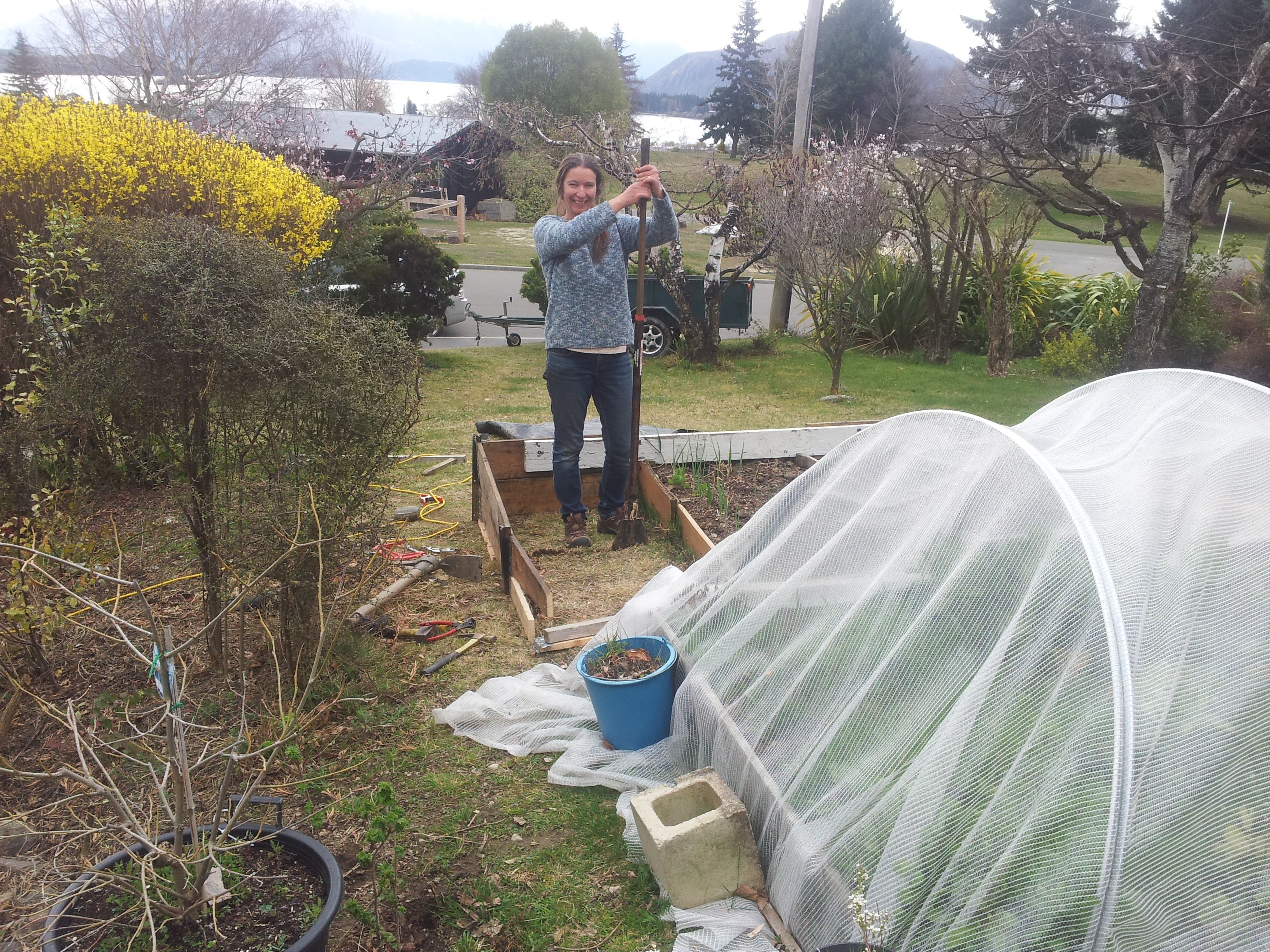
I think growing vegetables is a more productive way to use that space therefore we progressively dig up our lawn. Advantages are many:

  • We transform wasted areas in productive and beautiful spaces.Using the slammer in the garden
  • We produce pesticides free veges, delicious and fresh from the garden, with zero food-kilometres and nearly for free. In her New Zealand footprint project, Ella Lawton has demonstrated that food and beverage makes up 56% of the total New Zealand footprint. The most efficient way to reduce our footprint is to produce half of our own food in our backyard, or at least eat locally grown food (page 27). It is slightly more efficient than becoming vegetarian.
  • We reduce our waste as all green waste is composted and used in the garden. It is even a way to
    store carbon therefore mitigate climate change
    .
    Organic gardening is good for the environment.
  • We take fresh air, build up muscles, stretch and burn calories. Gardening is good for our bodies.
  • When out in the garden, we hear birds and smell flowers, we connect with the slow pace of nature, reducing stress while providing a deeply meaningful and rewarding activity. Gardening is good for our minds.
  • We spend quality time together as a family.

Using a slammer, it is incredibly easy to remove patches of grass. Materials from Wanaka Wastebusters make frames.

Yes for a successful harvest, we need a lot of knowledge. It’s been built over the years, thanks to Dad, Terre Vivante where I worked for 7 years, Organic NZ, Dr Compost, permaculturists and friends’ wisdom. We also need seeds, also collected over the years and thanks to exchanges with friends or community swaps.

I’ve proudly added a Robert Guyton‘s Green Man sticker on my letter box and I am keeping an eye out for it in my community.

One advice: start small and expand over time. Now is a great time!