Submission to the proposed Milford Dart Tunnel
To the Director General
Attention: Robyn Roberts
Southland Conservancy Office,
Department of Conservation,
Box 743, Invercargill 9810.
Email: invercargill@doc.govt.nz,
southlandconcessions@doc.govt.nz
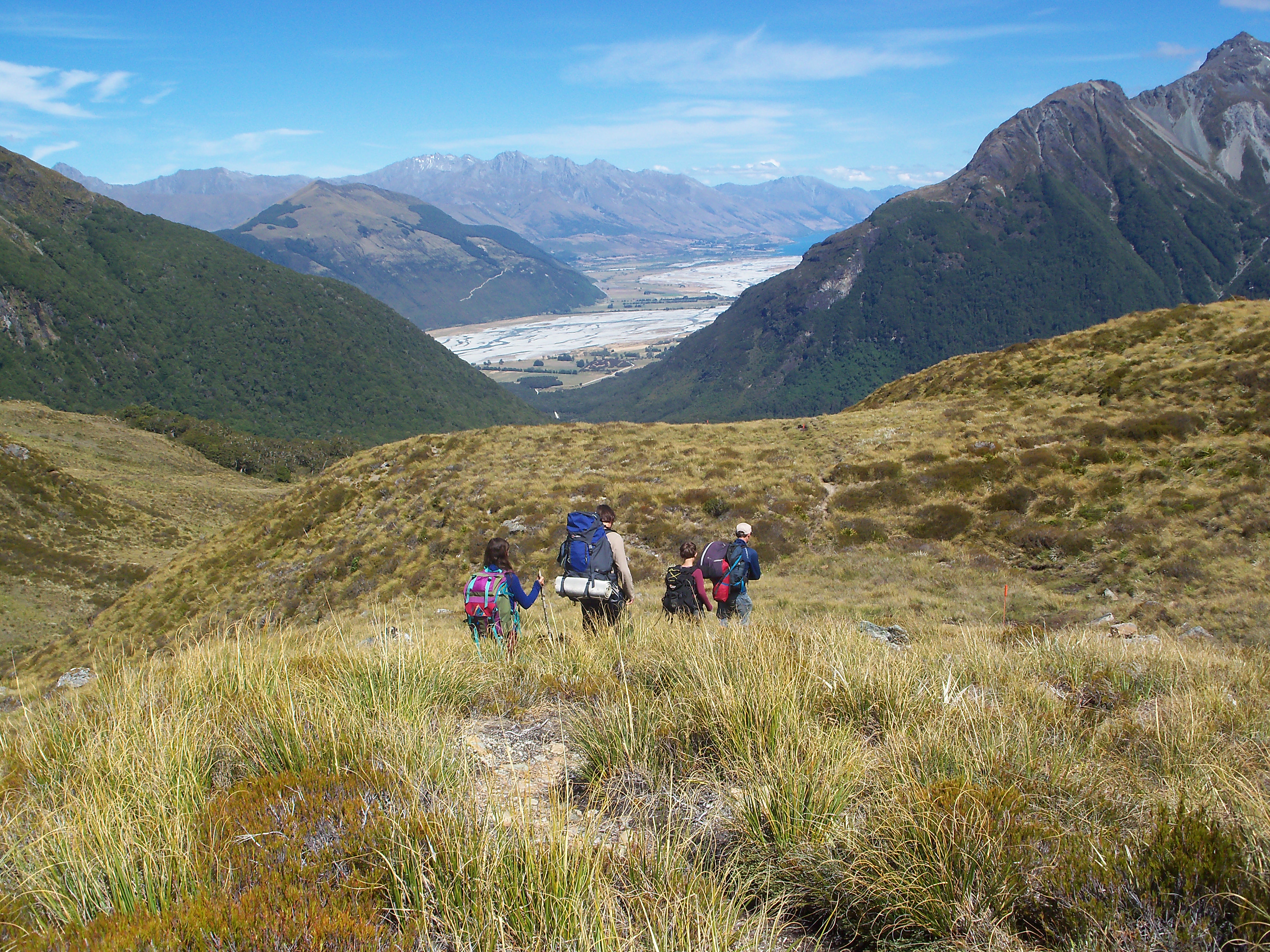
I am writing this submission against the Milford Dart Tunnel as information manager specialised for 20 years in environmental issues, as I have seen many stories of private interest wanting to nibble and encroach on public conservation land, whether for resources extraction, access or use. The proposal will particularly affect two of my favourite places in New Zealand, Glenorchy and Hollyford Valley, both of which I value for their pristiness, remoteness and quietness, all qualities that will irremediably disappear if the project is granted.
Duty of Protection
The National Parks Act 1980(section 4 (1)) states that the role of National Parks is to preserve in perpetuity, the scenery, ecological systems and natural features of the parks for the benefit , use and enjoyment of the public.
Besides, The Resource ManagementAct Section 6(b) makes the protection of Outstanding Natural Landscape a matter of national importance.
Both sides of the proposed tunnel are so far outstanding natural landscapes with no human constructions in sight. The entrance of a tunnel will create an everlasting scar in the landscape. No amount of tree planting can ever mitigate such a visual impact.
Furthermore, it is within a World Heritage Area http://whc.unesco.org/en/list/551which place the responsibility to protect the zone in the New Zealand state who signed the convention http://whc.unesco.org/en/conventiontext to “ensure the identification, protection, conservation, presentation and transmission to future generations of the cultural and natural heritage”.
Adverse effects
Noise, air pollution and dust resulting from the transit of an estimated average of 23 buses a day (peak 40) will not anly affect the peace of the other Park users but also the wildlife, that includes in the areas, the mohua, an endemic species in grave danger of extinction on the mainland. A few numbers still live in the canopy in the first three kilometres of the Routeburn Track, that is very close to the proposed tunnel entrance.
On the Hollyford Valley side, I remember hearing each car that would from time to time pass on the remote road, when resting near the river. I remember the birds stopping to sing for a while after each noise in the evening. I also remember noticing the smell of the scarce cars’ fumes when walking on the road and the inconvenience of the dust each created. The passage of buses will be heard and smelt which severely affect the peace for the National Park users.
In particular, noise from buses will impact on Routeburn track and visitor centre and can’t be adequately remedied, avoided or mitigated.
Effects of noise, vibrations, air pollution and dust on fragile and sensitive animal species are not known and I require studies to be carried out to determine whether there are adverse effects or not on all the native animals of the area, including mohua, whio, kākā, bats and parakeets to name a few.
The works for the proposal involve removing potential habitat of threatened species:
• Clearance of 8,500m2 (80m by120m,) of mature mixed broad leaf forest, including 6 large podocarp trees (probably kahikatea) for portal and staging area Hollyford Road. This is the preferred nesting or roosting habitat for 2 species of bats and kaka and rifleman. I require a survey to be done to prove that none of these native protected animals actually live in the designed area. And if there are, they would need to be protected and the works not done.
I note that some native trees planting is planned to remedy to the clearance. Planting trees does not compensate for the loss of 300 years or more of growth for trees.
• Removal of vegetation from Hollyford Portal and Hollyford airstrip construction staging an area over about 7ha. Hollyford airstrip area includes vegetation important for red admirals and a small area of intact conifer/broadleaf forest. It should not be allowed to be destroyed.
New way not desirable
New roading is inconsistant with both the Mt Aspiring National Park Management Plan (policy 1 section 6.6.4)http://www.doc.govt.nz/upload/documents/getting-involved/consultations/current-consultations/otago/draft-manp-management-plan.pdf page 69 and the Fiordland National Park Management Plan (part 5.7) http://www.doc.govt.nz/upload/documents/about-doc/role/policies-and-plans/national-park-management-plans/fiordland/part-five-5.7.pdf as it is in the back country zone, it will spoil the enjoyment of theNational Parks by other users, and it is not required for access to departmental visitor facilities, thus making the proposal outside any exceptional circumstances for allowing new roads.
Part 3 of the Conservation Act 1987, section 17U states that “the Minister shall not grant any application for a concession to build a structure (…) where the activity could reasonably be undertaken in another location that is outside the conservation area (…) or could reasonably use an existing structure of facility”. Which is the case as the Milford Road http://www.nzta.govt.nz/projects/milfordroad/ State Highway 94 is one of the highest and most scenic state highways in New Zealand. Part of the magnificience of the Milford Sound destination is definitely the journey, with its many well maintained tracks and facilities.
The excursion does take more than 4 hours from Queenstown but is scenic all the way which contributes to the WOW factor of the experience. Surely the road to Glenorchy is scenic as well but I doubt the experience of travelling in a 11 km tunnel will be enjoyed by many. The disaster of the Mont-Blanc tunnel is in all the minds, as well as 2009 Chunnel fiasco. I require studies of people stress when going through long tunnels, demonstrating it is not significant, as it will impact on the tourist in New Zealand average experience and overall level of satisfaction.
The planned road and tunnel is not for the general public but will be for private, sole operator access through/under a national park, so there is no added benefit to users of Mt Aspiring National Park. Although it is beyond DOC responsibility, I want to underline that this tunnel will externalise costs on the general taxpayer. New Zealand Transport Agency is currently maintaining the Milford road to a high standard, at a high cost for the nation. The proposed tunnel will oblige NZTA to also improve and maintain the Queenstown/Glenorchy/Routeburn road, which ill be costly (for example at “the Narrows” site).
Enormous works impacts
Even of temporary, effects of the construction activities are huge and are planned for several years and yet, can’t be adequately remedied, avoided or mitigated.
They include, but are not limited to:
• Clearance of at Hollyford for construction – includes concrete batching plant, gravel crushing , workshops, generators, water treatment plant, office accommodation, fuel storage, sedimentation and water treatment ponds. (80-100 people on site during construction).
• 12m diameter 4m high spoil surge pile and settling ponds and tanks at Routeburn portal site
• Noise, dust and lighting effects on wildlife not known
• Spoil disposal will raise airstrip by 7-7.5m – potential flooding risks
• Sediment flowing into waterways and thence into Hollyford River
• Taking gravel from river for concrete making
• 30 -35 truck movements per day from portal to airstrip on Hollyford road
• Acid leachate – 1% of tunnel spoil may contain sulphide rich rocks. I require further studies to find engineering solution to this problem, or a study that proves that it will not have any negative impact on nature.
• Tunnel discharge water into Hollyford River
• Weed invasion to disturbed sites
• Intensive trucks circulation on both sides, implying pollution and insecurity for other road users
Private vs Public
Last but not least, the fact thatit is solely for private use and to capitalise on surplus mining equipement http://www.tunnelandminingnz.co.nz/index.php?option=com_content&task=view&id=308&Itemid=49 , the fact that project’s website www.milforddart.co.nz or the consultants’ once existing websites http://www.brownandcompany.co.nz/projects/milford-dart-tunnel/(Nearly same page on http://www.brownpemberton.com/projects/milford-dart-tunnel/ ) do not work, are signs of transparency avoidance and confirm that there is nothing for the interests of the public in this idea.
Such a massive project is inapropriate in National Parks and will have enormous long lasting visual effects and bring irremediable destruction. I hope you will consider the responsibility we have to maintain natural resources for future generation to enjoy and will therefore refuse this application.
I do not wish to be heard, mostly because I do not have time nor money to go to the hearing, but I trust like-minded associations will support my view point in the hearing.
May my submission add weight to their evidence and submissions.
Kind regards.
Florence Micoud
References:
http://www.fiordland.org.nz/Files/Submission-guide-on-Dart-Passage-Tunne.pdf


 MAIA
MAIA I luckily have a book about having poultry in the backyard so I found out that it likes:
 Regenerative Livestyle Blog