
In the Core Concept document of our Graduate diploma for Sustainable Practice are listed Nine planetary boundaries, three of which are in the red zone “Li-mit ex-ceeded“! Climate change, Loss of Biodiversity: Yes this is sad, I know lots about these. And Nitrogen cycle. Exceeded by 200% ! What is that???? I need to go back to my biology textbooks and discover that many seemingly different problems are all Nitrogen issues. Acid rain? Water pollution by nitrates? Lakes eutrophisation? Ocean dead zones? Have you heard of them? I had, but had not connected them yet: they are part of the HUGE nitrogen cycle issue…
 Nitrogen
Nitrogen is a crucial element in all living things, essential part of the structure of proteins and nucleic acids. Atmosphere is made of 78-80 % of nitrogen gas (N2). But this molecule, N2, is so stable that it is rarely available directly to organisms. It is in mineral form, nitrates (NO3) , that nitrogen is assimilable/available/incorporated to plants and animal tissues.
Natural cycle
How is Nitrogen oxidized to its mineral form: through a several steps process of ammonification and nitrification.
Ammonification: Nitrogen fixing bacteria fix atmospheric nitrogen and transform it to ammonia NH3. These bacteria are either:
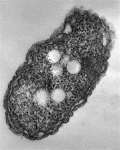 Azobacter, found freely in the soil, producing 25kg/ha/year of ammonia
- Rhizobium, living in root nodules of mostly legumes, producing 500kg/ha/year
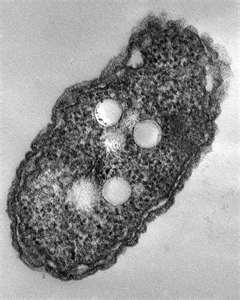
Ammonia also comes from animal excretions (urea) and the action of decomposers on dead organisms.
Nitrification: Nitrifying bacteria, nitrosomonas, transform ammonia in nitrite NO2, then another nitrifying bacteria, nitrobacter, transforms nitrite to nitrate NO3, which is assimilable by plants and animals.
Of note: Lightning discharges can oxydise nitrogen directly to nitrate which ends up in the soil, but accounts for only 10kg/ha/year.
Denitrification: The last part of the cycle is the process of denitrifying by anaerobic bacteria pseudomonas, that return fixed nitrogen to the atmosphere. They can evacuate only 20% of soil nitrates.
The cycle is imperceptible and yet fundamental to life and growth. I am not sure I will remember these names, but I understood there is a variety of different of bacteria and an order in the process therefore the cycle can be bottle-necked.
Industrial N-fixation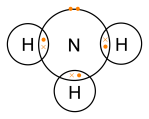
At the end of the 19th century, it was discovered that it was possible to transform atmospheric nitrogen into ammonia. Its role on plant growth was identified but its making was long and difficult. Fritz-Haber discovered in 1909 how to make it industrially (at great pressure, at 600°C, in an iron catalyst and combined with hydrogen). It produced an explosive that is said to have given an advantage to the Germans during the wars.
After the second World War, it started to be used in agriculture as a fertilizer. Agronomists promoted its use to increase much needed food production yields. My Mum recalls when, in the 50’s, her respected teacher had spread nitrate powder on a field on a hill to form the letters A Z O T E (French for nitrogen) , so that a few months later, everyone could see from far away how greener the grass was when fertilized with nitrate. During the next forty years, the quantity of fertilizers spread on fields has increased fivefold. Today 100 millions tons of nitrogen fertilizers are produced and spread each year. The nitrogen deposition has increased:
- over 200% in ecosystems,
- 250% in the atmosphere (in various forms),
- 400% in rivers…
Attention ! Not for the faint hearted!
Problems in waters
Nitrogen that is not used by plants is sent back to atmosphere by pseudomonas at a rhythm of only 20%, as seen above. The rest leaks in stream, lakes and aquifer waters. It causes:
Eutrophisation: in low stream waters, accumulation of nitrates grows algae which consume all the oxygen from the water and lead to the death of other aquatic life.
Water pollution: Human consumption of nitrates is dangerous as it becomes nitrites which inhibits oxygen assimilation in infants and, accumulated as nitrosamines, is carcinogenic.
Because of its long term impacts on food webs, nitrogen inputs are considered a major pollution problem in marine environments.
Problems in the atmosphere
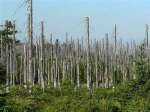 Various Nr outputs in the atmosphere result in a decreased atmosphere visibility due to fine particule matters and an elevated ozone concentration. Both affect human health (respiratory diseases and cancers), global climate change and decrease agricultural productivity (due to ozone deposition). And acid rains further damage ecosystems and contribute to ecosystems acidification and eutrophisation.
Today, over one third of N2O emissions results from human activities, mostly from agriculture. But combustion of fossil fuels, in automobile engines and thermal power plants also produce various nitrogen oxides (NOx).
Nitrous oxide N2O is of particular concern because it lives up to 120 years and is 300 times more effective than CO2 as a greenhouse gas.
Problems in soils and ecosystems
Adding nitrates to soils no longer improves productivity because soil also needs carbon and oligo elements to “digest” it. It only acidify the soils and leaks away. It is now counterproductive.
Acidification causes changes in the plant communities, aluminum toxicity, habitat loss, decrease in biodiversity, water turbidity, even hypoxia and dead zones…
We could add that this production consumes 2% of the world annual energy supply and have a thought for this well-intentioned teacher!…
The results of the first European evaluation for nitrogen Report announced during the Edimburg Climate Change and Nitrogen conference in April 2011 show that nitrogen-caused damaged are estimated at 70 to 320 billions of Euros each year, only in the European Union, that is 150 to 740 Euros per person and per year, that is more that the double of the benefits created by nitrate use in European agriculture.
Solutions
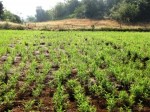 Solutions exist even in seemingly desperate situations. David Holmgren explains how in Africa, soils have been exhausted from the growth of a corn introduced to improve food supply. After a short time, nitrates were added to help the diminishing productivity but not only they were not affordable for the community but they also badly damaged local -rare- waters. Nitrogen-fixing legumes were introduced and used in crop rotation, which in two years restored the soil fertility, while adding nutritional value to the locals and the water improved.
Solutions need integrated approach on agriculture, transports, water sewage and individuals choices: work on Nr storage and de-nitrification in all areas, changing agriculture practices, reducing overall animal breeding, so eating less meat and dairy products.
As many years of research have shown, once nitrogen is oxidized, it globally “cascades through the environment” as detailed in this UNEP document http://www.unep.org/yearbook/2003/089.htm and addressing the issue is now recognized as one of the biggest challenge today.
Sources
- Guide Illustre de l’Ecologie, by Bernard Fischesser. Paris: La Martiniere, 1999.
- Year 12 Biology 2006 Student Resources and Activity Manual. Hamilton, Biozone, 2005.
- Permaculture: Principles and Pathways Beyond Sustainability, by David Holmgren. Hepburn: Holmgren Design Services, 2006.
- Internet links included



 Regenerative Livestyle Blog